Ultimate Pocket Notebook Showdown – Moleskine, Rhodia, Leuchtturm, Gibson, Wal Mart

Okay, enough with separate reviews, they have their place, but it’s time for an ultimate black pocket-sized notebook show down. We’ve got a couple slots for easy comparisons and five different books to do today.

Rhodia Webnotebook

Paper: Great, smooth, thick, fountain pen resistant, archival quality.

Cover: Faux leather, smooth, easily damaged but solid.

Spine: Hardy, doesn’t crease, folds tightly.

Other: Bookmark and back pocket, well put together. Elastic strap.

Size: 3.5 X 5.5

Notes: Has some minor bleed though issues, really dark yellow papers.

Price: $20

20131009-011234.jpg

20131009-011241.jpg


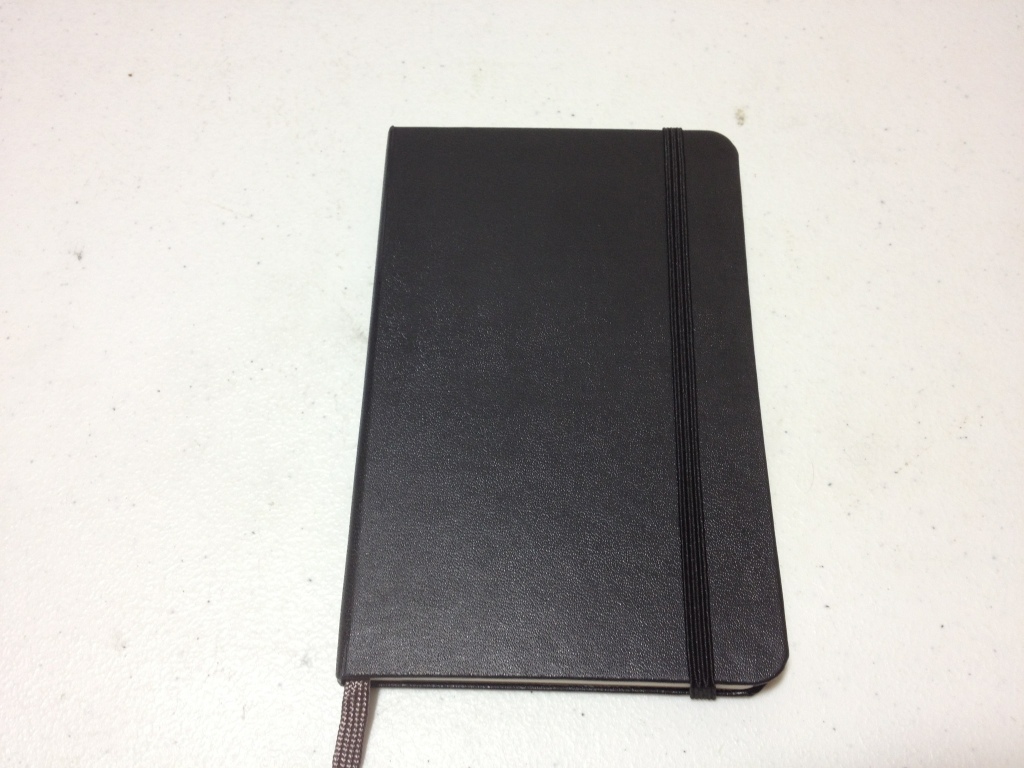
Moleskine pocket 

Paper: Thin, bleeds easily, archival quality.

Cover: Pleather, hard cover, like a rock.

Spine: Nice, creaseable, starts to wear near the end of the books life.

Other: Book mark and back pocket. Elastic strap.

Size: 3.5 X 5.5

Notes: Yellowed pages.

Price: $15
20131009-011118.jpg

20131009-011128.jpg


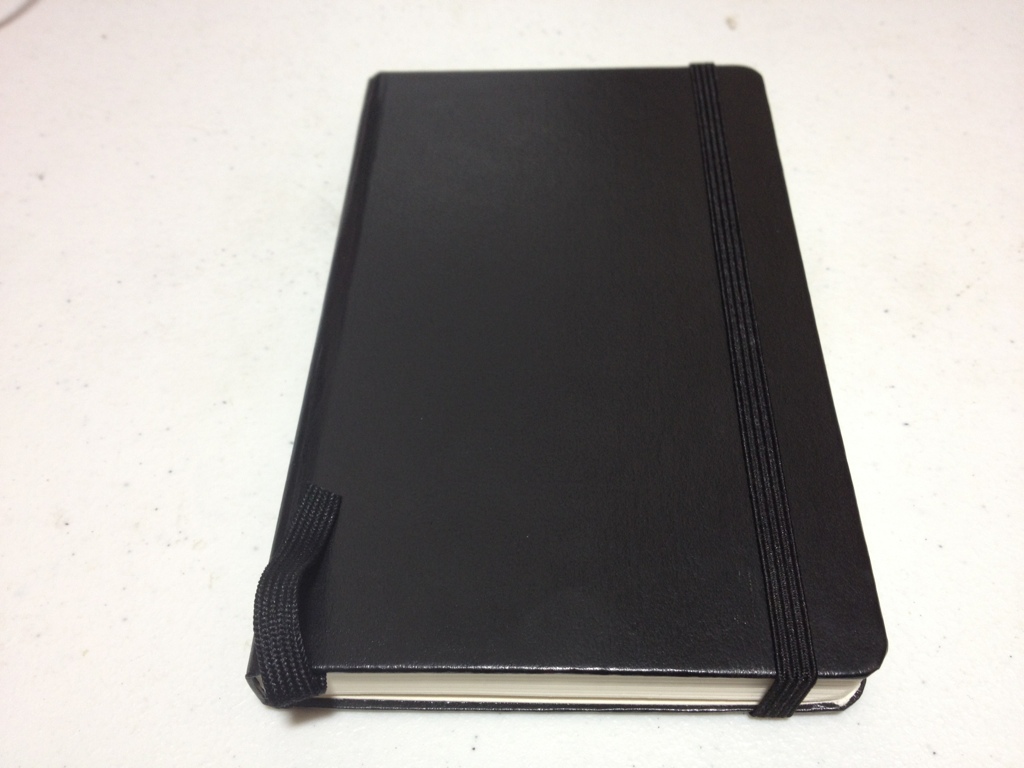
Leuchtturm 1917

Paper: Medium thickness, bleed resistant, but shows through a lot, rough paper.

Cover: Thin, a little flexible, but sturdy.

Spine: Creases easily, but is sturdy, paper could peel off.

Other: Back pocket, bookmark, elastic strap.

Size: 3.5 X 6

Notes: Numbered pages, table of contents, perforated pages.

Price: $12
20131009-011208.jpg

20131009-011223.jpg


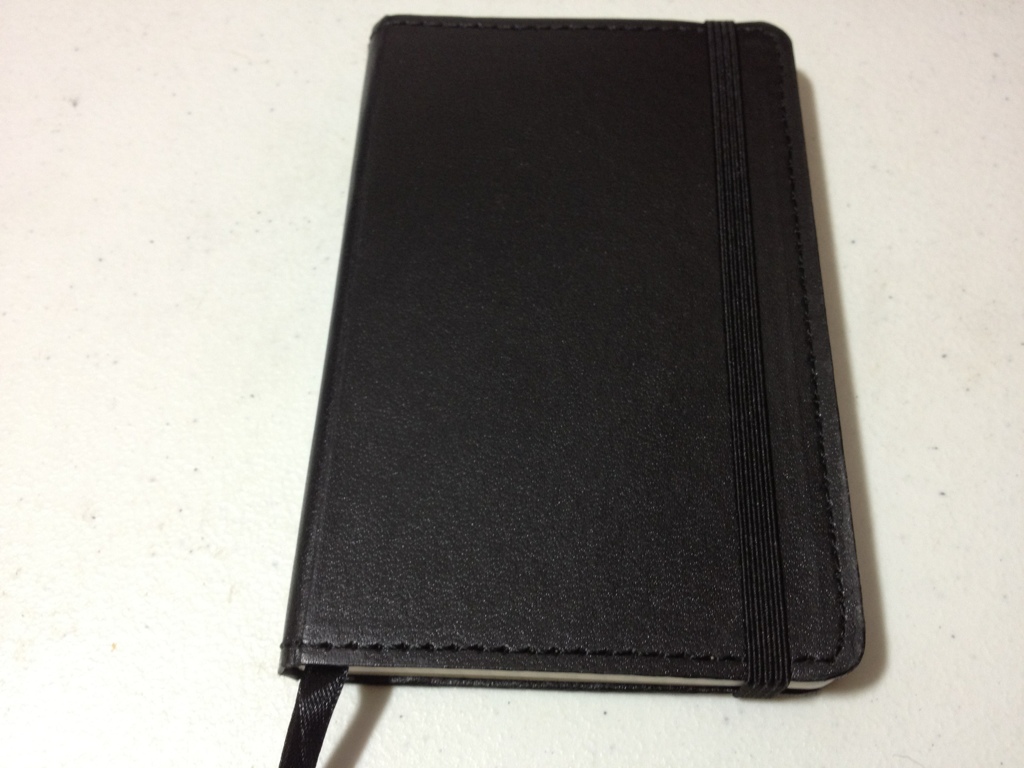
Gibson Markings

Paper: Dark yellow, little bleeding, some show through.

Cover: Thick, damageable, bends easily, has stitches around the sides.

Spine: Works well, but creases, is fragile, and can break.

Other: Back pocket, elastic strap, bookmark.

Size: 3.5 X 5.5

Notes: Not very smooth paper.

Price: $5
20131009-011247.jpg

20131009-011252.jpg

Wal Mart Leatherette Journal 

Paper: White, shows through really badly, but doesn’t bleed easily. Not the smoothest.

Cover: Thick, ridged, but flexible, with stitching around the outside.

Spine: Alright, but could crack and fall off.

Other: Back pocket, elastic strap, bookmark.

Size: 3.5 X 5.5

Notes: Elastic strap came off after limited use. Cheap construction. Ink for lines was run off on some pages.

Price: $3

20131009-011257.jpg


20131009-011302.jpg

Review – Pigma Graphic 1

So you like to draw things a bit larger, and technical pens just don’t get big enough. You don’t want to use a brush or something similar. You may want to try the Pigma Graphic in size 1.

20131002-000542.jpg

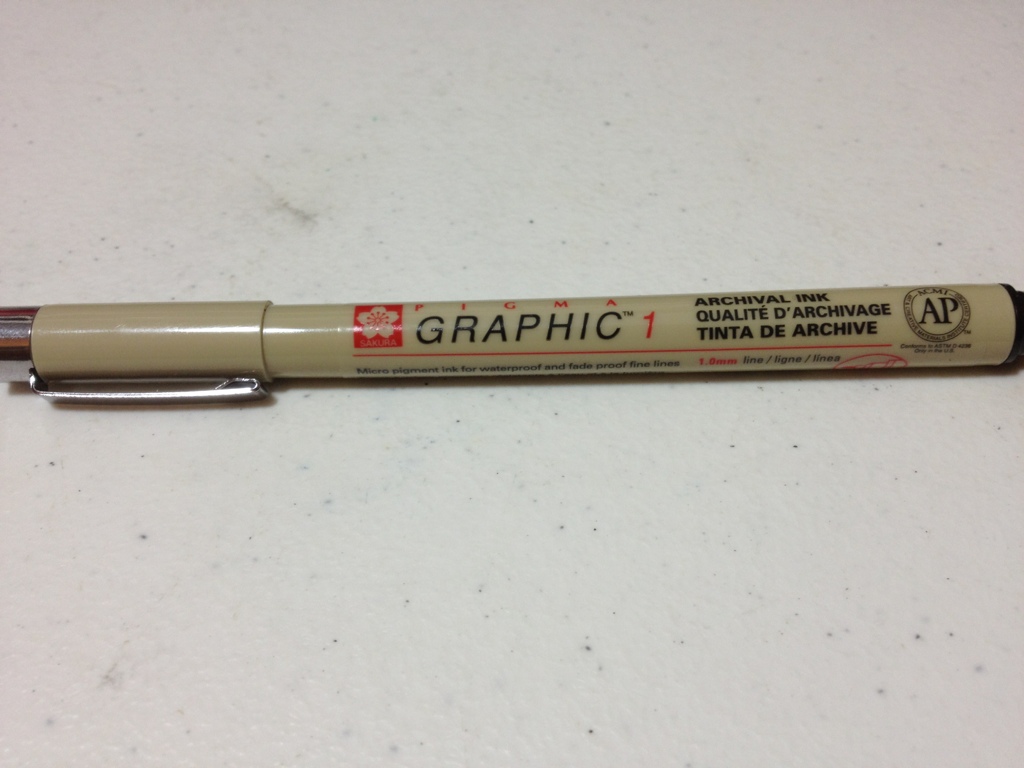
The body is identical to a Micron body. It’s tan and smooth, with most necessary information printed on it. It has a place on the back for the cap to fit that is color coded. The cap is nice and has a metal clip. On the top it says 1 to indicate the size. The top can rub off, though, with some rough treatment. The grip section is easy, kinda small but easy to hold onto due to it being textured.

20131002-000548.jpg

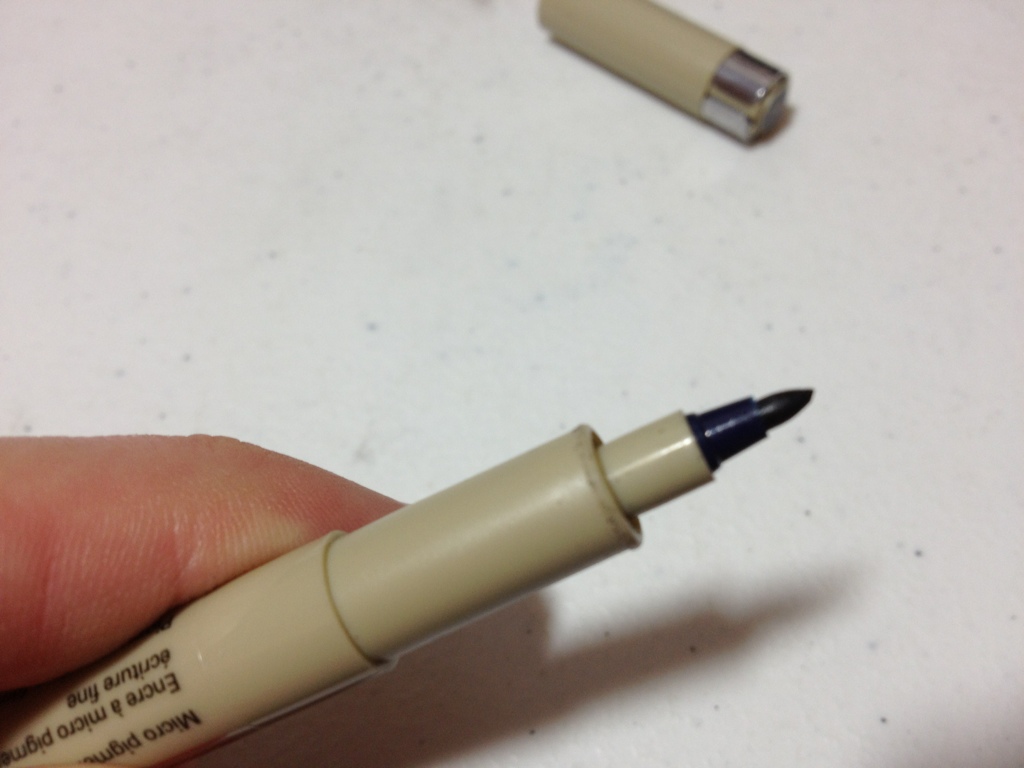
The tip is felt. It comes to a point that is about 1mm. It flows nicely, laying down a nice line with no inconsistencies. The point doesn’t have much flexibility, making the line very constant with could be a plus or a minus. The ink is the same black that all Pigma pens have. It is fade and smear resistant, with some waterproofness to it. It is also acid-free, making it archival quality. In other words: it’ll last as long as your paper does. The ink is also a very nice, true, dark black. The writing experience is smooth and easy.

To sum up, the Graphic 1 is basically a larger tip Micron. It does have a different type of tip, on which the point can be more easily damaged, but the base is more secure. If you like Microns and need something bigger this is a good choice. And if you like felt-tip pens and want a higher quality one this is certainly the pen for you.

Review – Prismacolor Premiere 4 Pen Black Set

Some people don’t like Microns, or they just can’t get them. There are alternative technical pens for those, fortunately. There is a set that is even sold in WalMart: The Prismacolor Premier 4 pen set.

20130925-003926.jpg

The body of the pens aren’t particularly nice. They are black with an abundance of text. The cap is short with a thin metal clip. The cap is hard to grip and kind of ugly, as it fits on tightly but is hard to remove. The cap can be posted, but is also hard to remove there as well. The section of the barrel that is covered by the cap is short and hard to grip but not uncomfortable. It is slick.

20130925-003932.jpg

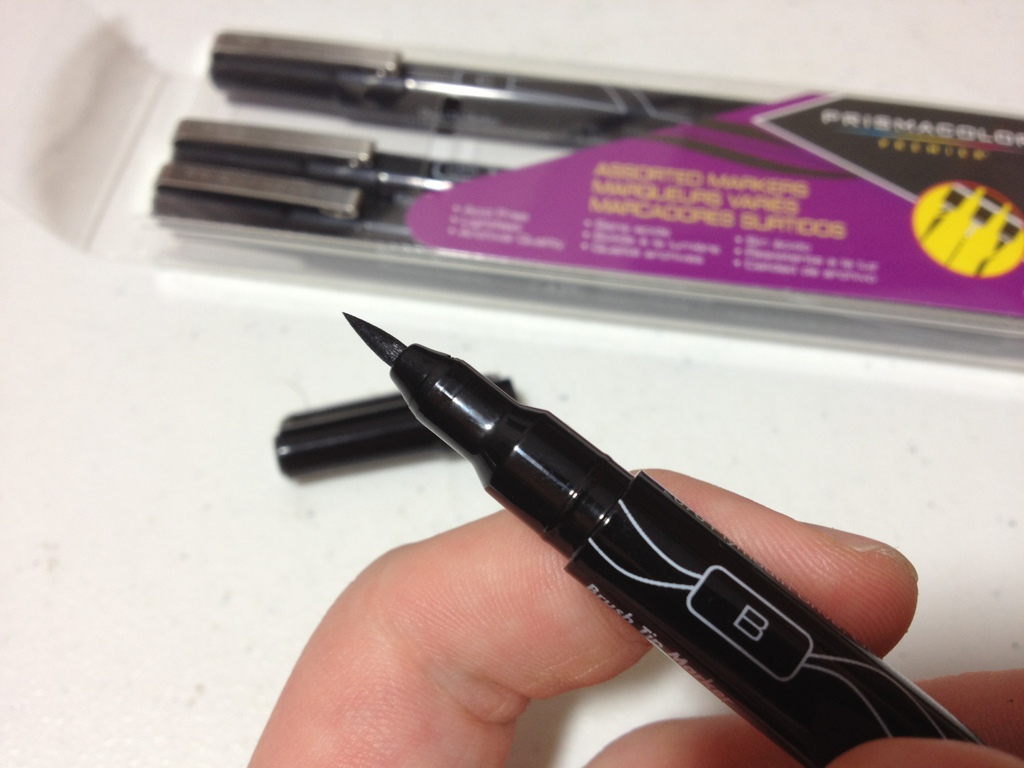
This set has 005, 05, chisel, and brush tips. They lay down a nice black line. They are archival quality, so they are fade-resistant and acid free. The ink flows smoothly, with the occasional hiccup that happens in all technical pens. The 005 and 05 have a similar size and tip feel to Microns. The chisel is a nice tip, but it is a bit weak and seems like it won’t take much abuse. The brush seems more like a long marker than a brush, and it is not very flexible. It does have quite a bit of line variation, though, when you really push it hard. It’s just more difficult to use.

20130925-003938.jpg


20130925-003944.jpg

Overall this set is a nice one, and it’s cheaper than most other technical pens. They are a bit uncomfortable, and the ink is a bit worse than some of the competitors, though they are quite nice. For the price of a little bit less, they offer just a little bit less. They work great and will serve admirably at their purpose. They just aren’t the best on the market.


Review – Le Pen 003 Technical Pen Black

How thin do you need your lines to be? Do you need them consistent as well? Are the conventional technical pens just not thin enough for you? Then you may want to try out the Le Pen technical pen in a mind-bogglingly small 003 tip.

20130918-004443.jpg

The body of the pen is white. All necessary information is printed in several languages on the side in black, it is raised which makes me thing it will rub off with a lot of use, but this hasn’t happened yet. It also has the size on top for easy reference during storage. The clip is a very flexible plastic covered with a metal strip, making it durable and flexible at the same time, though it is quite strange and bulky. The cap lines up flush with the body and almost flush with the end when it is posted. The body proper is flat, and slightly tapered to the front, with some grip from the raised writing. It is a bit fat which makes it uncomfortable for smaller hands or for long periods of time. The grip and point though are almost identical in size to the Micron.

20130918-004454.jpg

The nib however is very small, it feels entirely destroyable every time it is placed on paper. The ink is as resilient as micron ink. And I would say as black but the size of the nib makes it seem much grayer so I can’t tell. I almost think I’m writing with a pencil sometimes. Though because of it’s size the line isn’t the most consistent in the world, but it is the most consistent at this size. It does write incredibly smooth and remarkably comfortable for a short period of time.

So overall this is a great pen. It writes smooth, puts down ink well, and is one of the few pens you can get in this size. It is slightly less comfortable than a Micron in my opinion, and I would be tempted to say the ink is not as good. But it’s still a great value and a handy pen for some of those more detailed lines.

Review – Rhodia Web Notebook Pocket

Well, it’s that time again, time to talk about a little black book. This one’s particularly good for fountain pens. It’s the Rhodia Web-notebook pocket black version.

20130911-014436.jpg

The dimensions are almost exactly the same as the Moleskine, with the exception of it being slightly thicker. The cover is a strange, and easily warped, faux-leather. It is quite pleasant to hold, and the spine sustains much less damage than with stiffer cover books. Not to say the cover is flexible, it is definitely hard, though the Moleskine still holds the record for notebook most like a rock, the Rhodia does have a little give in it. Also on the front cover is a stamped Rhodia logo and an elastic band holds it all together. The standard pocket in the back tops it all off.

20130911-014444.jpg

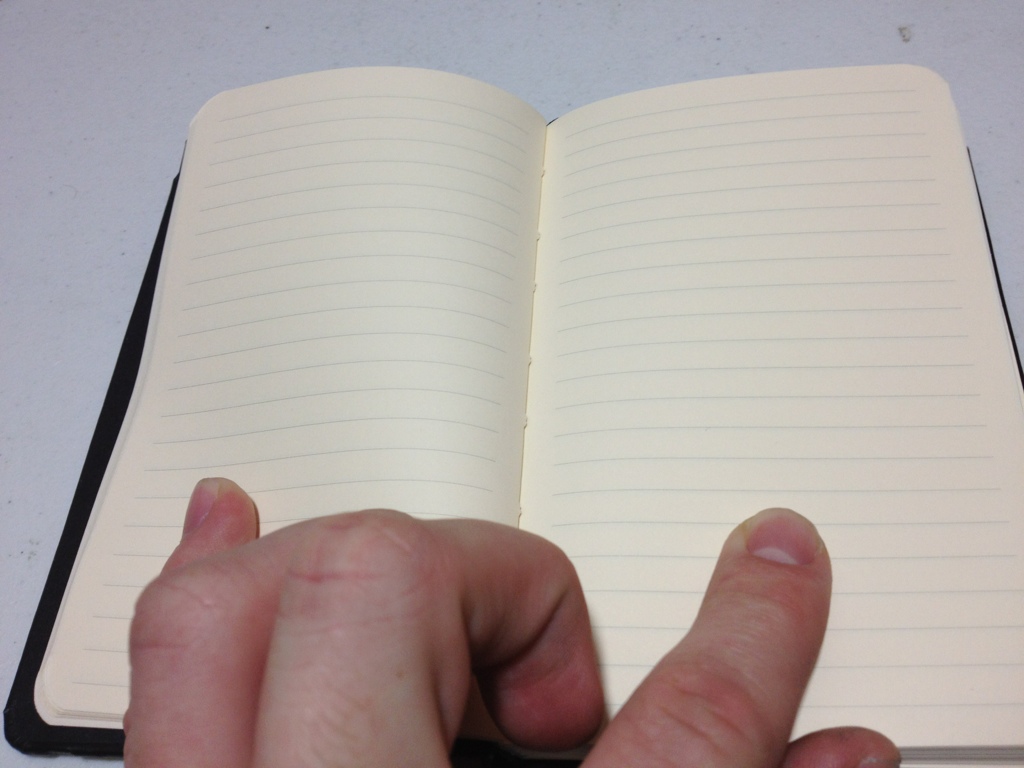
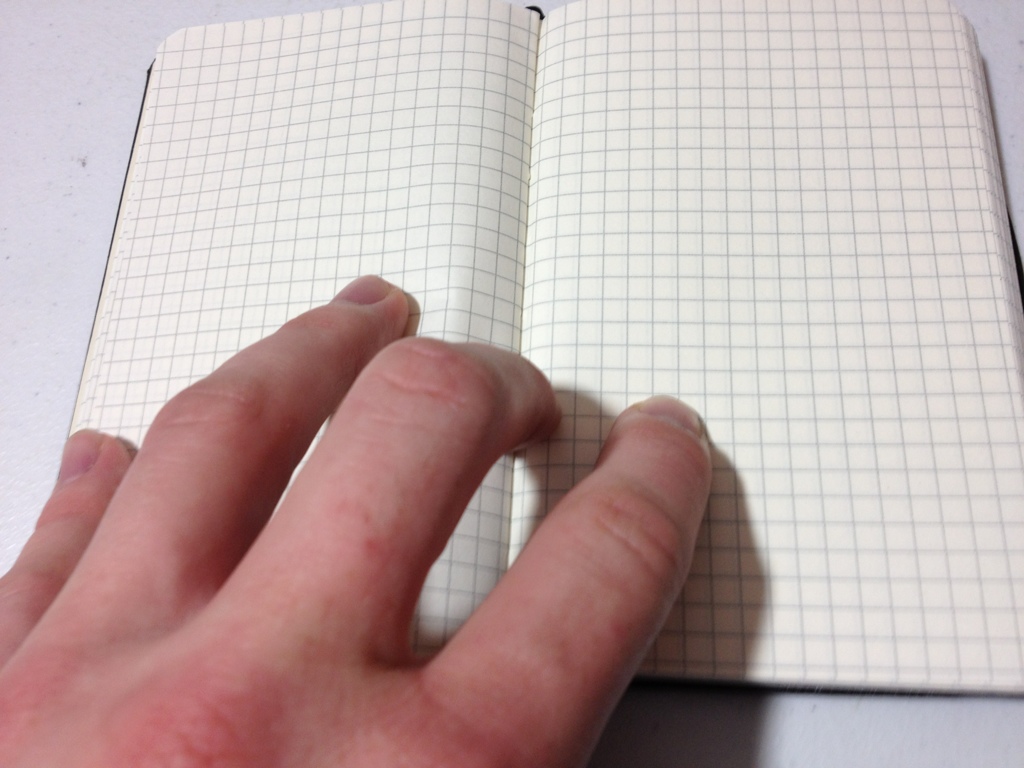
Inside there are the same number of pages as the Moleskine. The pages are thicker though, the first page is unusable and gives you their specks. They are slightly off white with a bit of an orangish tint. This version has them lines with thin grey lines and a slight margin on top. The paper is insanely smooth, as in the smoothest paper I’ve ever written on, right there with Clairefontaine, being made by the same company that makes sense though. It takes ink well, and it even dries relatively fast on there, though there are some problems with bleed through on broader nibs or wetter inks. It should be noted that the paper is different from the larger notebook paper.

So overall, if you have a fountain pen and need a notebook, this is a better choice for you than almost any other notebook on the market. Though if you’re drawing with flex pens or thick brushes be aware that you’ll still only be able to use half the pages in the book. Though bleeding onto the next sheet is something I haven’t seen. Are these the best pocket notebooks? It depends on what type of pen you’re using, and how much you care about the feel of your notebook, because this one does feel quite different.

Review – Black Papermate Flair Medium

Okay, so you want to ink a drawing, or maybe just sketch with a nice bold line, but you don’t have a technical pen. Either you can’t afford them or they aren’t available in the shops you have. Well, maybe you could try the Papermate Flair. The one I’ll be reviewing is the black, medium version.

20130904-011849.jpg

The body of the pen is a simple matte black. Sometimes this wears off and reveals a smooth body underneath. The ends are tapered, with a bulge in the middle. The name and size of the pen are printed in fairly high quality on the side. The clip is metal, works fine, but a bit tight, and has two hearts as decoration. On the top of the cap there’s a white breather hole. Removing the cap reveals a slick, tapered grip section. Despite this it is pleasant to hold because it flares out at the end, giving your fingers a place to rest.

20130904-011855.jpg

The tip is a nice felt tip. The medium is a fair bit wide, but is almost uncomfortable far from the grip. It writes well but sometimes has so much feedback that it seems to drag on the paper. Its ink is a nice black, though sometimes it can fade to a deep grey. It applies easily and consistently, having very little line variation, which is good if you’re inking something. The nib does feel like it can get bent out of shape fairly easily though, so be careful.

So really, if you want an impromptu inking pen, or something to sketch or make technical drawings with, but don’t have a technical pen, this is a fairly nice replacement. It isn’t as high a quality so it won’t last as long, but it it still a superb writing instrument and a very cheap alternative, even if it doesn’t have all the same quality features.

Review – Micron Orange, Yellow, and Fresh Green Colors

It’s that time again, the time I review Micron colors. The three I have this time are the bright colors: orange, yellow, and fresh green.

Starting with the orange: It’s a very bright color, brighter than the fruit of the same name. It’s also a little bit on the light side, looking a bit washed out on the paper. It’s less pleasant than most of the other Micron colors. The pigment does apply evenly and there is no doubt it is orange, though.

On to the yellow, which is super saturated. It’s almost illegible on white paper, on off-white it’s not much better, even though it is still rather subdued and looks quite like the yellows presented in nature. In large patches it loses its illegibility and actually looks quite pleasant. It’s probably the closest to a natural yellow you’ll find in a pen.

Now the fresh green. This one looks like lime green. It is also super bright, and comes the closest to hurting my eyes of the bunch. The pigment tends to pool, creating some shading when drawing. This can be both advantageous and disadvantageous depending on the effect you’re going for. It is the most likely to bleed of any of the colors, but with this selection that isn’t too bad. I would also say this is the least realistic and useful of the bunch.

micron colors 3

Overall, these three bright colors have some issues, but are fairly good. They write well and are entirely servicable, but finding jobs for them seems difficult to me. I’m not sure if they are the must-haves of the other Microns, but they are quite good.

Review – General’s Jumbo Kneaded Rubber Eraser

So what’s something every artist needs but no one talks about? If you answered eraser, congratulations! You get a digital cookie. Now then, let’s talk about a good eraser, a General’s Jumbo Kneaded Rubber eraser.

20130814-192301.jpg

Kneaded rubber erasers are really cool. They bend and twist into any shape you like, they don’t leave any shavings behind, and they can be used for a long time. They “clean” themselves a little when you knead them, allowing you to use them more regularly, and without smearing. They are rubber, so they come apart and back together. This particular brand comes in a nice square and works perfectly.

20130814-192309.jpg

All-in-all, even though there’s little to say about them, they are amazingly handy tools to have around, and much superior to any other eraser you’ll find, though much more expensive.

Review – Pilot Precise v7 Black

Smooth writing is something quite a few people desire, for both writing and sketching. Fountain pens are some of the smoothest writers available, but they have some convenience issues. And regular ballpoints require too much force for some people to write smoothly. Pilot’s Precise line of liquid ink roller balls are meant to fill this gap in the pen market. This is the V7 black version.

20130814-004318.jpg

The pen body itself is straight, nice on the fingers, not slippery, but polished. All necessary info is printed on a label on the side, along with an ink window so you can view your supply, of which there is a lot. There is quite an interesting, fountain-pen-like feed which is clearly visible under the grip. It keeps up well with the writing. From there, there are some strange ribs leading up to an extended point with a rolling ball.

The cap is simple: straight with a nice clip that works well and says “Pilot”, Though it does have some strange indents, it posts well.

20130814-004325.jpg

The V7 point is 7mm, which is shocking, I know. It is very smooth. It dispenses ink handily and never skips unless it is dry from not putting the cap on. I also find it is less prone to get away from you as some of the other rollerball pens with fine points I’ve used are. The ink itself is quite black. It dries quickly but not immediately. It does get grey after some wetting or smearing, but this isn’t much of an issue.

So overall this is a great “take everywhere” pen, for both artists and writers. Though I would recommend it more to artists because of the nature of the tip and liquid ink. I find that in sketching it pays to move fast, while in writing it doesn’t. Either way it’s a comfortable pen that writes super smooth and lays down a nice line of fairly black ink. It’s worth a look at least.

Review – Sharpie Black Retractable Pen

So you want to ink a drawing you did, but you can’t find Microns, or any other technical pen. You certainly don’t want to use a ballpoint. What do you do? Well, the Sharpie retractable pen may be an answer. The black version, to be precise.

20130808-234009.jpg

The pen itself is a shiny black that gets finger prints on it constantly, though it cleans easily. The body of the pen starts out wide and tapers toward the rear of the pen. Near the front is a rubberized grip section with some grippiness to it. Sharpie pen is written on the back near the clip in silver. The pen looks like it can be taken apart in several places, but it can’t.

20130808-234019.jpg

The clip is metal, it’s rather stiff and doesn’t easily go into or out of a shirt pocket. The click mechanism in the back for retracting the pen feels solid, but the plunger is loose and feels a little flimsy.

20130808-234014.jpg

As for the most important part: the tip. It’s a fine tip, with the standard very black Sharpie color. It puts down a fairly smooth line. I would compare it to a Micron 01 or that range, but it’s really slightly smaller. The tipping material is very stiff and doesn’t like to bend, which leads to less line variation but a longer usable life. It’s not a permanent pen, or at least permanent like the markers. It writes and sticks on most surfaces, but not on all, but it is very black on everything.

Overall is it going to replace a good technical pen? No, but it is very good for inking in a pinch or if you want a less-used line width in your art. It writes well, it looks good. The main problems for me stem from the fatness of the pen and the cheap-feeling mechanisms. Is it for you? Maybe. I’d recommend trying it out and maybe keeping a few around just in case.