Review – Speedball Super Black Ink

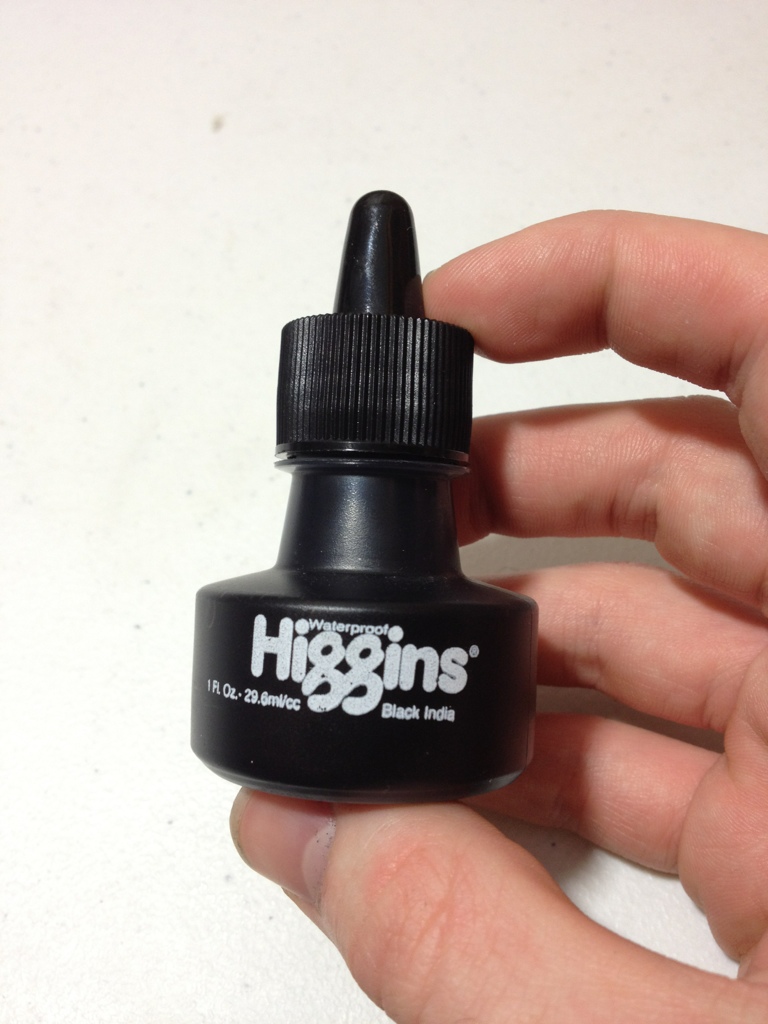
Let’s get to inks. If you’re drawing you might want to try out some India inks. I’ve already taken a look at Higgins India inks, but today I’ll be looking at Speedball Super Black. The ink comes in a plastic half-cone container, that is fine for dipping as it is very wide. It is very full though and can be easily spilled at first, so be careful. The cap has a foil lining that isn’t very good and ink gets on the rim and underneath it constantly, so be careful when opening and closing as there may be ink where it isn’t supposed to be.

20131129-004435.jpg

Now on to the ink itself. It is black, and when I say black I mean black. It has virtually no greying even when applied in the finest or broadest of nibs or brushes. It goes on black, and it dries black. Though it is a warm black with a hint of yellow brown when applied very thin. It does dry fairly quickly, though not the fastest, and it doesn’t feather on any paper I’ve used, even in large amounts. It doesn’t bleed through the page, but it does have some show through and page buckling in larger dollops, so it should only be applied in one coat. It is quite water-proof as in it doesn’t even move when water is applied to it, though that is because it contains shellac which can clog up pens and brushes if not washed out properly. They recommend ammonia for that but soapy water applied right after use should do the trick if nothing else. It can also be diluted for washes etc, but because it is heavily pigmented this is not the optimal ink for the purpose as it could go bad quickly.

20131129-004443.jpg

Overall if you want a BLACK drawing ink and can handle the problems pigmented ink presents this is a fairly cheap ink that may just be exactly what you’re looking for.



Review – Pentel Sign Pen

A felt tip marker can be a useful art supply. If you want to use a high quality marker pen from a well established brand, and don’t need a particularly thick line, the Pentel Sign Pen may be the thing you’re looking for.

20131018-003651.jpg

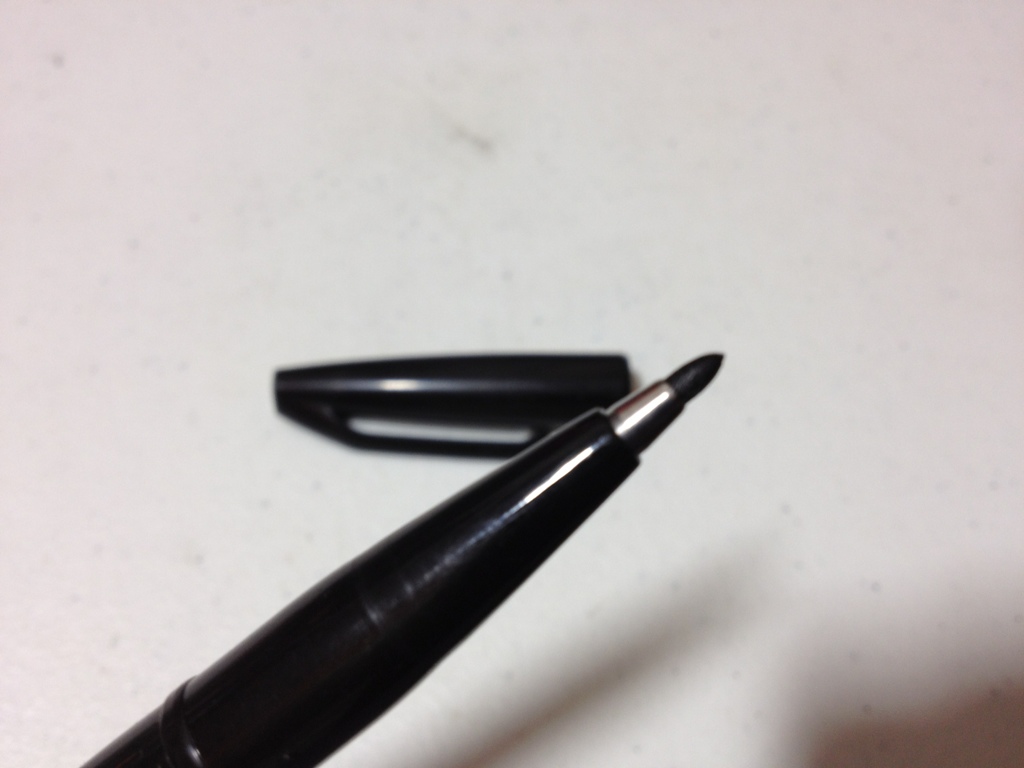
The pen itself is black, fairly flat, combining the worst of matte and shiny blacks. The base has a small tan disk. It’s got a slightly hexagonal design, and both ends taper down to a cylinder. The cap is in the same design. The clip is a long piece of plastic, and it ends in a slightly sharp, shirt tearing, tip. The grip section tapers down to a metal holder and a thin felt tip.

20131018-003657.jpg

The ink is a nice black, and it is very black. The tip doesn’t seem to have much line variation. It looks about the same no matter the pressure. Using enough pressure to give variation would damage the tip. Tilting the tip can cause some variation. The ink is mildly waterproof. It does turn grey and does smudge heavily, though it doesn’t fully disappear and can in most cases be read.

So if you need a fine-to-medium point, water-resistant black marker, which sounds specific but really isn’t, this could be the pen for you. In my opinion it is more comfortable than a sharpie, and is a bit smaller, which is nice. It is a very good pen for line art especially on larger works.

Review – Micron Red, Blue, Purple, and Green colors

I have reviewed several Micron pens in the past. But in case you were wondering if they could add a little more color to your life, here are some Micron Colors in .05.

It is an eight-pen set of colors from Micron that I’m looking at. It includes black so that’s out. The first four colors I will look at are what I call the ‘standard’ colors. They are red, blue, green, and purple.

I have already talked about the blue and the red so I’ll cover those quickly first. These pens are larger than the ones I reviewed previously so the ink is a bit more saturated. They aren’t as glaringly red and blue as before, but they are still some of the brightest and most vibrant of their colors on the market, aside from the awful nano-liner. Getting this large also makes them more prone to bleed-through, of which there is a slight hint in the blue.

Next we have the purple, which, in the Micron style, is a very aggressive purple. It is very deep, and in low lighting could be mistaken for black. It is very highly saturated, and changes little to none when applying pressure for some time to just tapping it on the paper. Amazingly at this darkness it isn’t very prone to bleed-through.

Finally the green. This is, surprisingly, a fairly sedate green, falling in the middle of forest and lime. It is unmistakably green, but rather unremarkable. It doesn’t jump like the other inks in this set. It just sits there, making it rather like greens in real life which you have to look closely to appreciate. Again, surprisingly enough this color is the most prone to bleed-through in the entire set, even writing fairly fast it leaves dots on the other side of fairly thin paper.

micron color test 1.1

So overall the ‘standard’ colors in this Micron package are great. They’re not really the best for sketches of nature or the outside world, but for labeling and organizing they are great. For example, different color parts in a schematic. It’s nice to have colored pens around and these hold up the Micron standard. I can definitely find a use for them.

Review – Noodler’s Nib Creeper Flex Pen

Fountain pens don’t particularly lend themselves to art. That’s more in the realm of brush and dip pens. But for the more artistically inclined fountain pen users, there are flex pens. Though most examples are ludicrously expensive, Noodler’s Ink brand has several flex pens at a reasonable price. Let’s see how the Noodler’s Nib Creeper Flex holds up to scrutiny.

20130704-232129.jpg

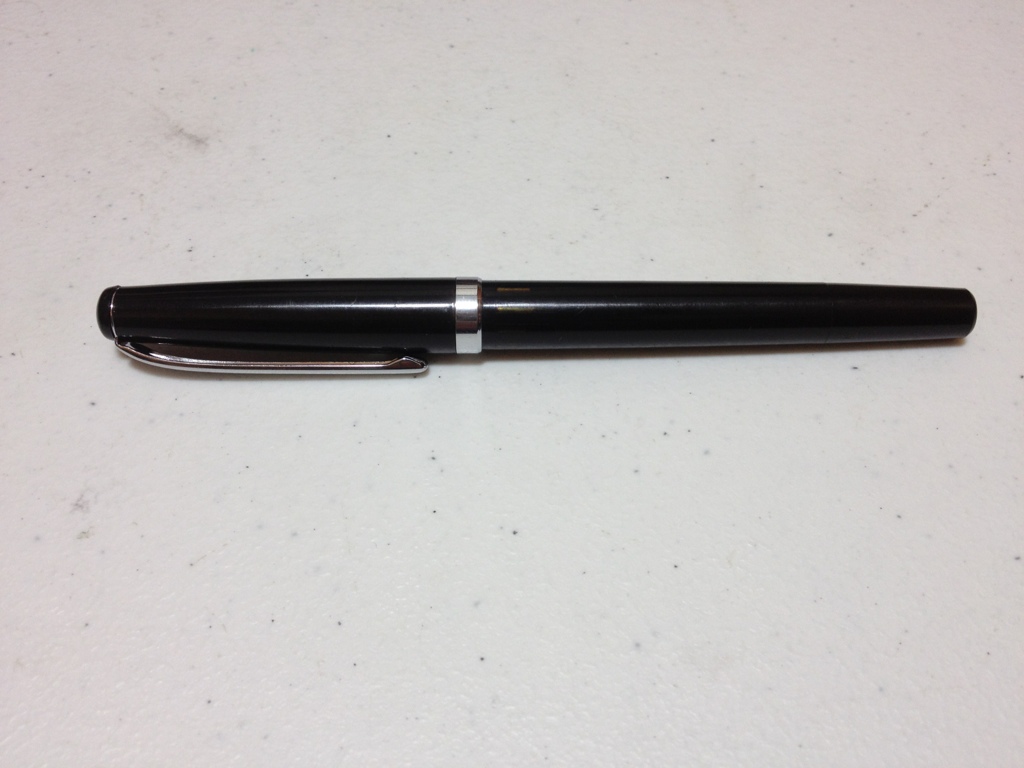
The one I personally have at hand is a plain black one. They come in all sorts of wonderful colors and you should really look into them if you’re thinking about buying one. The black itself is quite nice, though shiny enough that scratches are noticeable. The trim is a nice metal, not sure on the specifics but also shiny. The clip says “Noodler’s Ink” and rotates on the cap; it also does a very good job of holding the pen in a pocket. In the middle of the pen there are a few semi-transparent windows with which you can view your ink volume, though they are not the most accurate things. The cap unscrews to reveal more of the same design to the nib. Both the body and the cap are made of a nice plastic, which feels a little too light and smells a bit. But it is quite sturdy and the smell does subside.

The pen fills nicely by twisting the back all the way out and then down several times (to eliminate as much air as possible) while the nib is immersed in ink. The plunger mechanism unfortunately doesn’t come out like several other Noodler’s pens, or at least not easily. But the nib and feed can be removed simply by gripping them in the mid-section and pulling them out as they are friction fit into the pen. This allows for easy customization of the ink flow. It also allows for easier cleaning when changing inks.

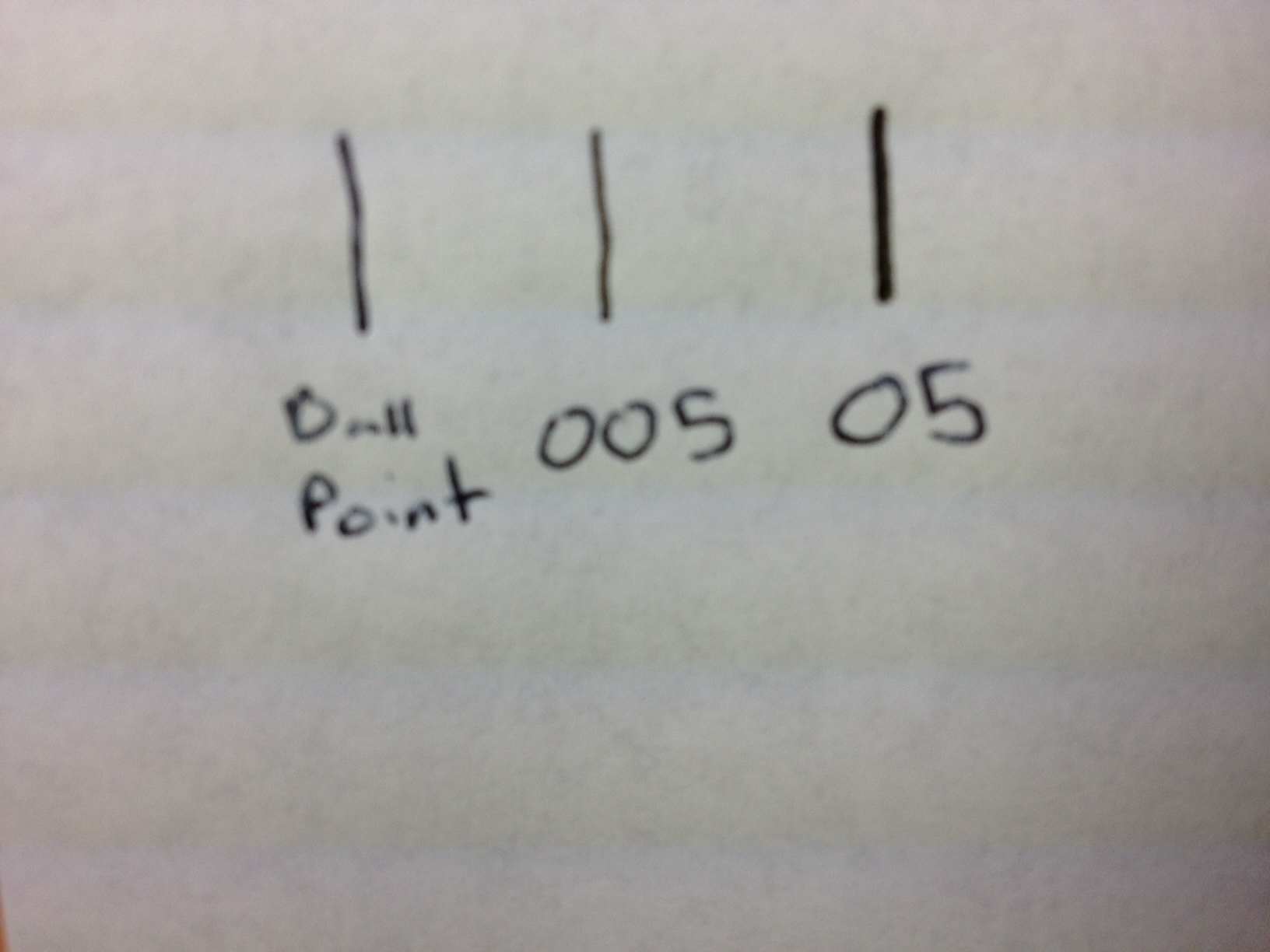
Now to the nib and the actual writing. On paper the nib is wonderfully smooth. Not as smooth as a nice Cross or something similar, but up there. It flexes when pushed down, though not very easily. It does require some force, and at times feels like it may have problems, though these have never materialized for me. The thickness of the line varies depending on the nib and feed configuration. I would say it goes from about a Micron 01 (005 if you go really, really light) to just over a Micron 08 or about the size of the Micron Brush. After that it starts to railroad (split into two lines) even in the wettest of configurations. It also tends to write fairly dry, having a faster ink drying time and less bleed-though than other pens. But this is only minimal.

20130704-232148.jpg

Overall this is a very nice pen. If you’re looking for a sturdy brush replacement or just something to add some variation to drawings it may be the thing for you. For me it strains my had a little, and I prefer less variation in my line, which limits my use for it. But it is still a superb little pen, and a very good value. It can also double as a fancy signing pen, and a note pen. Just something to carry around. It’s great, and if you’re looking for a flex pen it’s definitely the place to start.


Review – Higgins Black Waterproof India Drawing Ink

So a while back I reviewed Higgins black non-waterproof India ink for fountain pens. That’s a fine ink for fountain pens, but if one wants to do, say, an ink wash it doesn’t fare too well. There is a Higgins solution for this; Higgins black India drawing ink.

The ink comes in a tiny well with a small dropper. There is not nearly the same volume of ink, but the bottle takes up about the same amount of space.

20130411-232817.jpg

The ink itself is very black. Very, very black. It is waterproof and a little thin. It can be used to create a very dark line right out of the bottle, or diluted with water to make various shades of grey. Unlike the fountain pen ink, which turns a greenish color when diluted, the ink remains black or grey. It colors the water completely black no matter the solution, so measuring the amount of the mixture before hand is recommended.

Overall the ink is superb for what it is made for, which is brush inking and ink-washing. It is very dark and handles very well. It dilutes nicely to create shades, and covers well when it does. It does take a little practice to get good at using it but when you get the hang of it it works wonderfully.

Review – Pentel Pocket Brush Pen

So I do a lot of non-drafting type drawing, which I will admit is most of drawing. But in that type of drawing, lines are not the same length, they waver, get thicker and thinner and such. If you need to get a similar effect, Pentel has a pen for you.20121205-010917.jpg


The Pentel Pocket Brush Pen is quite a nice instrument with a very uninspired name (which is good for tracking it down). The body of the pen is medium length, slick and black. At the bottom of the cap in silver is an asian character that I don’t know the origin of and the word Pentel. They are both slightly engraved and hinder nothing. They are the only adornments on the pen. There is also a clip on the pen that serves its purpose well.

The brush itself is very nice, it is easy to keep at a point and is very responsive to pressure. The pen requires no squeezing or other methods to keep ink flowing so one always gets a nice full line.

20121205-010922.jpg


The ink itself is black but thin. It takes multiple coats to create a true black, otherwise one gets streaks, but these are only visible on close inspection and may be what you’re going for. The cartridges are also replaceable and fairly easy to find. The pen comes with two and one can buy packs of four.

In short the Pentel Pocket Brush Pen is just that, a pocket brush pen, and a very nice one at that. It does its job well and painlessly. It is one of the finer and cheaper brush pens I have encountered.

Review – Pigma Brush

Do you like the flowing lines and moderation of a brush, but want the simplicity of a pen? The makers of Micron have a solution. The Pigma brush.

20121102-235927.jpg


The ink is the same as the Micron ink. It is a very deep black that applies smoothly to the page and rarely bleeds. It is waterproof and fadeproof archival ink. It marks just as well or better than any pen around.


The body of the brush is the same as the Micron’s, as well. It is slick and glossy, but fortunately easy to hold, and never once felt like it was slipping in my hand. The cap locks in place firmly and snaps haphazardly onto the back. The clip attached to the cap works das designed. The writing on the body is easy to read and rub resistant, and the identification on the cap is easy to read.

20121102-235932.jpg


But now for what this item is about: the brush. The brush is fairly short, no longer than the nib of the regular Microns or most other pens. The brush at its finest is super thin, and goes up to an above average pen thickness. The line range is roughly equivalent to the Micron 005 to 05 and everywhere in between. The application is buttery smooth and never splutters or splatters. Even when the brush begins running out of ink you will only begin to get a grey line instead of a patchy one. And it takes a long time to get it to run out.20121102-235937.jpg


For fine detail work this item is perfect, it is a perfect addition to the Pigma family and suits the audience it was created for perfectly. But it is for a specific audience. Very large or multimedia projects will find the product ill suited to create most desired effects. But that does not diminish the fact that it is a very good pen.

Review – Higgins Fountain Pen India Ink

Higgins non-waterproof fountain pen India ink. I don’t really have more of an introduction than that. This’ll be pretty short because there isn’t much to say about ink. But there is still enough that it is warranted.

First off this ink is black, I mean really black, even when it is diluted by water it is still a solid grey, it doesn’t turn into a deep green or blue. It is not true India ink because it does wash off with water, but you’ll have to do some scrubbing. It is fairly thin because it is used for fountain pens, making it less suitable for most other uses. Applied over a large area it causes the paper to wrinkle, but not too severely. But because of this it is very smooth, and any line problems will stem from the pen. It shows through most papers and stains a lot of items. So one must be careful while using it.

20121024-000449.jpg


Over all the ink is nice, it works well for fountain pens and is okay for other tasks. It is water soluble so it can be cleaned up (if not easily) which is a huge bonus. But most importantly it is a true black.

Review – Pigma Micron 05 Technical Pen

Ah, another Micron, this one is the 05 (.45mm) black version. Its main difference from other Microns of course being its nib size.

The pen body is slick but doesn’t slip when pressure is applied. Aesthetically it looks old school with its graphic design, but all the necessary info is readable and in intuitive places. The top of the cap is marked with the size, making finding the correct pen for the job from storage much easier. The overall length and weight of the pen is nice and makes it easy to handle.

Of course the main difference between this Micron and other Microns is the nib size. The 05 nib is a medium size, good for main lines and other things that should be noticed but that you don’t want to emphasize as much (assuming you’re using a broad range of pen sizes). The nib also takes considerably longer to wear out then its smaller counterparts, and one will find the ink becoming grey or stopping almost entirely before wear from normal use is noticeable.

The ink is of course the wonderful Pigma ink, which resist fading and running. It does fade after prolonged times, but not entirely and it is hardly noticeable. It also begins to fade as an eraser is rubbed over it, but this is minor and will only happen once or twice.

Overall the pen is nice and a great value. It is more of a writing size pen then the other pens in the Micron range, making it one of the most versatile of the line.

Review – Norcom Graph Composition Book

There are a lot of sketchbooks and various types of notebooks out there. But a composition book doesn’t seem to scream “art supply”. The binding is great but they’re obviously meant for writing and not drawing. Luckily (kinda) there are math classes in school as well that need notebooks. And this is one of them, the Norcom no. 76002 graph composition book.

The listed dimensions are nine and three quarters by seven and a half inches, with five squares to an inch. Each page has 49 by 36 squares so the given dimensions are mostly correct, but a little off. The book contains one hundred sheets, and some extra stuff on either inside cover.

The paper itself is thin, but not overly so. Pencil and ink can be seen through but not enough to cause trouble in perceiving or creating what is on the page. Ink from pens does not bleed through, but brush inks will, and if a pen is heavily applied over an area bleeding is a very likely occurrence.

The grid is helpful in the way grids are. It is printed light blue, and does not get in the way of writing, drawing, or graphing.

The spine however is poorly made. The string binding is loose and the pages are almost free to move around. While the pages seem sturdy the spine may need duct tape for prolonged use.

Graph paper is very useful and having it in an easily portable book with a “solid” binding is nice. The book is nice for what it is but there are many better (although more expensive) options out there.