Review – Kutsuwa STAD Pencil Holder

Okay, I’m going to admit here that I don’t really know the name of this product as the only English I could find on the package was a URL, “made in China”, and STAD. But I do know it’s a pencil holder, so there is that. From my research I’ve found that this is a less-common or less-popular model (as in I couldn’t find it online at all). So I feel the need to say this is not a review of the “one-push” model.

photo-130

Pencil holders have been around for a while, and there are quite a few options to choose from. In fitting with my style, I got the cheapest one (okay it was given to me, but I think that sentence suits me. I haven’t been able to find a price on these, but I bet it isn’t much). After all, it’s just a metal tube to hold a stubby pencil; can it being cheap really hurt it very much?
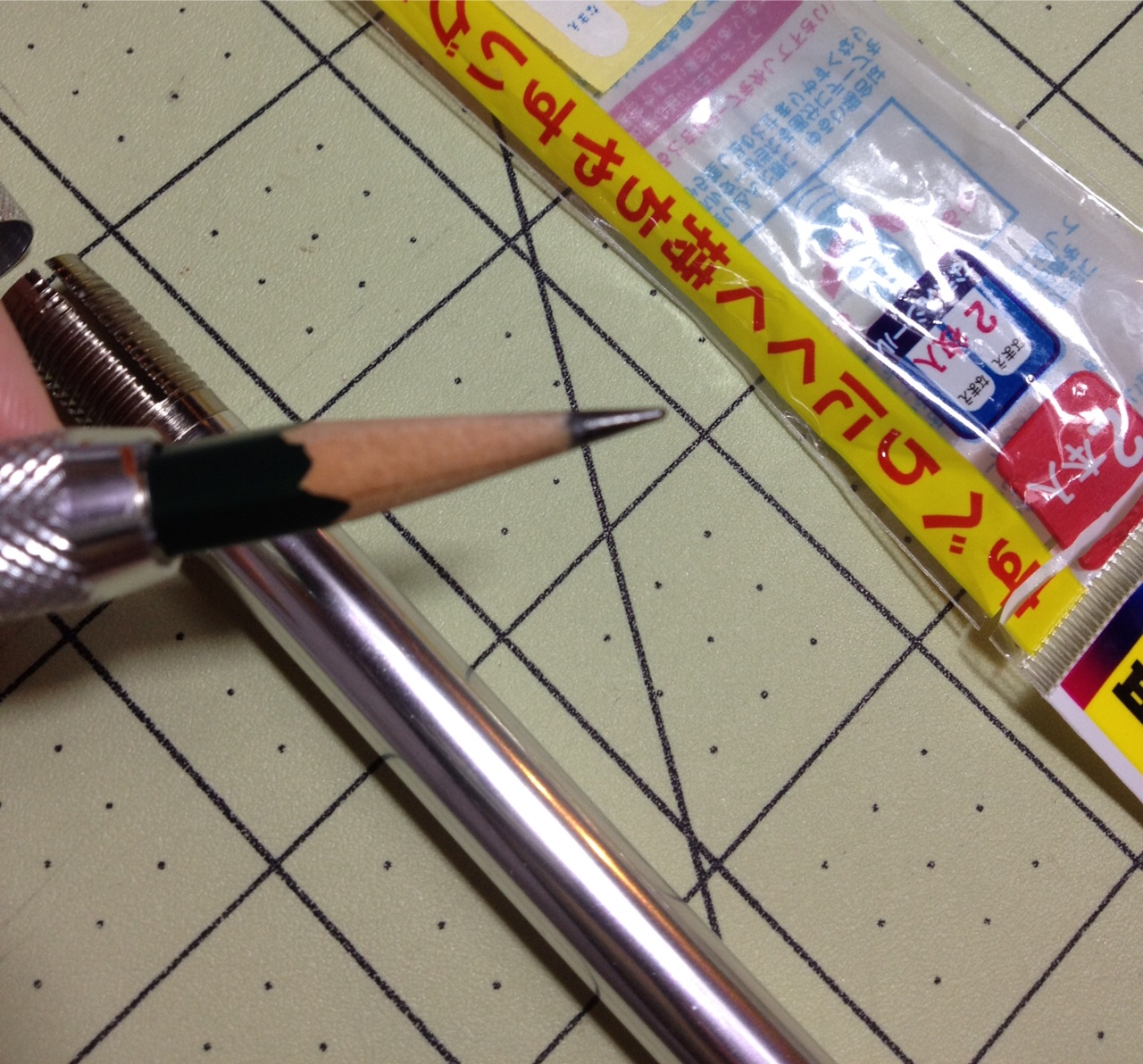
photo-131

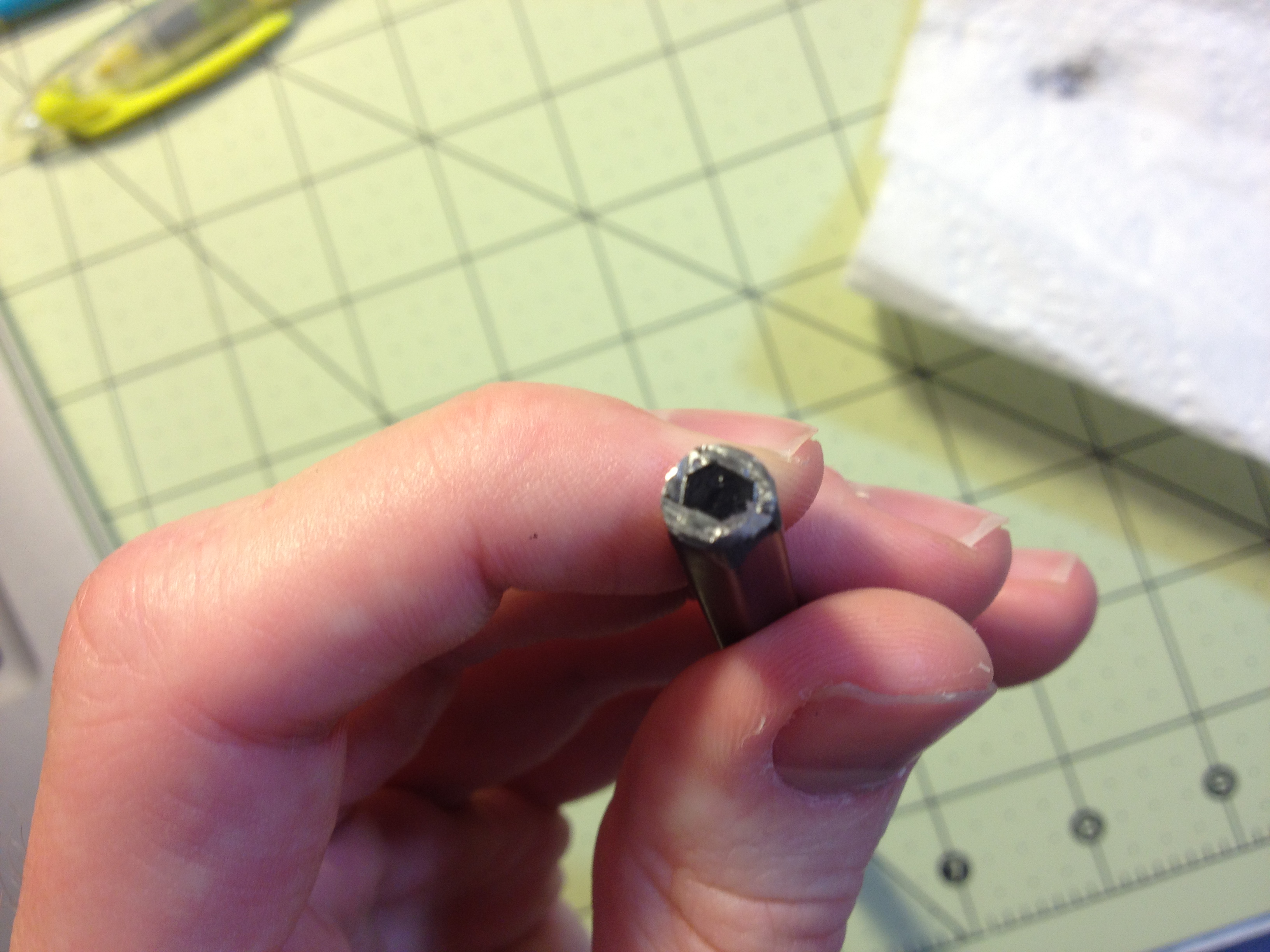
The item comes in a two pack with some labels that you can stick on the side when the pencils (or whatever you’re using) information is covered up or sharpened away. There are only two labels so use them wisely. The holders themselves are very simple: they are two pieces of aluminum, a straight barrel with a stop-bump followed by some threads with cuts in them that allow the second knurled cylinder, which is tapered on the inside, to screw on and force it to act like a collet, holding the pencil in place. The finish is smooth save the knurling and resists major scratching but is quite shiny and reflective.

The pencil is held quite securely inside the device. There is the tiniest amount of give even when tightened down as far I as think I could go before damaging either the pencil or the holder. It is easily enough to allow for comfortable writing or drawing and (fairly) easy sharpening. I’m sure one could throw it hard enough to knock the pencil out, but that isn’t a normal-use scenario. Being dropped from desk or hand height won’t hurt the holder or have the pencil fly out, but it might hurt the pencil. The grip works well enough, but it is a bit slippery, the length of the barrel is enough to allow one to rest it in the webbing between their thumb and forefinger on most hands, though it isn’t the most comfortable or ergonomic. It also seems a bit front heavy with the back of barrel empty when the pencil gets very short.

To be short, no, being cheap didn’t hurt this product very much. It doesn’t feel weighty or expensive, but it does do its job. It holds a pencil that would otherwise be very uncomfortable or hard to control in a way that makes it at least tolerable to work with. It’s simple to use, and easy to handle. And with how cheap it is, I would say it would certainly be worth looking at. It isn’t as nice as the more expensive ones, but if one isn’t very picky, like me, and if you happen to find one, get it.

Review – Autopoint All American

There are tons of pencils out there, but sometimes the old designs just call to me. And they still work very well. It’s hard to beat some of the most simple writing utensils in many cases. The Autopoint All American is not the simplest of pencils, but it is quite a classic and simple design that works very well.

photo-78

The top of the pencil is a hard, but functional, eraser held in by a metal sheath; removing this allows for access to the lead storage area. There is a metal collar that holds the clip just down from that, followed by the faceted barrel with 10 sides. This continues until the break for the twist mechanism, at which point the tip tapers down to the point of the lead. The only information is the lead size and brand on the clip, which is quite hard to read, and leaves me wishing the model name was somewhere.

photo-77

The mechanism is a simple wire-twist one that is a bit stiff to use. Once lead is inserted, one can twist to the right to advance the lead, or twist to the left and push on a hard surface to retract it. While stiff, the mechanism is quite solid, and the lead is held firmly in place. I have a .9 lead size version (in blue) and the lead is large enough that breaking isn’t very common anyway, and I haven’t found it to be a problem. The lead included is fairly standard in and of itself.

photo-76

It’s a good pencil with a classic design. The mechanism isn’t the easiest to use but it’s robust and sturdy. The pencil itself has a very utilitarian look and feel that I quite like. It feels like many of the classic pencils I have. So for those looking for a classic, rugged pencil design, this is one to look out for.

Review – Staedtler AllXwrite

I’ve looked at a few all-graphite pencils in the past, but they were only sold in art supply stores and were thicker than the average pencil. The Staedlter AllXwrite is a #2 all-graphite pencil that is much more widely available. How does it hold up?

photo-80

The body of the pencil is unsurprisingly plain. It’s a standard hexagonal pencil design, all grey with silver lettering. The information printed on it is enough to get by. At the end of the pencil there is a standard metal eraser holder, and a fairly standard white eraser that works well.

photo-79

The graphite is quite hard, but still writes with the same pressure as a normal pencil. There is a coating on the outside to prevent major marks, but it is still possible to mark with it. Sharpening is easy, but wasteful, and if one adjusts their writing or drawing in such a way as to re-sharpen the pencil as they write with it, it requires none and will last for a very long time, far outstripping the eraser. Other than that, it’s a standard HB, suitable for taking tests or notes, and making lists and art.

photo-84

I like this pencil a lot. They’ll last forever and write well. I’ve flattened the ends of one of mine to make it easier to shade large areas. This, coupled with a few others at varying degrees of flatness leads to a ton of artistic options. While these pencils are a bit more fragile than wooden ones, I think that with normal use they will hold up just fine for someone interested in getting a long-lasting or quirky writing implement.

Review – Zebra M-301 Mechanical Pencil

The Zebra F-301 is one of my favorite and most hardy ballpoint pens. I’ve used one for a long time, and they have a good record for staying together. But Zebra has several other writing utensils in their “301” line, one being the still-very-popular M-301 Mechanical pencil. Is it as good as its counterpart? Let’s see.

20150618-222426.jpg

The body of the pencil is the same as the pen, starting with a sturdy stainless steel click button, and going to a black plastic clip “holder” for a stainless steel clip that does its job if one doesn’t get turned upside down and shaken. The barrel is also a nice, plain stainless steel with the pencil’s information printed on it. The grip section is plastic with a bit of “knurling” that provides some grip and is unintrusive. The real difference between the two bodies is that after the section the pencil has a black plastic taper with a metal pipe for the lead. Unscrewing this will reveal the lead and make it breakable but otherwise not change the operation.

20150618-222447.jpg

The push cap operates smoothly, and can be removed to reveal an eraser that does its job, though it has no replacements in the package. Removing the eraser reveals the lead feed, which thankfully does come with more than one lead in the standard version. The lead feeds well, and writes as smooth as one would expect a standard HB to. It is a bit hard, and brittle at times; unlike many pens there is no shock absorber, so keep the lead as short as possible. The pipe and the lack of a shock absorber do make this pencil much more like a drafting pencil than the standard mechanical pencils, and it would work in that scenario in a pinch (or perhaps a bit longer). And its rugged steel exterior make it great for taking anywhere. One would just have to worry about the pipe getting bent or tearing something.

20150618-222453.jpg

It’s a great pencil, really, and it lives up to the expectations of its ballpoint relative. It isn’t perfect, but it’s a tough little thing that gets the job done, and for an inexpensive price, considering the materials and drafting-friendly capability. If one can find refills, they will have a pencil they can take anywhere for a very long time, even if it’s not their main utensil.

Review – Bic Velocity Mechanical Pencil

Bic makes a lot of writing products, and sometimes it’s hard for me to keep them straight. I’ve never really been sure what one is supposed to do over the other. Nevertheless, the Bic Velocity is a solid mechanical pencil and I’ll be looking at it today.

20150510-220506.jpg

The back of the pencil is unremarkable; a clear plastic cap covers a small, white, barely functional eraser (it works about as well as most mechanical pencil erasers). This assembly can be pushed down to activate the lead advance mechanism. Just down from this is a plastic clip, functionally all right, with the pencil’s information written on it. Down from there, the body is clear and straight until it get to the rubberized grip section where it bulges then hourglasses, creating a nice place to rest your fingers. The little cap cone after this is clear, and has the metal tip floating inside so that is retracts when the lead is retracted, preventing the tip from getting caught on anything.

20150510-220540.jpg

Writing is fine. The lead is standard. It doesn’t break much, goes on smoothly enough and dark enough for school or office work. There is no advanced shock absorber or lead turning to prevent any damage, though, but at the price, that’s teetering on the edge of reason. The grip is comfortable enough to get one through writing or drawing without too much trouble. It doesn’t slip and isn’t too narrow. The overall construction is solid, and it feels like it won’t break in your hand.

Overall, the Velocity is fine. It isn’t the best mechanical pencil ever, and it has no real features, but it’s solidly and relatively comfortably built. It is fairly inexpensive and comes with enough refills of erasers and lead to last the user for some time. As far as inexpensive options go for mechanical pencils, it’s a good one, but there’s nothing special about it.

Review – Paper:Mate Sharpwriter

Papermate has been making pencils for a long time, and one of the simplest and least expensive mechanical pencils available is one that they make. These pencils are some of the cheapest on the market from a name brand, and always come in packages containing a large number. They are almost universally recognized as one of the lousiest pencils to use, but is that reputation deserved?

20150503-225627.jpg

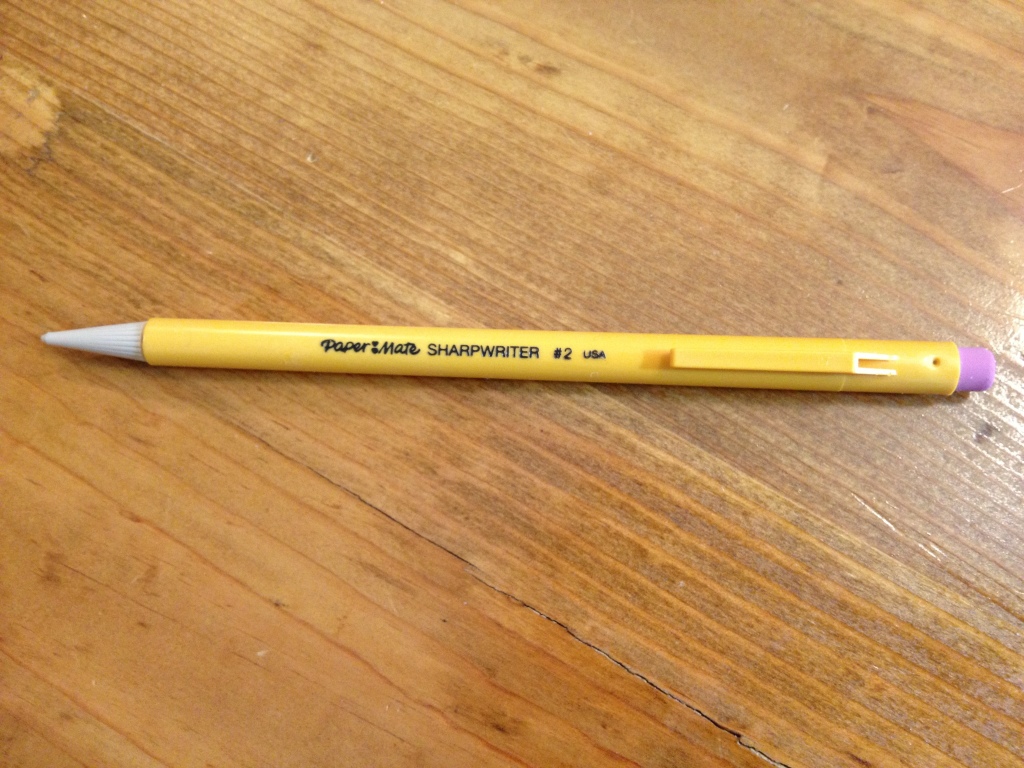
Starting at the back, it’s got a small, pink eraser that does indeed erase (quite well, actually,) but, like most erasers at the back of pencils, it won’t last very long. Moving down from that, we have a basically straight and plain body, with a terrible “clip” near the eraser (it doesn’t actually clip on most things the thickness of shirt pockets). The basic information about the pencil is physically molded in the side, with no other features on the barrel. It looks slightly slippery but does grip with no problems.

20150503-225632.jpg

At the front of the pencil is the lead-advancing mechanism, which one must twist both to extend and retract the lead. This is inconvenient, but not more so than a top click. This twist mechanism is flimsy and easy to break if one goes too far, but not too noticeable when writing. The lead is technically refillable, but the pencil is almost treated as disposable, so it isn’t worth it.  The lead that comes with the pencil is fine: it’s a #2 and it works fine for most purposes, even erasing well with the eraser. There is also a “shock absorber” in the pencil (I believe it isn’t a special thing but inherent in the design) and it works!  You can press down quite hard and the lead will simply retract a few mm instead of breaking, but writing like this would be fatiguing and still cause the lead to break, since the spring is only absorbing force in one direction.

Is it a great pencil? No. Is it a bad pencil that will explode when you take it out? No. It works.  It’s a bit finicky at times, and I feel like I could break it with my bare hands and minimal effort, but under normal use conditions this isn’t a problem. The clip is the worst part, and if you need a good one I’d steer clear of the Sharpwriter. If you’re looking for the one pencil to have forever this is also far removed. But it is quite versatile and quite inexpensive. (Adam Savage of Mythbusters likes them: https://youtu.be/uN6vptYpo5I?t=2m15s) And if you lose pencils often, or are getting them for an office, I’d at least consider it.


Review – Uni Kuru Toga Roulette

I’ve previously looked at one of the most liked (and according the to the Wirecutter the best) recent mechanical pencils, the UniBall Kuru Toga; I was under whelmed. Recently I was able to get a hold of the upgraded version, the Roulette. Is it worth the upgrade? Should you skip the regular model and get this one? Let’s take a look.

20150428-233220.jpg

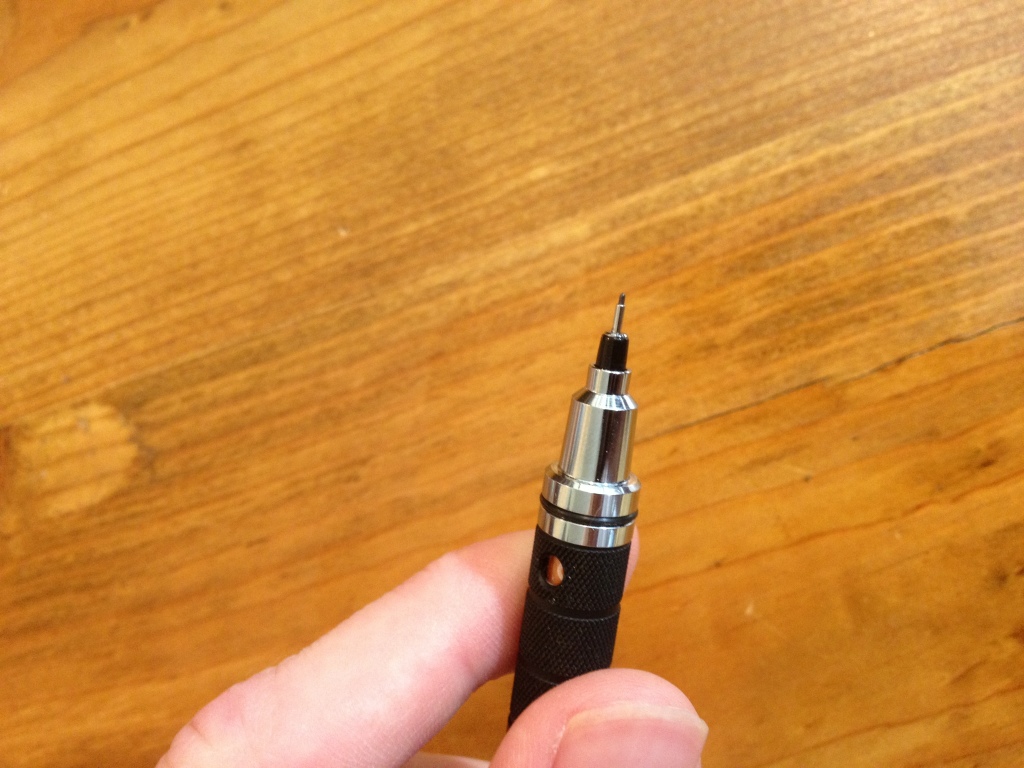
The back end of the pencil is a plastic and metal lead advancer; it works and doesn’t dig into the skin. There is a rubberized ring around it for reasons I don’t quite understand. Removing the advancer reveals a super tiny eraser that won’t last long but does indeed erase. Below that is a clip, which is fit onto the barrel in a way that would allow removal, but with difficulty. Japan is stamped into the side of the clip, and the name and size of the pencil is written on the barrel just beneath the clip. The barrel is plain until one gets to the section, which is metal and extended, the bottom half is knurled, but not aggressively so; it provides a good grip. There is a small hole in the grip that allows one to see the fact that the pencils mechanism is turning (but no the mechanism itself). Down from that is a tip very similar to the regular Kuru Toga, but extended is some ways. On this model this oddly designed step down cap is still not necessary, but covers up an otherwise ugly portion.

20150428-233226.jpg

Now on to the part everybody loves, the mechanism. I mentioned that I was under-whelmed by this previously, and I still am, but I know why now. The window in the grip section allowed me to see clearly when the mechanism was turning and when it wasn’t. And while it was possible to do this in the cheaper versions I was a bit harder to see. The mechanism itself by the way, as far as I can tell, is identical in both pencils, but there is no way to open them and find out exactly without possibly rendering them inoperable. But the answer to when the mechanism was turning when I was writing with the pencil was… never. I tested it, the mechanism works, it just never moves when “I” write with it. My writing, and drawing, are much too light to get it to rotate the lead, and thus I never see the affects. The packaging (for the inexpensive one, my roulette came in all Japanese packaging) says that the mechanism helps with the point of the pencil, and to prevent breakage. I really have never had a problem with either of these things, partly because I flail the pencil around compulsively when writing and drawing, and that rotates it such that my lead is always at a point. Now I guess I know that I write far too lightly to have a problem with breakage. But man, if I write lightly, some people must really press down on the things. So yes, it works flawlessly, but if you write like I do it isn’t really a selling point. And finally I wouldn’t worry about the mechanism wearing out, it is extremely well made and there have been no complaints about such a thing occurring, so if it does by that time you’d be able to just get a new one, it’s popularity means it likely isn’t going anywhere.

So, it is a good pencil? Yes. Is it worth the money for the upgraded version? Yes, even without the mechanism. The pencil is solid, well made, and solves the comfort issues I had with the less expensive version. The weight is good, the feel is good, the metal gives one a good grip and the writing is nice and fine. And if one does press hard enough to activate the mechanism I’ve heard nothing but good things. I wouldn’t take it over my Graphgear, but that’s just personal preference. I like the thinner body a little better on that one. So if you write with a lot of pressure, the Kuru Toga is the pencil for you, if you don’t you have other equally good options within the price range in my opinion. Even then it’s definitely worth a look.

Review – Poquitos Part 1 – Yafa Ballpoint and Pencil

Some things are better small, and the Yafa Poquito, being one of the first pens I got, proved that to me. It was exceptional for my small hands at the time. But how does the set compare now?

20150113-225904.jpg

The Yafa Poquito pens have metal bodies that come in various colors. The top of the pen is a bit of a rounded-off cone, and the top of the pencil has a small steel button. The clips are tight and almost identical, with the pen’s being pointed, and the pencil’s being round. The bodies of both utensils taper from the middle to each end, with the center band being separate in the pen and attached to the mechanism in the pencil. The metal tip of the pencil is also part of the mechanism, whereas in the pen it is part of the body. The bodies are quite solid, but the paint will wear off with time and a bit of use. Consider getting a silver or brass one to fix that if you mind.

20150113-225910.jpg

The pencil takes .7mm lead, and what it comes with it fairly standard, sometimes broken in transit. The mechanism is easy to use and quite sturdy. It would stand up to a bit of abuse. There is no play once the lead has been extruded, it doesn’t have “shocks” as it were, but the mechanism is separate from the pen body, and this creates a squeak now and then.

The pen is a smooth-writing fine cartridge. It is a ballpoint so there are occasional globs and hard starts. If left out for some time, the pen will be quite hard to start, but in this case a while is so long a time that one would expect it to. When it does flow, it is very smooth, and has almost no issues. It is not quite black, and waterproof, as most ballpoint blacks are.

The Poquitos pack quite a bit of punch for their size, being less than 4 inches long (and they still manage to fit relatively comfortably in the hand). And while they do have some flaws, they are far from from deal-breaking for having a pen or pencil there when you really need it. They serve best as backups and are miles ahead of small pens that don’t allow one to comfortably hold them or have very little ink. I’d say that in that category, Poquitos are at least worth a look.

Review – Uni-Ball Kuru Toga Mechanical Pencil

When talking about mechanical pencils, as with many things, it’s hard to get away from the idea that there must be some way to improve upon past designs, and that the standard design we use today has enough flaws in it that seem easily fixable that they should be promptly corrected. The Uni-Ball Kuru Toga is a mechanical pencil that is designed to fix one of the long-standing problems with pencils: unevenness of the tip due to use. Let’s see how it works out.

20141126-005210.jpg

The body of the Kuru Toga is quite simple. The barrel is almost entirely featureless until getting close to the point, where there are a few ridges for “grip”, and then a small metal step-down to the lead point. Interestingly enough, unlike most mechanical pencils, this metal step-down is not integral to the design and the pencil will function fine without it. At the top is a small click-advance system, with a transparent eraser cover that is the accent color. The eraser is small, but works quite well, and most packs come with a few replacements. The cover makes a satisfying clicking noise as it moves into place. The clip has all the info you’ll get about the pencil, which is just enough, though not very much. The clip itself is functional, but not the best. The barrel is semi-transparent with a logo, giving the pencil overall a very interesting look.

20141126-005215.jpg

The lead is HB, and, according to the package, diamond-infused. It is harder than most other HB’s I’ve used, and I haven’t had a lead break on me yet, though that’s more because of the lead advance, which tends to give less instead of more, meaning I have less lead available to break. Overall, the lead is smooth enough and doesn’t write very bold or dark. The real feature of this pencil is the turning point, which acts with the pressure of writing and supposedly turns the lead to prevent breakage and to create a more even tip. I’m not sure if it works, or even if it is working, as I’ve never felt it when using the pencil, but I have also never had the lead break, so there’s that. I wouldn’t say it improves the writing experience by creating a sharper point, but it certainly doesn’t make it worse. Perhaps this feature for me is unnoticed since I naturally rotate the pencil around in my hand willy-nilly. That’s just how I write.

So overall, how well does this pencil do? Pretty good, I guess. I’m not a fan of the overall design, and the lack of any grip on the smooth plastic can make it hard to hold. Like I said, I can’t even tell if the feature is working, but I’ll go ahead and say that, at least through a combination of factors that went into the design of the pencil and lead, it is much less prone to breakage than other models. So if you have a problem with breaking your leads, I’d certainly have a look, but if you value the comfort in hand more than the lead quality, I might look elsewhere.


Review – Papermate Mirado Black Warrior

There are a lot of pencils out there, and it seems there are even more cheap pencils (that isn’t possible, I realize, but it made sense when I was typing it). How good can some of these pencils be? Today I’ll be taking a look at the Paper:mate Mirado Black Warrior Pencil.

20141105-010555.jpg

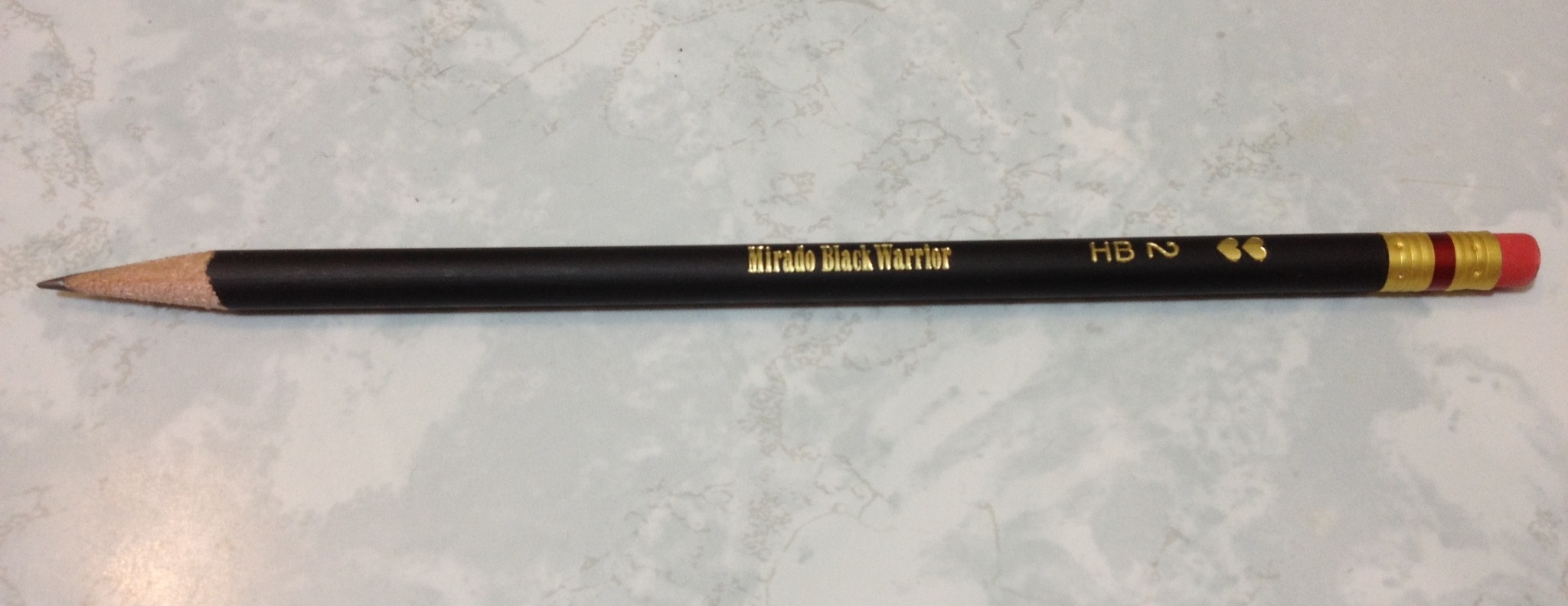
The pencil body is simple and round, which is surprisingly not a standard pencil shape. I always had round pencils at school (a set of leftovers from my father), and people always liked the way they felt when I loaned them out (which is why I lost so many). The shape is quite comfortable, and just that little bit better than a hexagonal pencil. The set of pencils that I received have a satiny finish that make them fairly grippy even with sweaty hands (from what I understand, they used to be more shiny and slippery). The rest of the body is a plain black with “Mirado Black Warrior” in gold on it in a poorly chosen font, as well as HB 2 and the Papermate logo, the hearts of which take away from the “warrior”-ness.

20141105-010601.jpg

The back of the pencil has a standard pink eraser, which does its job and hasn’t dried out in the time I’ve had it. I’d guess it isn’t the best quality and if you always want to erase what you wrote I’d recommend getting a dedicated eraser, but these work fine for most of us. The lead is HB, but feels much softer than most HBs I’ve used. Perhaps that is just me, but I’d say it is at least a little softer and it covers smoothly and well. A good pencil for filling in scantrons or shadows. Because it is so soft it is not too great at holding a point, though.
Is it a good pencil? Definitely, and for the money it’s really just a matter of preference.

There are loads of good pencils in this price range, so if one that is round (make sure your desk isn’t slanted) and has a slightly softer lead sounds good to you; or maybe you just like the “stealth” idea of an all-black pencil, this one is at least worth looking at. And like I said, for the price almost anyone could afford to pick up a box to compare to any other pencil they happen to be using.