Review – Poquitos Part 2 – Monteverde Ballpoint/Stylus and Fountain Pen

I had the regular Yafa brand Poquitos for quite some time before ever even hearing about the brand Monteverde, which is one of the many brands of “inexpensive” luxury pens that Yafa owns. Monteverde mainly has their own line of pens that could be completely separated from Yafa, but recently I discovered Monteverde was releasing a set of pens under the same name and similarly styled to the Yafa Poquito. This, of course, confused me, until I found out the companies’ relationship. The two Monteverde Poquitos have both similarities and differences when compared to the regular Yafa versions. Let’s take a look.

20150121-234835.jpg

First up is the fountain pen, which is styled very similarly to the original Poquito, but because it is a fountain pen, it is slightly larger, a little longer, and about twice as thick. The tip of the cap has the same “stylus” as on the smaller pens, and the clip is almost identical. The pen is also made of brass, but seems to be painted better, and Poquito is written right on the cap.

Being a fountain pen, it accepts cartridges (of the standard international variety), but there are no converters designed for it. Some small converters can be finagled into working, but none are advertised as doing so. The nib (which is only available in medium) and feed are relatively dry, but that is the case with many pens with similar nib and feed types (plastic, iridium point, German made) and many inks are designed to work well with this type of pen. The section is stainless steel (I think) and gets slick upon prolonged use. And the pen is too short to hold comfortably without posting. But the pen is still super small, and is absolutely ideal for taking quick notes provided one finds an ink that works well with it.

20150121-234842.jpg

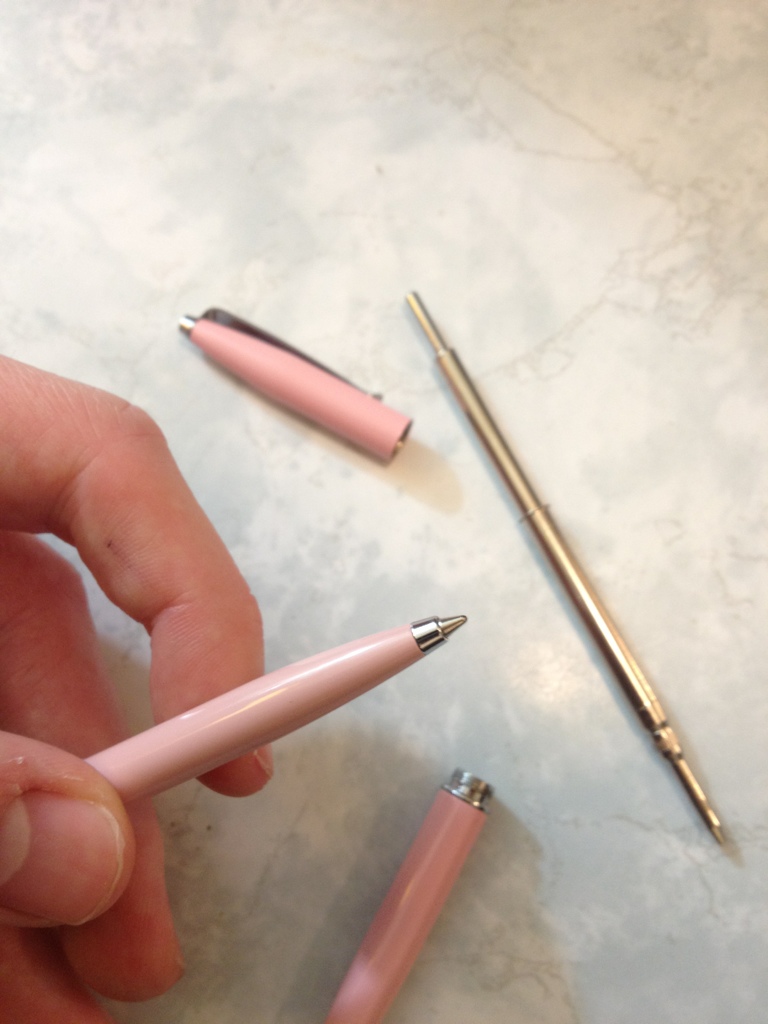
In addition to their release of the fountain pen, Monteverde also released a new version of the regular ballpoint Poquito, called the Poquito Stylus (and funnily enough, they also released the Poquito Stylus XL which is almost the size of the Largo). The pen has the same writing and mechanism end as the Yafa Poquito (which is the only part that the Poquitos share). But on the other end, a touch-screen stylus of average size replaces the old hard “stylus” point, which was really useless. This new stylus works quite well, though it can be a bit broad at times. The clip design has also changed. It works just as well, and looks a little nicer, in my opinion, but is more likely to damage the item it is clipped onto. The ballpoint itself is identical to the older pen, with refills being the same.

Overall, the Monteverde versions of the Poquito pens are quite small, and quite functional. They haven’t really fixed any of the problems with the standard Yafa versions, but the added benefits of a fountain pen and stylus (for the people that like to use them) are great. All of the Poquitos are hardy little pens that serve well, and can go almost anywhere. The Monteverde versions just add a little more style and a little more usage variation.

 

Review – Poquitos Part 1 – Yafa Ballpoint and Pencil

Some things are better small, and the Yafa Poquito, being one of the first pens I got, proved that to me. It was exceptional for my small hands at the time. But how does the set compare now?

20150113-225904.jpg

The Yafa Poquito pens have metal bodies that come in various colors. The top of the pen is a bit of a rounded-off cone, and the top of the pencil has a small steel button. The clips are tight and almost identical, with the pen’s being pointed, and the pencil’s being round. The bodies of both utensils taper from the middle to each end, with the center band being separate in the pen and attached to the mechanism in the pencil. The metal tip of the pencil is also part of the mechanism, whereas in the pen it is part of the body. The bodies are quite solid, but the paint will wear off with time and a bit of use. Consider getting a silver or brass one to fix that if you mind.

20150113-225910.jpg

The pencil takes .7mm lead, and what it comes with it fairly standard, sometimes broken in transit. The mechanism is easy to use and quite sturdy. It would stand up to a bit of abuse. There is no play once the lead has been extruded, it doesn’t have “shocks” as it were, but the mechanism is separate from the pen body, and this creates a squeak now and then.

The pen is a smooth-writing fine cartridge. It is a ballpoint so there are occasional globs and hard starts. If left out for some time, the pen will be quite hard to start, but in this case a while is so long a time that one would expect it to. When it does flow, it is very smooth, and has almost no issues. It is not quite black, and waterproof, as most ballpoint blacks are.

The Poquitos pack quite a bit of punch for their size, being less than 4 inches long (and they still manage to fit relatively comfortably in the hand). And while they do have some flaws, they are far from from deal-breaking for having a pen or pencil there when you really need it. They serve best as backups and are miles ahead of small pens that don’t allow one to comfortably hold them or have very little ink. I’d say that in that category, Poquitos are at least worth a look.

Review – Scotch Plastic Tape

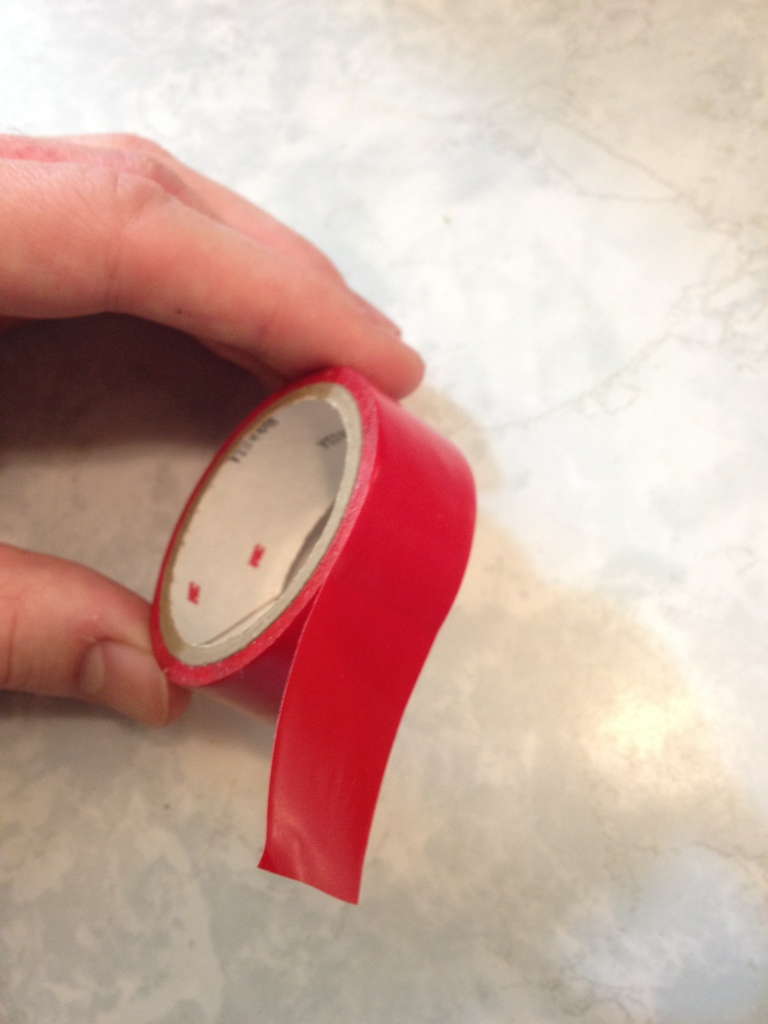
Sometimes you don’t want clear tape, whether it’s to obscure, or to label by color, or the transparency just doesn’t matter to you. Scotch has also got you covered in that area with its plastic tapes, so called because they are made out of plastic. The roll I have happens to be red, but they come in all sorts of colors.

20150106-225631.jpg

Really this can just be rated by its stickiness, and as such this review will be short. It is suitably sticky, if you have something that needs to be stuck temporarily or is quite light it will get the job done. It is as strong, but less adhesive than, the average electrical tape, though it’s possible it could serve that purpose. What it’s really great for is labeling things. It sticks quite nicely by itself and can be used as a color code or is easily written on with most writing utensils, though it could smear easily. When it comes off it leaves little to no residue, and can potentially be reused, though only a few times.

20150106-225637.jpg

It’s a good tape, not a life-depending tape. It does the job of the regular transparent tapes while being less see-through and easier to pull off.

Review – Bic Cristal Bold

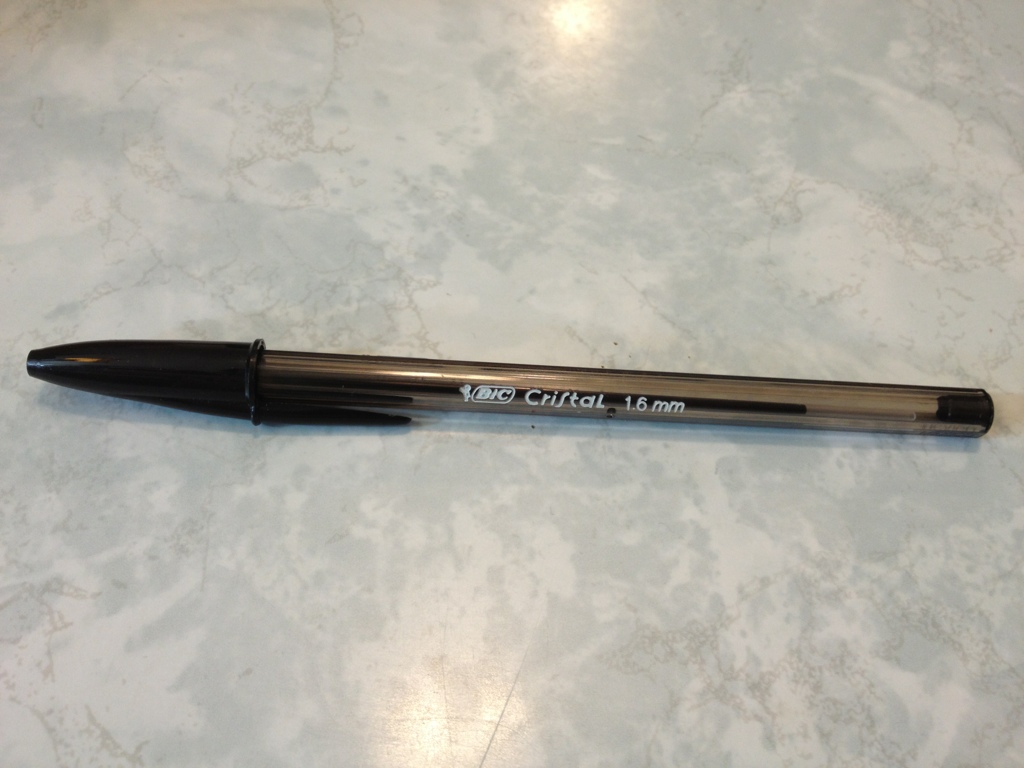
Bic makes a lot of pens, and the Cristal is one that everyone knows about. It’s a staple of the modern world: an admittedly cheap pen that can be, and is, used by everyone. But most of the time you find the medium version (or a fine if you’re either lucky or unlucky). And those have many of the problems we associate with ballpoints. And when one is running a business or doing art, sometimes it’s more important that the pen write on the first try, and write smoothly, than have a thin line. That’s where the Bic Cristal Bold 1.6mm pen that we’re looking at today comes in.

20141230-230245.jpg

The body is a simple as can be: a translucent piece of hexagonal plastic with key info on the side. The base of the ball point is plastic, while the tip itself is metal. The cap is a single piece with an integrated clip that works, but isn’t the best. The cap’s only real function is to prevent the pen from marking things when set down.

20141230-230252.jpg

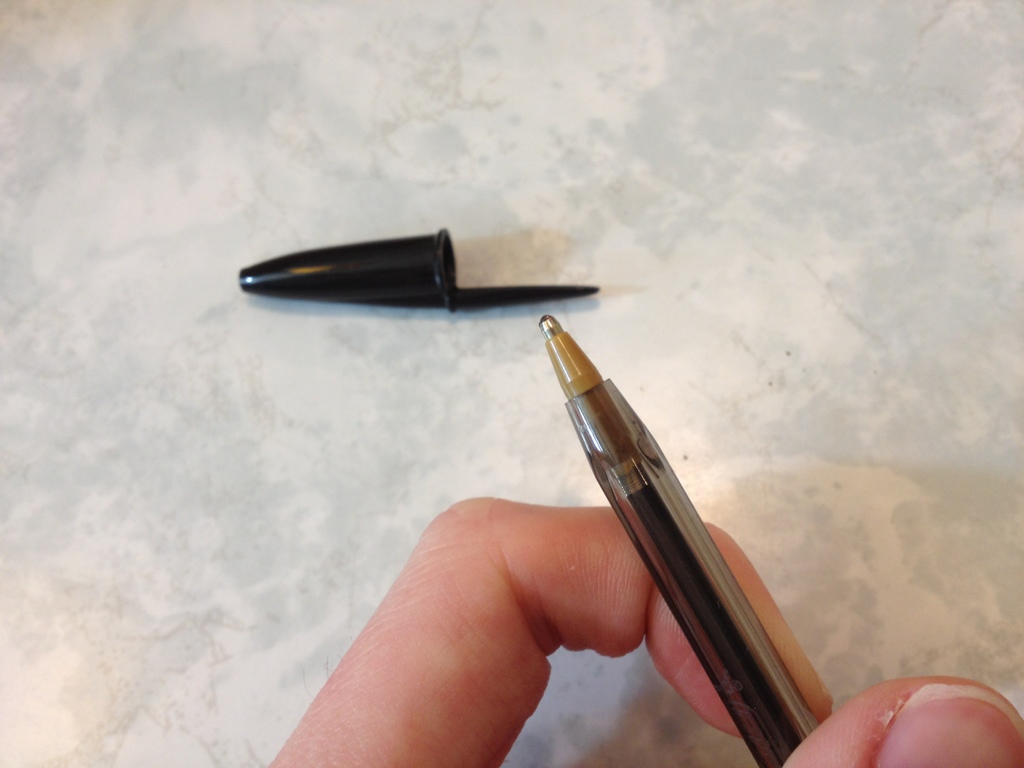
But the real thing here is the tip, which is much wider than usual Bic ballpoint tips. Bic says that it is an “easy glide” pen. And I’d agree that that is the case. The ink is super smooth, and requires very little pressure once it gets going. After pushing down for a little bit, the pen, in my experience, will be writing perfectly a quarter of the way into the first letter, so not perfect startup, but good for a ball pen. After that it’s smooth enough to write cursive easily. There are a few points where the ink breaks up, and those are unsightly, but with a little hand control they can be covered up nicely. Like most ballpoints it’s suitably waterproof. And while the pen and packaging say it’s 1.6mm, Id’ be much more tempted to say it’s simply 1mm.

Really, it’s a great little pen, and not very expensive. If you’re looking for a cheap way to get a smoother (and partially less globby) writing experience, I’d say this is the direction to go first. They don’t match liquid ink pens of any type, but they certainly do work quite well and are convenient, having replaced most of my other ballpoints right now.

Review – Pilot BP-S Medium

For quite some time, pen companies have been trying to come out with the “superior” ink. And many succeed in varying ways. Every ink has its benefits and faults. The Pilot BP-S (which I can only assume stands for “better pen” as it uses the “better” refill) claims to have a “revolutionary” ink (perhaps when it was first made) that is very smooth and writes the first time. But all my quotation marks just make me a skeptic. Let’s look at the pen.

20141224-010739.jpg

The body of the pen looks like a hyped-up Bic Cristal. It’s got a similar hexagonal shape, with a black end cap that screws off for easy refilling (with the Pilot better refills). The body is clear with a minor amount of information physically molded into it. It’s enough to tell you what you’re using. The grip is series of tiny ridges that lead all the way to the metal cone tip, and are surprisingly grippy compared to the rest of the pen. The refill in this model is medium, and it comes out a ways beyond the cone. The cap is nothing to write home about, though it does have a flat surface for easy removal, which is nice.

20141224-010745.jpg

On to the writing. I can tell you for a fact that no pen that isn’t liquid ink will write the first time every time, but this one comes close. It does take some pressure to start, usually, and a more constant pressure to continue writing than a regular ballpoint, but the overall experience is smoother. With the right amount of pressure, the ink comes out in a consistent line, and with a little let up, a serviceable one with a few gaps. Neither of these options are more strain on the hand than a regular ballpoint. The ink is black, most of the time. Sometimes it’s more of a cool dark grey. And that’s fine for any office setting, though not really for art. It is also smudge-resistant and water-resistant, like most ballpoints, so it will survive a spill as long as the paper does.

Overall it’s a good pen. Perhaps it was better comparatively when it was first introduced. It is nothing terribly special, but it is superior to standard ballpoint offerings from most major companies. Again, just slightly. If a ballpoint is the perfect writing or art utensil for you, but it just isn’t quite smooth enough, these are probably worth a look. They certainly don’t cross over into the realm of feeling or acting like another type of pen, which unfortunately tends to happen with these “smooth” inks.

Review – Zig Millennium 005 Technical Pen

There are a lot of technical pens out there, and I’ve only looked at a few. Today I’m going to try and remedy that a little bit by doing a review of the Zig Millennium technical pen, specifically the black 005 version.

20141216-235803.jpg

The pen body is a bit odd. The bottom is a small, rounded piece of plastic. The barrel is silver and covered in writing. All necessary information is printed in several languages. The cap is nothing really special either: the top is flat with the tip size on what looks like a black plastic cutaway; the clip is simple, with a rounded end similar to a Pilot Precise or Uni-ball Vision. Interestingly enough, it says to keep the pen horizontal, but gives one a pocket clip. It’s the section of the pen that’s strange: it’s very small and nubby, it rounds off quite quickly and the ridges used to keep the cap in place are quite noticeable. It terminates rather abruptly into a metal end that leads to the tip. I’m not sure if one is supposed to hold the slightly uncomfortable section when writing or move back on the pen and place the fingers over the written portions of the pen, which I can feel the ink is raised up on, and will likely rub off quickly.

20141216-235811.jpg

On to the tip. It produces a very thin line, around the same width, but perhaps a bit wider than other brands of the same size, though that may just be the paper being used. The ink is archival quality (haven’t tested) and waterproof (have tested, is quite!) though that is to be expected from a pigmented ink. The black is quite black, and a cool black, which is nice, as many blacks tend to be warm. Writing is smooth and there are no skips or bumps with a good tip, though it will wear out after some time.

Overall it’s a good little pen, and quite comparable to the other technical pens in terms of both quality and price. I can’t speak for whether or not the rest of the line is wider than its counterparts from other brands, but that might be something to consider when purchasing. Otherwise, I’d say it’s almost entirely an æsthetic and comfort choice for the user.

Review – Pentel Handy-Line S Permanent Marker

I personally don’t have much use for permanent markers, but quite a few people do, especially for the “fine” tipped ones like Sharpies. But regular permanent markers are kinda boring. Today I won’t be looking at one of those, but at a more interesting Pentel Handy Line S.

20141210-000538.jpg

The pen body is kinda ugly. It’s a very straight-cut tube in black, with lots of logos and text on it (though I have seen worse text on many items). The overall design is boxy. Up near the top is a very positive clicking mechanism that feels quite robust. The click it gives off is super satisfying, as well. The clip is nothing really special. It is a bit sharp and might tear cloth, but it won’t break. Interestingly enough, there is a mechanism underneath the clip that will disengage the clicking mechanism when the clip is moved away from the barrel, meaning that if you do put it in a pocket it will automatically retract, which would hopefully save one from some of the mess that would cause. The rest of the barrel is straight and black, with some writing. There is a slight curve before the retractable point, which has a nice cover that blends in with the pen to keep the marker tip from drying out.

20141210-000547.jpg

The writing is quite black: I’d say slightly warm but not to noticeably so. The pen is a bit dry when it is just beginning to write, but that is quickly worked through. I will admit that I haven’t given it the most rigorous testing possible, but the ink is suitably permanent. It doesn’t smear or feather when exposed to water, and writes on many different surfaces. The ink also has a very peculiar smell that is like no other marker I’ve used, though I probably shouldn’t sniff it regularly. The body of the pen says it’s refillable as well, though I can’t for the life of me figure out how that would work, but it’s cheap enough to replace.

Overall, for a retractable permanent marker, I’d say this one hits the nail on the head. It works well in all places and has no glaring flaws. It isn’t that expensive and can be used for all sorts of things. Whether or not the features make it worth tracking one down is up to you.

Review – Up&Up Double-Sided Tape

Well, you can call me out of ideas again (but not Shirley). I’m going to be looking at tape. This time it’s the type of tape you never realize how much you need until you get some, and that’s double-sided tape. Specifically, from the brand Up&Up.

20141203-000355.jpg

The container is nothing special, it’s thin and plastic-y, but still flexible. The teeth are solid, and do a good job of cutting the tape. Everything is cheap but everything works on it. The tape can also be taken out and used in a different dispenser, though it is slightly thinner than regular Scotch tape and one must be careful to have it not stick to the inside of the dispenser.

The tape itself is good. The sides both stick strongly, and equally so. The tape itself is stronger than the adhesive, so it will come off before breaking. It is fairly pliable but it loses its adherence fast, so nothing that moves a lot, or will be handled, will be stuck for very long with the stuff. But really it’s for posters and scrapbooking, and for that it works superbly. It is quite transparent, but that only really matters if the things you’ll be sticking on both sides are transparent as well.

In the end, it’s good tape. It might be slightly below Scotch tape (in my opinion), but really not enough to tell. For any of its main uses it will serve well, and double-stick tape is really useful.

Review – Uni-Ball Kuru Toga Mechanical Pencil

When talking about mechanical pencils, as with many things, it’s hard to get away from the idea that there must be some way to improve upon past designs, and that the standard design we use today has enough flaws in it that seem easily fixable that they should be promptly corrected. The Uni-Ball Kuru Toga is a mechanical pencil that is designed to fix one of the long-standing problems with pencils: unevenness of the tip due to use. Let’s see how it works out.

20141126-005210.jpg

The body of the Kuru Toga is quite simple. The barrel is almost entirely featureless until getting close to the point, where there are a few ridges for “grip”, and then a small metal step-down to the lead point. Interestingly enough, unlike most mechanical pencils, this metal step-down is not integral to the design and the pencil will function fine without it. At the top is a small click-advance system, with a transparent eraser cover that is the accent color. The eraser is small, but works quite well, and most packs come with a few replacements. The cover makes a satisfying clicking noise as it moves into place. The clip has all the info you’ll get about the pencil, which is just enough, though not very much. The clip itself is functional, but not the best. The barrel is semi-transparent with a logo, giving the pencil overall a very interesting look.

20141126-005215.jpg

The lead is HB, and, according to the package, diamond-infused. It is harder than most other HB’s I’ve used, and I haven’t had a lead break on me yet, though that’s more because of the lead advance, which tends to give less instead of more, meaning I have less lead available to break. Overall, the lead is smooth enough and doesn’t write very bold or dark. The real feature of this pencil is the turning point, which acts with the pressure of writing and supposedly turns the lead to prevent breakage and to create a more even tip. I’m not sure if it works, or even if it is working, as I’ve never felt it when using the pencil, but I have also never had the lead break, so there’s that. I wouldn’t say it improves the writing experience by creating a sharper point, but it certainly doesn’t make it worse. Perhaps this feature for me is unnoticed since I naturally rotate the pencil around in my hand willy-nilly. That’s just how I write.

So overall, how well does this pencil do? Pretty good, I guess. I’m not a fan of the overall design, and the lack of any grip on the smooth plastic can make it hard to hold. Like I said, I can’t even tell if the feature is working, but I’ll go ahead and say that, at least through a combination of factors that went into the design of the pencil and lead, it is much less prone to breakage than other models. So if you have a problem with breaking your leads, I’d certainly have a look, but if you value the comfort in hand more than the lead quality, I might look elsewhere.


Review – Pilot Precise Colors, Green and Purple

I’ve taken a look at the Pilot Precise V5 pens before, and they’re pretty good pens in the standard compliment of black, red, and blue colors. But they also have a few other colors available, and in this little review I’ll take a look at the purple and green offerings.

Pilot precise green and purple

First the purple, which is much darker and a much truer purple than most, which are more a fuchsia. The color is deep, but not deep enough to be washed out. It could still conceivably be used in an office setting, but might be pushing it. And while there are rarely truer purples, it doesn’t have a very natural look to it. Perhaps it exists in some deeps shades of flowers, but otherwise it is far too dark. Startup with this color is easy, and while it does fade with water, it is still readable.

And second, the green, which again is much darker and much truer than other greens. It is unmistakably green, but darker than what one would usually think of green as being. It doesn’t get close to a forest or hunter, but certainly is far from a light or lime. I couldn’t think of any office uses, unless you’re a teacher who doesn’t want to use red. It is just light enough to stand out and not look professional. In art, though, it is a wonderfully natural color, and it shades a little bit for interesting effects. It has a bit of a startup problem (or a drying out problem) and is the less water-resistant of the two, but it is still adequate.

Is it worth moving over to Pilot Precise pens just to get these colors? Unlikely, but they are great colors that add to an already nice lineup. I enjoy them, and very similar colors are hard to find in disposable rollerballs or gel pens. They might be worth a look.