Review – Staedtler AllXwrite

I’ve looked at a few all-graphite pencils in the past, but they were only sold in art supply stores and were thicker than the average pencil. The Staedlter AllXwrite is a #2 all-graphite pencil that is much more widely available. How does it hold up?

photo-80

The body of the pencil is unsurprisingly plain. It’s a standard hexagonal pencil design, all grey with silver lettering. The information printed on it is enough to get by. At the end of the pencil there is a standard metal eraser holder, and a fairly standard white eraser that works well.

photo-79

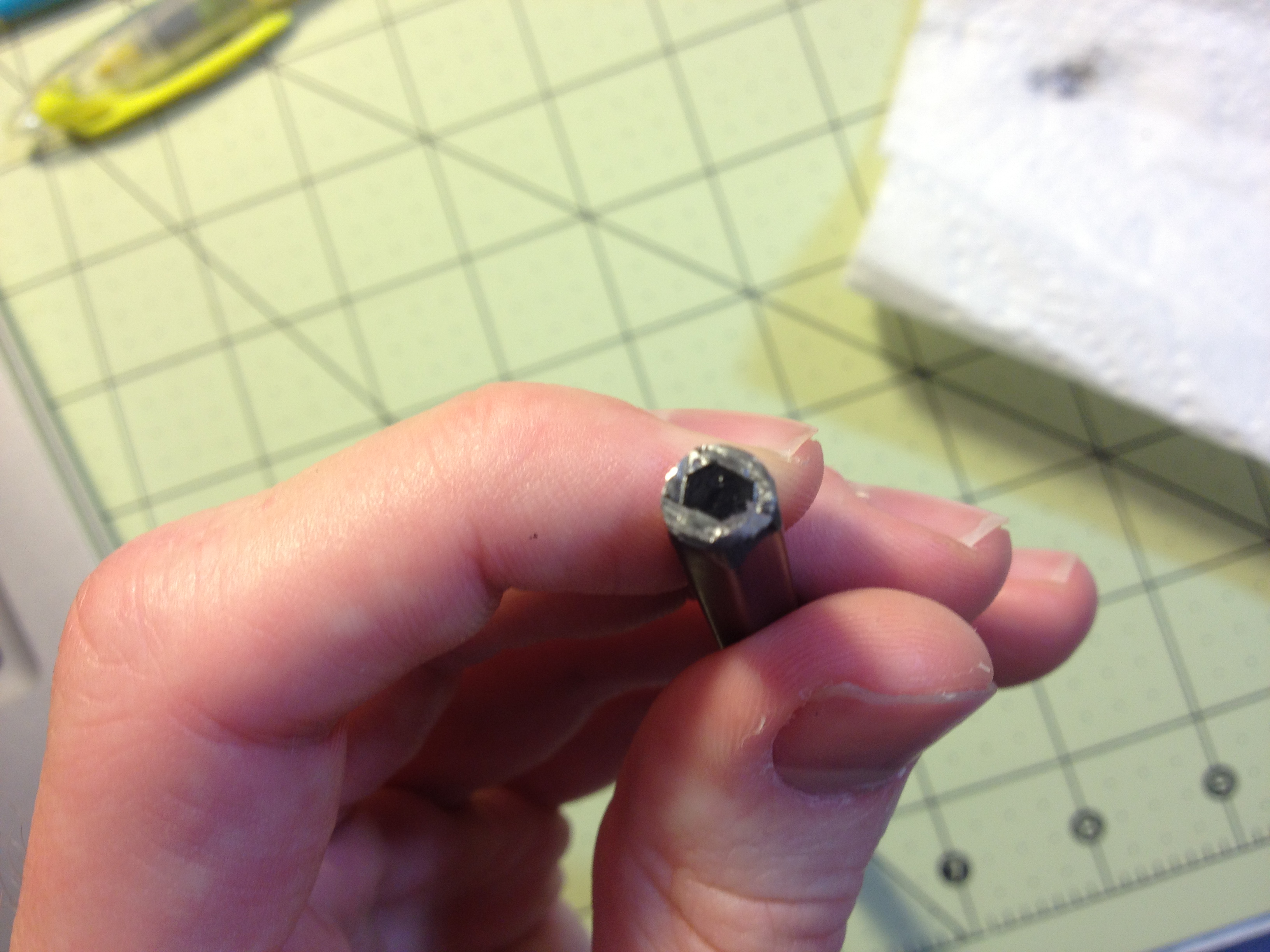
The graphite is quite hard, but still writes with the same pressure as a normal pencil. There is a coating on the outside to prevent major marks, but it is still possible to mark with it. Sharpening is easy, but wasteful, and if one adjusts their writing or drawing in such a way as to re-sharpen the pencil as they write with it, it requires none and will last for a very long time, far outstripping the eraser. Other than that, it’s a standard HB, suitable for taking tests or notes, and making lists and art.

photo-84

I like this pencil a lot. They’ll last forever and write well. I’ve flattened the ends of one of mine to make it easier to shade large areas. This, coupled with a few others at varying degrees of flatness leads to a ton of artistic options. While these pencils are a bit more fragile than wooden ones, I think that with normal use they will hold up just fine for someone interested in getting a long-lasting or quirky writing implement.

Review – Liquid Accent Highlighter

Highlighters are a useful tool, mainly for their intended purpose of highlighting text. But they can also be used to “sketch” drawings before inking them and not be picked up by a scanner (similar to drawing with a blue {non-photo} pencil). Still, many highlighters are the same, and I hesitate to review them, but let’s take a quick look at the Liquid Accent highlighter that is my main choice for this type of product.

photo-82

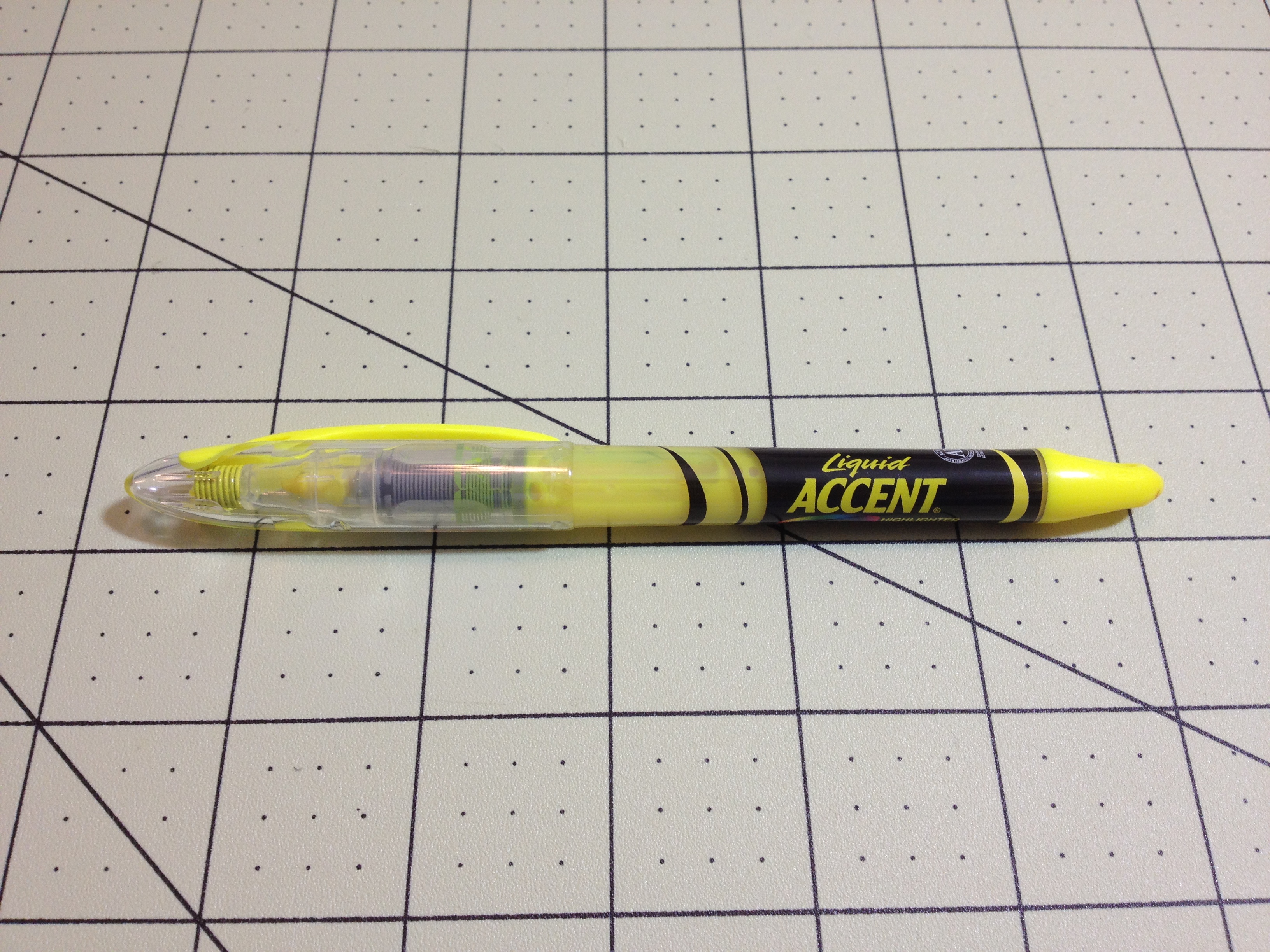
The design of the body is fairly standard for this type of stuff. The cap is a smooth, domed shape with a “futuristic” clip based in and protruding from it. This snaps onto a barrel that is again one sloping shape, with a “lanyard” hole at the end (I assume that’s what it is). The body is transparent, so the ink supply and feed can be seen from the outside. The section is almost slippery, but not quite, and the chisel tip of the marker is quite hard and works well. The information printed on is the bare minimum, and I wish there was a bit more (like manufacturer’s name) to identify it.

photo-81

There isn’t much to say about how it writes: it’s smooth, it’s bold, and isn’t too wet (it doesn’t bleed). The ink stays where you put it, generally. I haven’t tested it in the sun, but it does smear a little bit under water, and it also smears any of the less permanent or non-dried inks it highlights.

It’s a good highlighter, but it’s hard to have a bad one. It highlights stuff, it holds well, and it has a ton of ink. (I’m having trouble finding my exact brand online, there are highlighters that seem very similar produced by Sharpie and Paper:Mate {Both owned by Sanford, which is owned by Rubbermaid}, but if it’s a cheap one when it is found, that’s another plus) I don’t really have much to recommend it over any other highlighter, but if you do find it, it’s not a dud.

Review – Flex By Filofax Pocket

This review has been a long time coming. I first picked up the Flex by FiloFax pocket book a year ago from a surplus store as they were being discontinued in America (though I can find them on Amazon again now). I’ve never really been the organizer type and I didn’t know what I would use the item for, but it was cheap, and black goes with anything so I picked it up. How could I resist another notebook?

photo-59

So I have settled on a use for it, and it goes with me (almost) every day as my wallet (second wallet: my first one isn’t large enough to carry much cash and business cards as it’s attached to my phone). So this will be a review of the product as a wallet, and not the myriad of other things it could be used for.
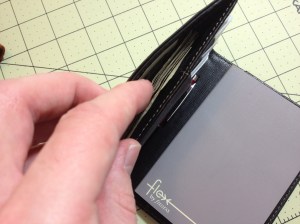
photo-58

The book comes with two notebooks that I’ll cover first. One is a small, journal-type book, and the other is a tear-able (not a pun) pad. Both are good quality paper that’s fairly smooth, and can stand up to some fountain pens even, but they’re a bit stiff. They fit snugly into the slots on the cover and never seem too intrusive or fattening. Replacement books and other styles can be bought individually, and they are still good even if not protected in the cover.
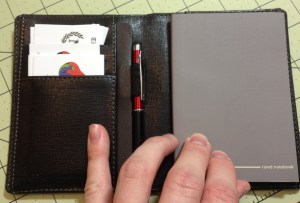
photo-57

The cover has a leatherette feel to it (I don’t know the material) but it’s pretty strong and the spine is designed to be flexible so it doesn’t look bad or get destroyed by being opened and closed a lot. On the outside there’s nothing but stitching and a subdued logo, which I like. On the inside there are two panels, each has an inside-facing, and outside-facing pocket that are about business card size and can hold the notebook covers. One panel then has three card slots for business/credit cards or the pad, and the other side has only one slot for either the pad or any other item that FiloFax made to be put in there (I suppose cards would work there too, but there is only one slot). Finally, it comes with a thin piece of cardboard with a pen loop attached that can be inserted into the back pockets, allowing for one to easily take their pen with them.
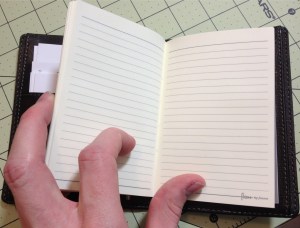
photo-60

I personally have: business cards, cash, a small pen (Monteverde Poquito stylus), and all of the included items stored inside. The cover has held up well, with no signs of wear yet, and while I rarely use the books because I have so many other ones (and I’m not a fan of jot-pads) they do come in handy and can take inks that many cheaper papers can’t. I’ve had no problems with the spine or the pockets, and the stitching is still all there. I wish it was a little more customizable, but I wish that about everything.

The Flex is a quality product, as a wallet, organizer, or notebook. It is very customizable and very hardy. If one’s needs change, the Flex can change with them, and it seems to be built well enough to last through those changes. I really like it, and wish it was more widely available here (it might be now: I need to check up on it). It is on the bulky side, so it’s not for the minimalist, and more customizable options would be nice. But unless I see something great I’m not on the hunt for another wallet.
Review – Expo Ultra Fine Pink, Purple, Orange, and Brown

I’ve looked at the 4 most common Expo marker colors (specifically in the Ultra-Fine tip) in the last few weeks, and this week I’ll look at 4 of the lesser-seen colors: pink, purple, orange, and brown.

photo-52

Pink- to start with, the pink is a nice, dark pink that looks much more pleasant than the common pinks found in writing utensils. It’s rosy, and very consistent; the line width is medium, though.

Purple- next, the purple is a very bold writer, it goes on smoothly and with a lot of ink, but there is more variance in the color when dry. It is a nice, dark purple, and unmistakably so. It might be confused with black from far away, but is generally distinguishable.

Orange- the orange is very thin, both in line and in color. It’s sometimes hard to tell it’s there at all, and there is a wide color variance within it. I’m not a particularly big fan of it.

Brown- and finally the brown, which is another wide-writer. It writes smoothly, with the only color variance being in the tips. It’s a dark enough brown to be easily read, and still distinguishable from the other dark colors.

Overall, these 4 are a nice addition, though they aren’t my favorites, either in performance or in looks. I like them, but if I were just getting these for a class I would skip them. For organization, note-taking, and art, these colors have a better purpose, but those aren’t the main purpose of dry-erase markers.

Review – Expo Ultra Fine Red, Green, and Blue

Last week I looked at the Ultra-Fine Expo markers as a whole, and the black color specifically. This week I’ll look at the more common colors in most dry-erase ranges in this size and brand, and see how they work.

photo-52

Red- The color red is a problem with many pens, and dry-erase markers are no exception. The red goes on smoothly enough, and is one of the thinner “sticking” inks. The lines it makes are solid, but the shading and their thin-ness is more pronounced. The color is also quite washed out and pink, which I’m not really a fan of, but seems to be a theme in reds.

Green- The green is one of the thicker and smoother colors. The lines are bold and solid. But the color, while pleasant, is also washed out. While it is definitely in the green spectrum, it’s more of a sea-green or something similar.

Blue- And finally the blue. In writing characteristics, it’s more of a mixture between the other two. The lines aren’t as bold or thick, and it’s not quite as smooth as green, but more so than red. The color is the most true and least shading of the bunch. It goes well with the black, and is easy to read even from far away, though it isn’t too dark.

The first set of colors is standard, and while lackluster, they get the job done. I can’t really complain as they weren’t created with art in mind, but rather for ease of use and low odor, which they have. Next week I’ll take a look at some of the less-standard colors available in the lineup.

Review – Expo Ultra-Fine Point Dry-Erase Markers

When it comes to dry erase markers, Expo is almost the only brand people recognize out there. Their chisel-tip markers are almost ubiquitous in any place that requires a white board, and are generally what people replace the cheap in-package markers from home magnetic boards with. And while I like the markers and always have, I do have a problem with their tip size. Even the fine point markers are large enough to be hard to use for people who like to write fine lines, like I do. Fortunately, there are slightly-less-popular, but still easily available Expo markers with an “ultra-fine” tip. Are they much better?

photo-51

The body design is almost identical to the fine tip versions, with a slight taper from the middle to the ends. There is a step-down on the rear to allow for easy posting. There is also a step-down from where the cap is removed to the section. The cap and all of the writing on the pen is loosely in the color of the ink. The section can be a bit slippery, but it’s never a problem. It ends in a small cone with the point that is indeed very fine for a dry-erase marker. The information presented on the side is standard and useful enough.

photo-53

The tip is very fine when compared to a regular fine marker. It gets down to a medium/broad on a regular ball or fountain pen. The ink flows smoothly and erases easily, as one would expect from the Expo brand. The black is the standard Expo black, and does the job. It doesn’t start to wash out at this size and is perfectly readable.

photo-52

For anyone who needs to mark something with a bit of a finer point (like on a map), wants to write regularly on a dry-erase board, or for those who are artistically inclined and were frustrated when they couldn’t get the various line sizes they needed out of the more standard Expo markers, these work very well. They are of the same quality as the other markers in the line (which is to say as good or better than competitors) and offer a much smaller and more manageable line.

Comparison – Simply Tacky vs. Scotch Mounting Putty

When looking for some sticky tack to put that poster up on the wall without using push-pins, one usually looks for the Scotch brand. After all, they do know how to make things sticky. But one may also find Simply Tacky a (terribly named) product that does the same thing. Is it worth it to search for the right brand?

20150618-222538.jpg 20150618-222544.jpg

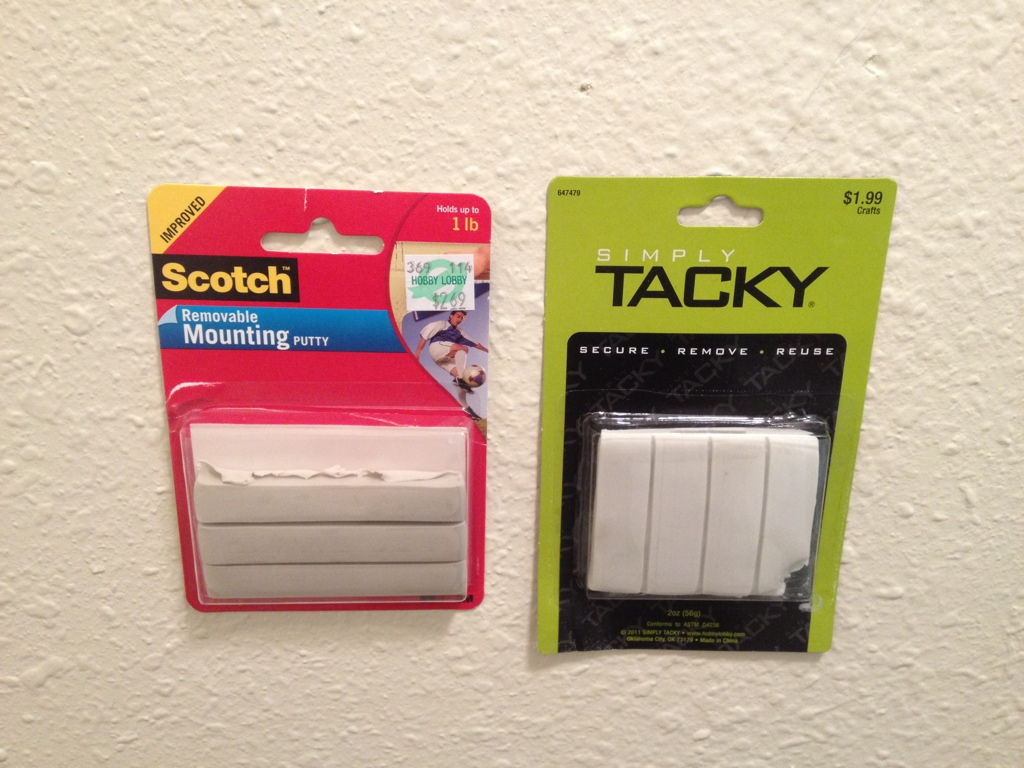
To start off with, both items come with very close to the same amount of product. The Scotch packaging is slightly smaller, and more packed with use information and diagrams. Both are cut into four similarly-sized bars. The Scotch is the only one with a weight limit (of 1lb). Both are quite white, and are easy to pull apart and shape to stick onto a surface. Both are very grippy, with the simply tacky being a little more malleable and aggressive. It breaks into pieces more easily, though.

20150618-230521.jpg

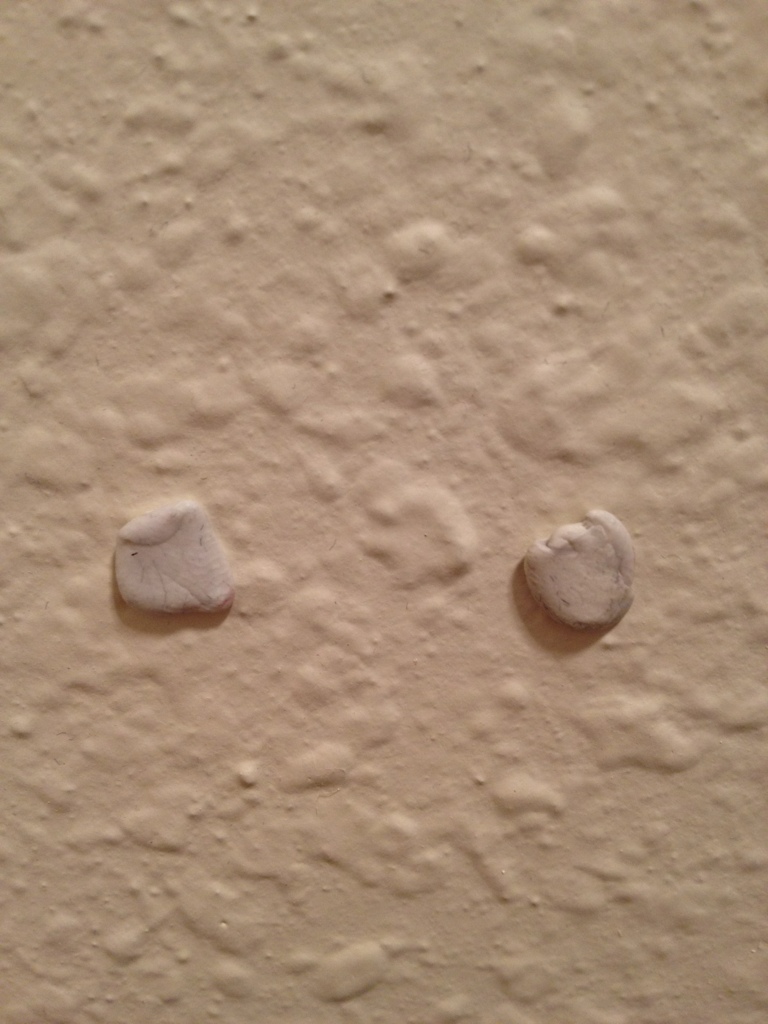
As for what they can hold I’d say it’s about equal. The Scotch says it’s up to a pound, but they don’t tell you how much product to use. With a tiny, equally-sized bit of each product (weighing less than a gram) I was able to hold 70 grams (2.4 oz) easily, and I’ve held up to half a pound products stably up with enough (It will do up to a pound, but only in certain configurations of putty and object). Putting that same small piece of product up with a 7oz (198g) item, both failed fairly quickly with the Scotch maybe a little faster, but I’d chalk that up to my tests being not completely scientific.

20150618-222550.jpg

Overall, I’d say both products are really the same on the user’s end. Their uses are the same, price can be more or less in favor of each brand depending on where one shops, and they hold almost equally well. If you’ve got a choice in the aisle, then I’d say take the cheaper one, but it’s not worth another trip to get the right brand.

Review – Zebra M-301 Mechanical Pencil

The Zebra F-301 is one of my favorite and most hardy ballpoint pens. I’ve used one for a long time, and they have a good record for staying together. But Zebra has several other writing utensils in their “301” line, one being the still-very-popular M-301 Mechanical pencil. Is it as good as its counterpart? Let’s see.

20150618-222426.jpg

The body of the pencil is the same as the pen, starting with a sturdy stainless steel click button, and going to a black plastic clip “holder” for a stainless steel clip that does its job if one doesn’t get turned upside down and shaken. The barrel is also a nice, plain stainless steel with the pencil’s information printed on it. The grip section is plastic with a bit of “knurling” that provides some grip and is unintrusive. The real difference between the two bodies is that after the section the pencil has a black plastic taper with a metal pipe for the lead. Unscrewing this will reveal the lead and make it breakable but otherwise not change the operation.

20150618-222447.jpg

The push cap operates smoothly, and can be removed to reveal an eraser that does its job, though it has no replacements in the package. Removing the eraser reveals the lead feed, which thankfully does come with more than one lead in the standard version. The lead feeds well, and writes as smooth as one would expect a standard HB to. It is a bit hard, and brittle at times; unlike many pens there is no shock absorber, so keep the lead as short as possible. The pipe and the lack of a shock absorber do make this pencil much more like a drafting pencil than the standard mechanical pencils, and it would work in that scenario in a pinch (or perhaps a bit longer). And its rugged steel exterior make it great for taking anywhere. One would just have to worry about the pipe getting bent or tearing something.

20150618-222453.jpg

It’s a great pencil, really, and it lives up to the expectations of its ballpoint relative. It isn’t perfect, but it’s a tough little thing that gets the job done, and for an inexpensive price, considering the materials and drafting-friendly capability. If one can find refills, they will have a pencil they can take anywhere for a very long time, even if it’s not their main utensil.

Review – Tombow Dual Brush Pens Grayscale Set

Ink-washing is a great way to improve the look of ink drawing, but diluting India ink and using traditional brushes can be messy and a hassle at times. Gray brush pens certainly do help and the Tombow Dual pens have both a brush and marker tip to make using grays easy.

20150615-082919.jpg

On either end of the marker there is a cap. One is quite a bit larger than the other, in both length and circumference. Both have ridges for easy removal, and small inner caps to prevent what they’re covering from drying out. The larger cap also has a fin to prevent it from rolling too far on a desk. The caps are made in such a way the that larger cap can “post” over the smaller one, and the smaller one can post into the larger one. They’re both sturdy and work well. The section for the larger brush side is nice and tapering. It’s long and easy to hold. However, the one for the marker side is quite stubby and holding on the body is almost necessary. The body itself is plain: a cylinder with text, Necessary information is there and it works.

20150615-082925.jpg

The pack I have is a pack of five grays and a black. The black is fairly understandable and a bit warm. The other grays purport to be “cool” but do vary from cool to warm, in my opinion. Several of them are also far too dark to really be distinguishable, but that also is just my opinion. The N95 and N60 are the most distinctive. Being very light and easy to work with, and very warm, turning to green after a while, respectively. The 45 and 55 are barely distinguishable and the 65 is about halfway between true white and true black, but all three get very dark very quickly and none of the five easily make a smooth edge, they are too varied in color to do so. The colors are all acid free, making them archival quality. And while they are water-based and claim to be blendable, I find that once they absorb into paper or card they are almost immovable. They go on smooth, the brush has quite a bit of variance but can be fragile (it is a sponge-like and not a bristle brush) and the marker is quite consistent and rigid. They can be used for several large projects or quite a few little ones, but can’t be expected to last longer than any other felt-based markers.

20150615-082930.jpg

In the end, they are great for someone who is just trying to get a feel for the grayscale washed look but is frustrated with, intimidated by, or doesn’t have to time for mixing up one’s own wash. Some other supplemental brush pens might be needed to get the full effect out of the shading, but these are a good start and the double-ended aspect makes them more useful than similar pens.

Review – Fiskars Cutting Mat (12×18)

If one is cutting things for hobby purposes for much time and one doesn’t have a table which would deal well with sharp objects, a cutting mat is really a no-brainer. But how well do the more common ones really work?

20150608-034547.jpg

Fiskars cutting mats are easy to find in many places. The particular one I use is 12×18 inches, but has a border of about a half-inch, extending the dimensions to about 13×19 but with rounded corners. Each edge is marked with a ruler that is accurate and the mat is divided into inch squares.  A couple of angles are also laid out in one corner. Most of the information on the mat is printed on a sticker on one of the sides (it’s double sided).

Being made of a fairly slick plastic, the mat can clean up easily after things like paint and plaster, but it has a texture that prevents the items being cut from sliding around. The mat is self-healing, but that really only applies to small nicks, anything larger might get a bit better, but will obviously never go away. Most things of this nature don’t inhibit the use of the mat. And it can take quite some beating from blades. If one is using this for hobby projects it will easily hold up to almost anything that is thrown at it (or rather cut on it). Obviously it has an upper limit, as it was cut into shape in the first place, but for normal personal (not industrial) use, it’ll work for a long time.

It does its job, I don’t know what else to say. Placing this on top of a table before cutting something for hobby, personal, or artistic use will almost ensure the safety of the tabletop. It works, and you can buy them from Wal-Mart.