Review – Tombow Mono Zero Erasers

A few years ago I was aiding my brother in the search for a good separate eraser to go with lead holders (that often don’t have their own erasers), and that lead me to review the Sanford Peel-Off Magic Rub, which is essentially a Magic Rub eraser in the same body Sanford uses for their Peel-Off China Markers. And to me that was the answer. I knew there were mechanical erasers, but they were mostly cheap little things, or not available in the stores I frequented. It wasn’t until a few months ago that I found the potential simple, high-quality solution of the Tombow Mono Zero mechanical erasers and I got them as fast as I could. Are they up to the task?

photo-2photo-1-2

The body is super simple, being a cylinder about the size of a pencil and a little over 3½” long. It comes in 2 different colors: silver for the round eraser, and black for the rectangular one (it’s made of plastic either way). At the front there is a step-down to the “lead-pipe” of sorts. This “pipe” being cylindrical for the round and flattened for the rectangular is the only other main physical difference between the two. The (lead/eraser) pipe is a nice, stiff metal that cleanly guides the eraser as it extends. On the back, there is a non-removable, simple push-click mechanism with an integrated clip. The clip is good but not superb at clipping, while having the advantage of being very structurally sound (something most plastic integrated clips are not). On the top of this mechanism is a sticker with the eraser’s sizes: 2.3mm in diameter for the round “small” and 2.5mm x .5mm for the rectangular “slightly less small”.

photo-2-1photo-3-1

Performance is good; the click mechanism is sound and has a satisfying feel, retracting and reloading are simple and both done from the front end (reducing the number of failure points but also making disassembly functionally impossible). The erasers are of the white variety and erase very well. They aren’t the absolute best I’ve seen and they won’t get rid of every single mark, but they are both quite tiny and precise, making them very useful in those fine detail areas other eraser wouldn’t even be able to get to.

photo-4

They are very good erasers, but more as a set to complement others than on their own. For writing, pocket and backpack sketchbooks, or those who do a lot of detail work, they will be fantastic, especially if one gets both to use in different situations. But for general use, they obviously don’t have the huge, quick-erasing capabilities of a standard eraser, and I’d imagine that in most people’s use cases they’d augment and not replace one. Still, I am one of those people who like to write and do finer-detail drawings more often than other types and they have earned a place in my pencil bag that I don’t see them moving out of any time soon. So if you’re looking for a fine mechanical eraser to easily carry around, fit in with your pencils, or do detailed work, I’d say take a look at these.

Review – Caran d’Ache Sketcher (Non-Photo Blue Pencil)

Pencils are a nigh-indispensable tool for the artist. But usually, especially with ink work, they need to be erased, and that can be a hassle. It’s a lot of work, it risks ruining the drawing (or paper), it takes time, and it becomes harder to correct later. But oftentimes the final work is either a duplicate of the original, or more work is done over inked lines, meaning that using a pencil that simply doesn’t show up in the reproductions saves time and work by not needing to be erased. Non-photo blue pencils were used for this purpose as many image replication processes (mainly cameras and photocopiers that were used to duplicate artwork for printers) have a hard time transferring it, and they still retain a place with modern scanners that will be able to pick the color up, but do so in a way that the image can be easily edited to omit it. But is it really worth it to get a new different pencil like the Sketcher from Caran d’Ache?

photo-264photo-258

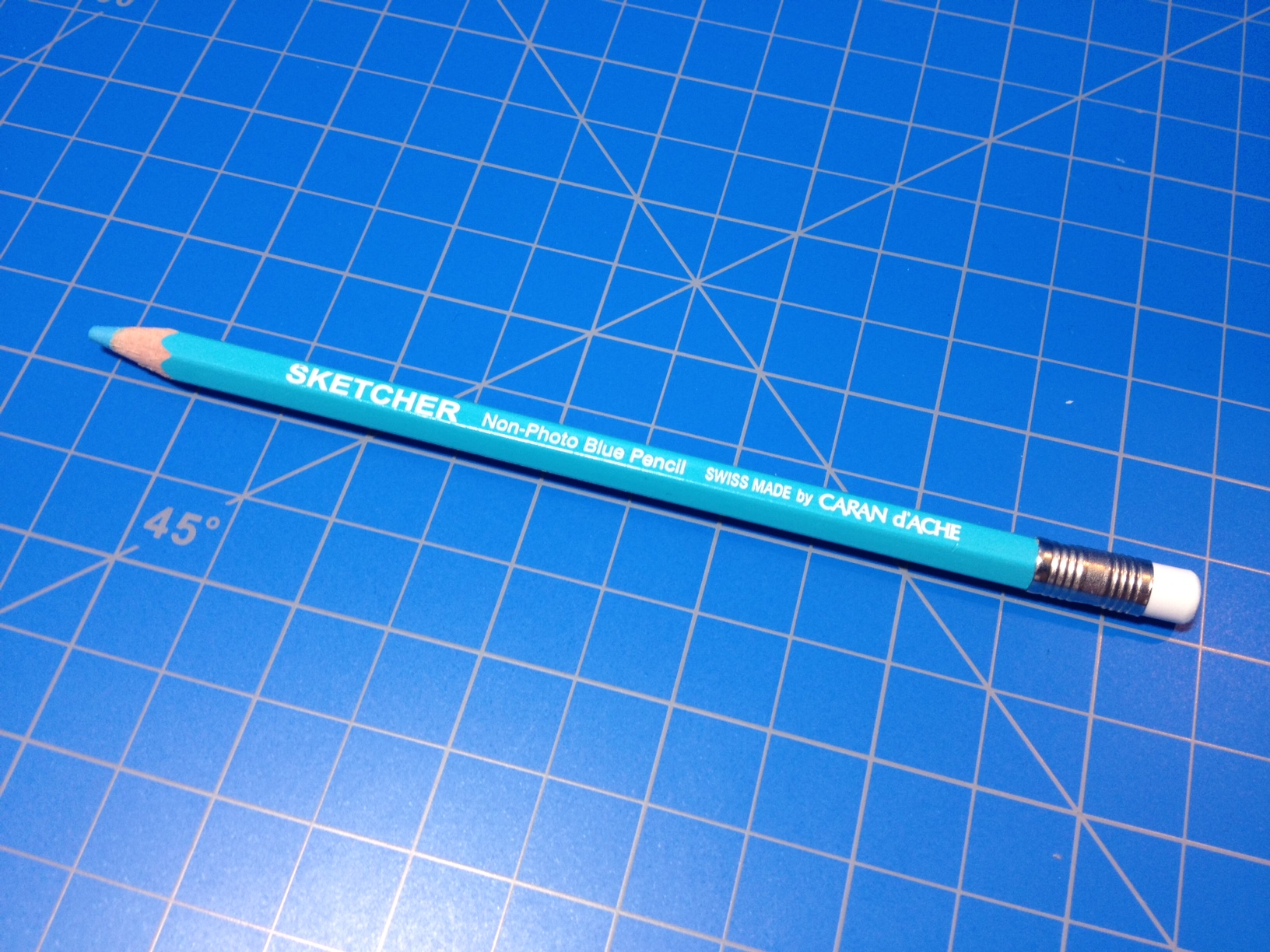
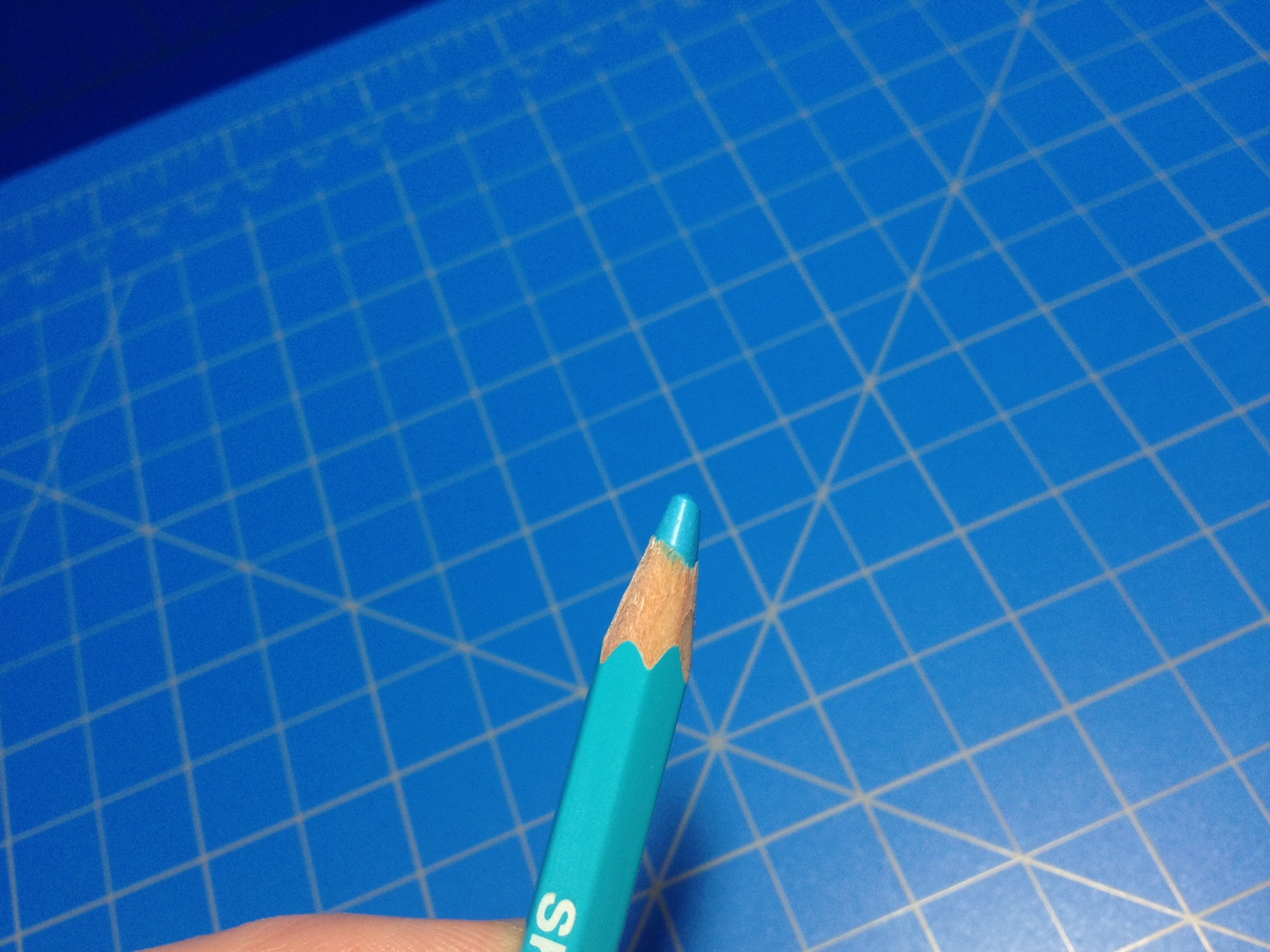
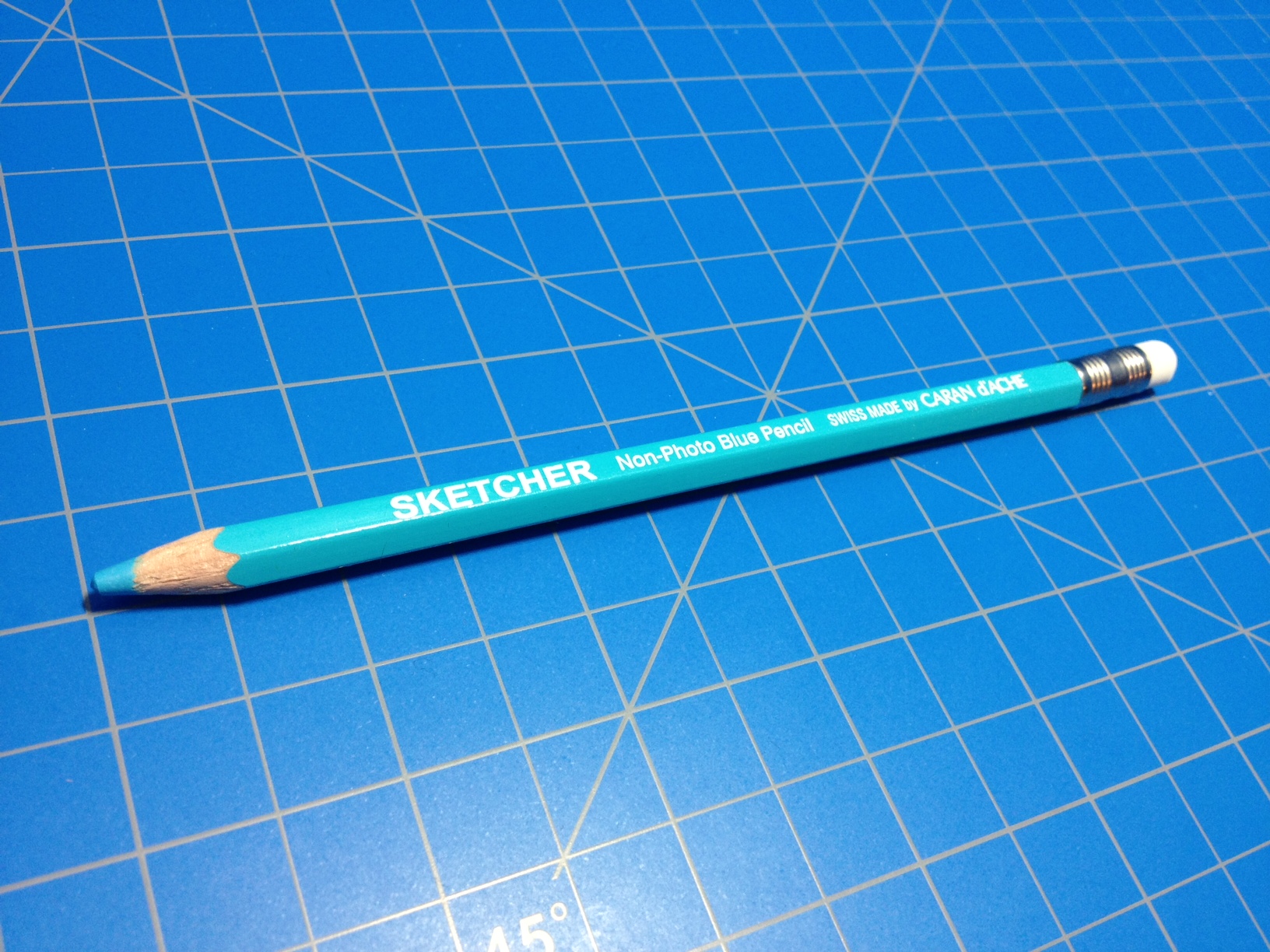
The pencil is as basic as one can get: made of wood and hexagonally faceted to limit rolling, one end is sharpened the other has a metal ferrule connecting the body to an eraser. The body is a pleasant blue color mirroring the color of the lead and on one facet neatly stamped and inked in white is all of the relevant information. It looks and feels very much like a standard #2 pencil.

photo-266photo-267

The eraser is well done; it erases cleanly and is dense enough to not float away far faster than the rest of the pencil. The lead is hard to place in hardness; it feels softer than a standard HB but it has a more waxy quality (characteristic of colored pencils) that makes it give a much harder line. So it writes somewhere harder than HB and wears somewhere below. The line it produces can go from very light to surprisingly dark, but even at its most dark, it is barely visible in scans and can be easily isolated and removed. But it is only a tool for pure ink drawings, and its use is limited in other senses. If one were to, for instance, lay a wash over it, it would be harder to isolate and almost impossible to be rid of on scans, and it resists being covered by lighter washes. And if one were to erase before laying down a wash they would find that the ink laid on top of the pencil is cut down severely, with the entire line becoming grey and having several holes that are almost white, basically where the ink adhered to the pencil and not the paper (this effect is present, but much less severe, with standard graphite pencils). A similar set of problems would be encountered by someone wishing to put color down. So using a pencil like this would necessitate an additional step between inking and coloring/washing where the inked drawing is reproduced and tweaked to eliminate the blue (and potentially other errors).

photo-268

I’ve also had a bit of an issue with the lead being soft enough to break inside the pencil. It hasn’t been severe, but it’s worth noting.

photo-265

So am I converted to the blue pencil? Not quite. I really like it, and for a specific type of work-flow it is perfect, but that work-flow isn’t mine. I color/wash my original drawings, and I don’t see that stopping unless I get big enough that I can hand it off to someone else. So the pencil has very little use inside my work environment. I do use it now and again, but it also wears down quite quickly, and having to use a sharpener just drives me back to my mechanical pencils. That being said, it is a well-made pencil that does its intended job superbly. If you need to reproduce or scan in original inked artwork and don’t want the hassle of erasing, I would say this is right up your alley.

Review – Art & Parcel (September 2016)

Art & Parcel is a monthly subscription service for art supplies from H. Blyth & Co. It’s like a Lootcrate, but for art supplies; so it’s way better than a Lootcrate (my opinion). But with so many of these monthly-blind-subscription-service things around, what makes this one special enough to look at? (Answer: Art supplies) And is it worth it to get one?

photo-217

(Couple of notes here: I got this parcel for free {and even though I got to pick one, I didn’t get the one I picked, so the picking part won’t influence the review} for review, and I live in the US where the “subscription” part of this service is unavailable. From what I can tell that means that I would have to pay up front as a lump sum to get my parcels, instead of being able to pay by the month, this also means that shipping cost is terrible to get them here, £16 (About $20) is a steal for these products, and the shipping in the UK is a great deal too, even throughout the rest of Europe it doesn’t exceed the price of the items like it does coming to the US)

photo-226

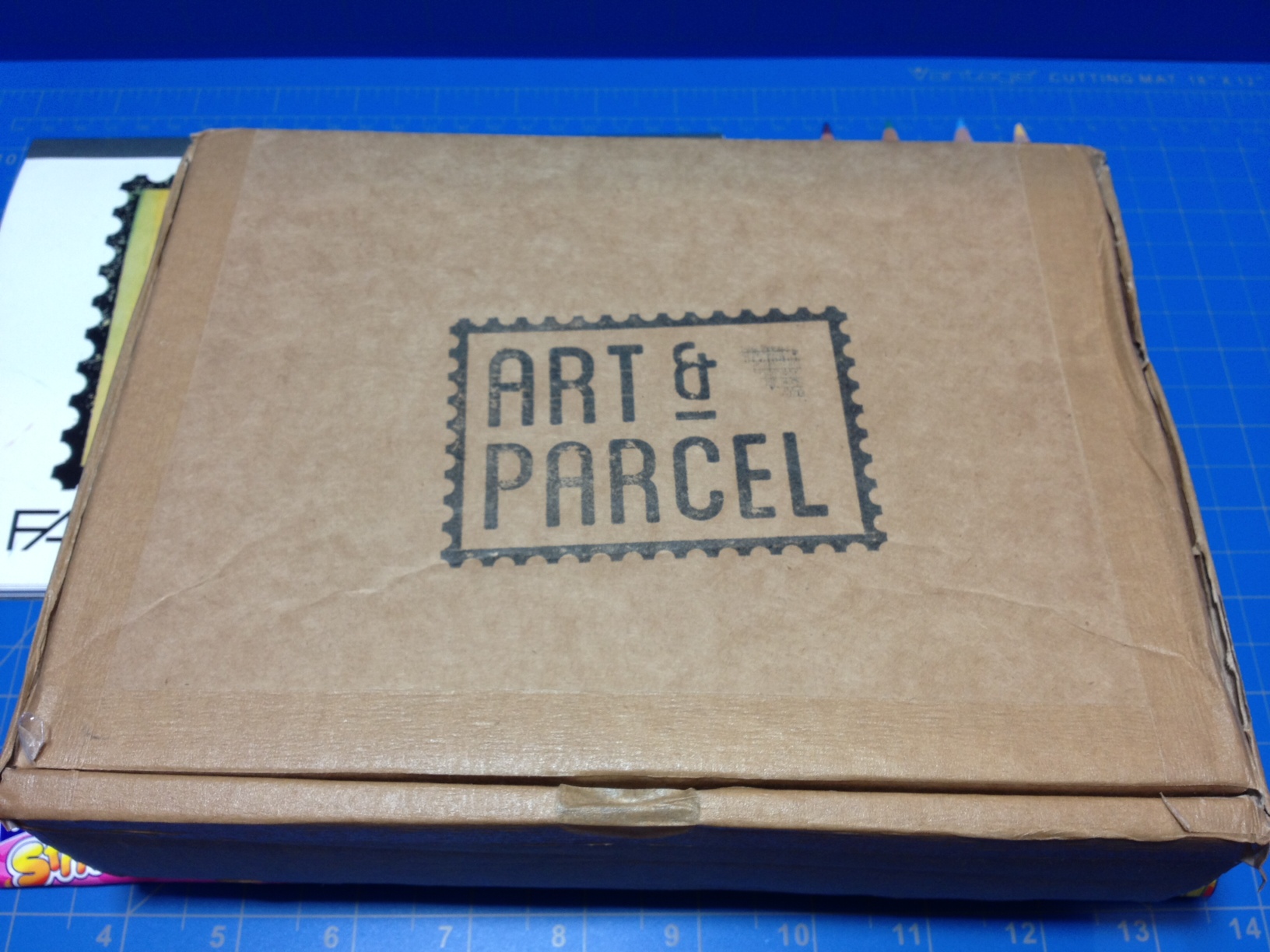
The one I am going to be looking at today is September’s parcel, which is focused mainly on colored pencils, but first I’ll talk quickly about the packaging. Mine was shipped in a bubble envelope, inside of which was a very nice cardboard box that was very well sealed with brown tape. On the top the Art & Parcel logo is printed very plainly, and on the bottom in pencil there is the month. (My box was a bit dented, but this is likely from the post office as, due to my schedule, the box had to be sent through the post twice) Inside is a nice packing slip that explains everything that is in the box along with its regular retail price (if that’s anything to go on you save a pound or two from buying the items individually in this set). All of the materials are neatly and securely wrapped in a newsprint/tracing paper that is sealed with a sticker of the Art & Parcel logo. It is all very well executed and nothing got damaged.
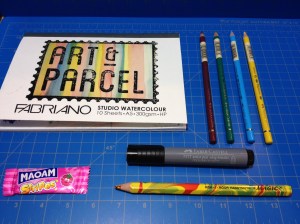
photo-220

The first items in this box were four Faber-Castell Polychromos pencils. I am no stranger to these pencils (they were the subject of one of my first {and not as well written} reviews), though I don’t have these particular colors: Naples Yellow, Light Phthalo Blue, Chrome Oxide Green Fiery (wonderful name that), and Red-Violet. I think the choice of colors is a bit strange, but they are definitely useful, and give a better representation of the pencils abilities than a plain RGB or RYB would have. There’s not much more to say there since they are some of the best colored pencils around. One thing I do really like about them is the fact that they layer so that some colors can somewhat be on top of other colors, unlike the cheaper colored pencils where they’re pretty mutually exclusive.
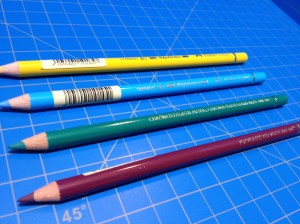
photo-225

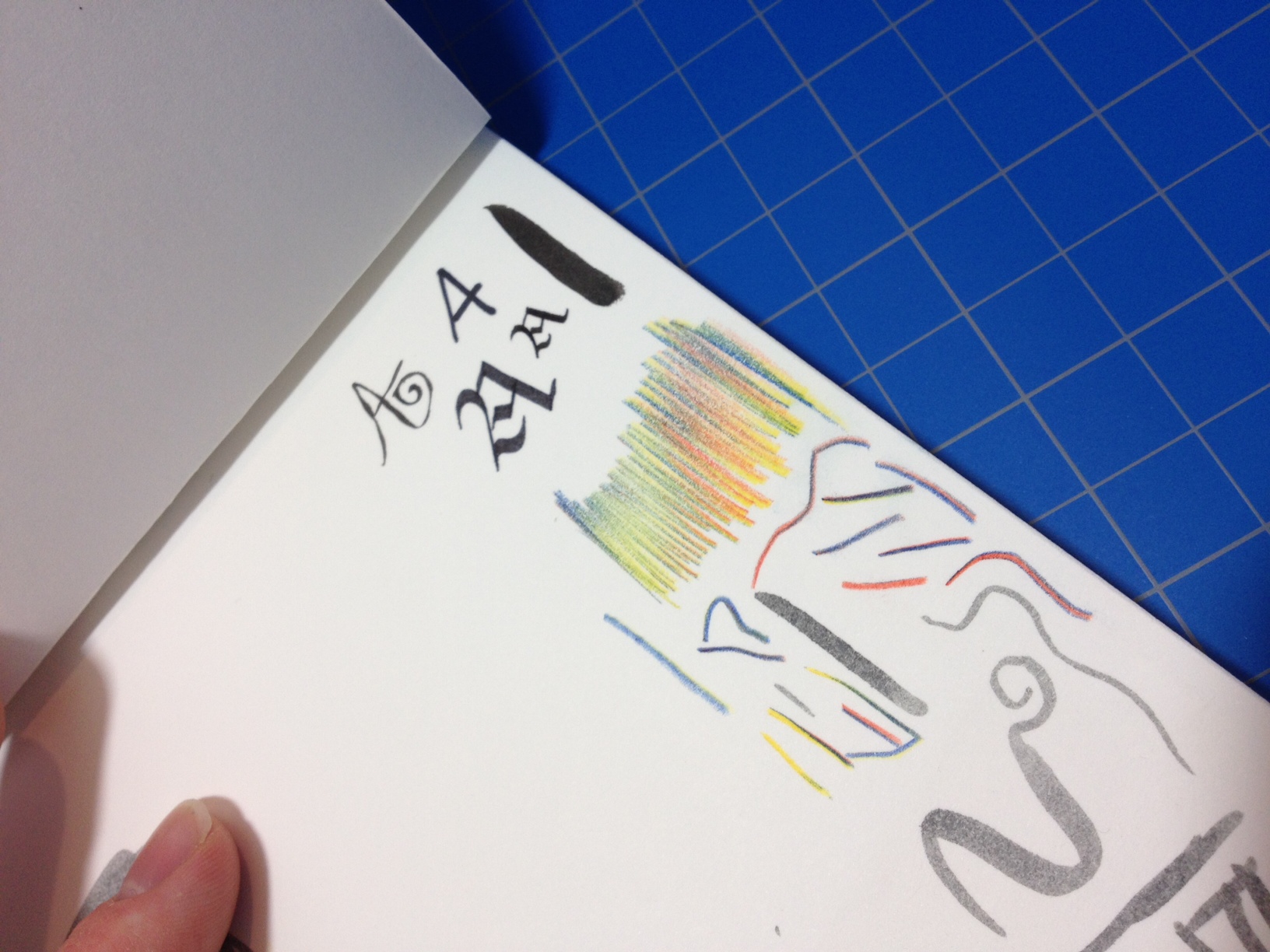
Next is the KOH-I-NOOR Hardtmuth Magic pencil, which is basically a fat colored pencil that has a “lead” made up of the 3 RYB colors. This means that as you write or color with the pencil it changes, and the colors mix together to create a nice gradient effect. In practice the yellow mixing with both the red and blue works great, but the purple almost looks black and rarely shows up, and getting a nice solid version of one of the primary colors is very difficult, so the gradient looks more green and orange than anything else. I would bet that with some practice and odorless mineral spirits with a blending stick that it could produce wonderful effects, but I would still have trouble finding a use for it.

photo-224

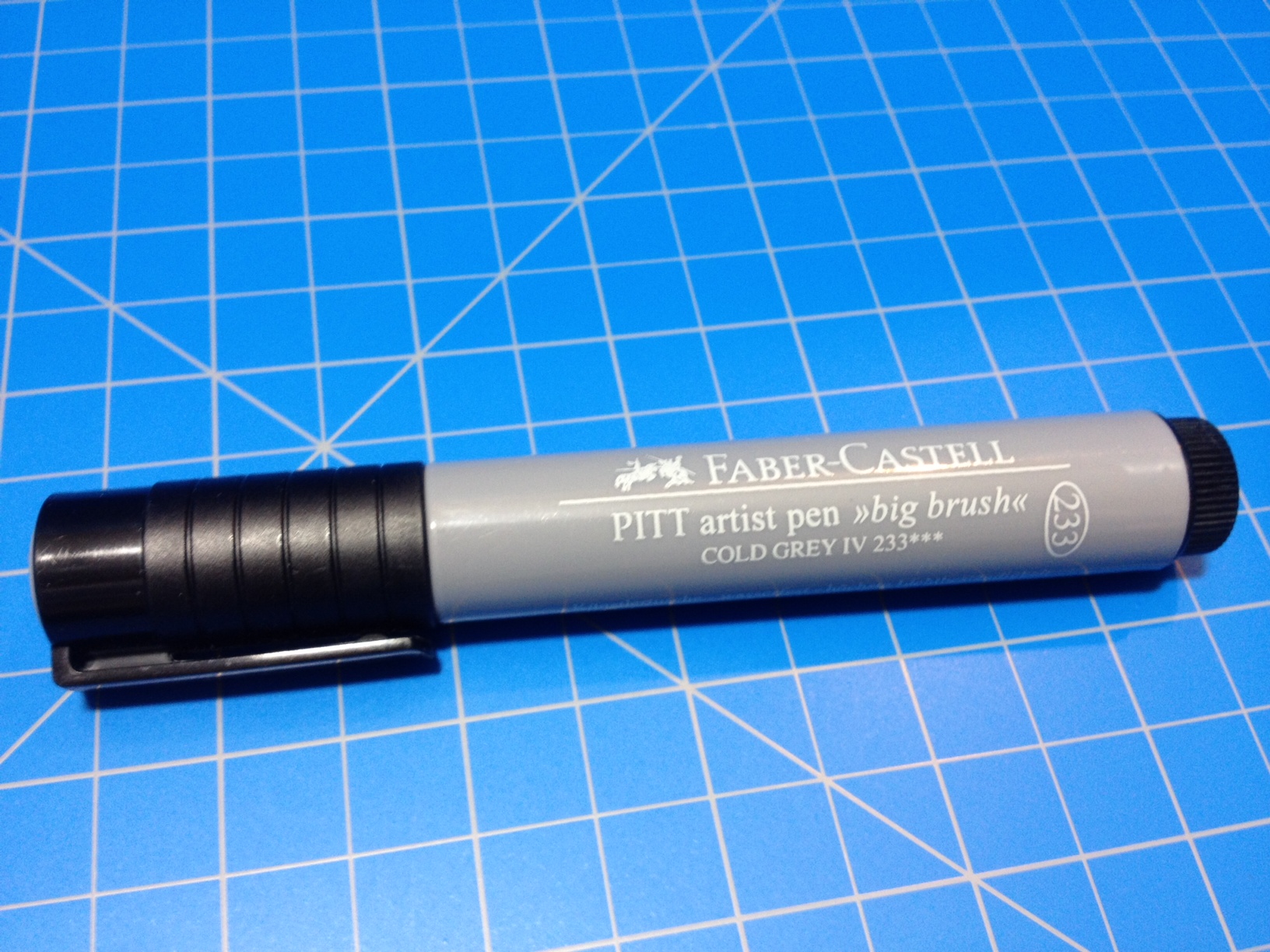
Third up is another Faber-Castell product; one of their Pitt Artist Brush Pens, another item I’ve looked at in the past, though this is a different version. It’s a “big brush” and the body of the pen is over a half inch in diameter, a bit chunky for me but still very easy to hold on to and surprisingly comfortable. The color is “Cold Grey IV” which seems to be in the middle of the grey family, and the brush is very fat, going from lines of about ½mm to almost 5mm. It’s also got all of the stuff you want out of an ink: waterproof, lightfast, and archival quality. But I’m not really sold on how it fits with the rest of the stuff here. It is a grey, which makes it more like a pencil when sketching, but going over the same place multiple times does make it darker. It’s just strange to me, but then again I have a very different style to most people, and playing around with a new brush pen is always fun.
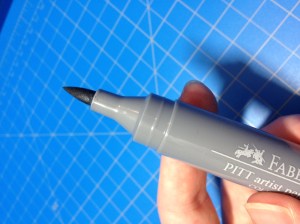
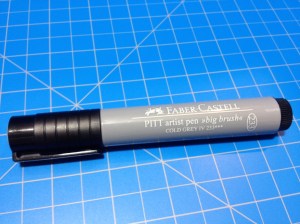
photo-222 photo-223

And the final item included is a 10-sheet pad of watercolor paper. It’s made by Fabriano but has the Art & Parcel logo again on the front. It’s A5 size, which is about 6” x 8” and is a hefty 300gsm. It handily took everything I threw at it without flinching, bleeding, or feathering. Sharpies, calligraphy pens, and brush pens push most papers to the limit, but this stuff is truly meant for paint (watercolor at least), which I don’t have too much of lying around (in accessible areas, I did have some tempera and it handled that very well), but it seems easily capable of handling it. A liberal application of water will turn it in to one big slight buckle, but that’s about it. My only complaint is that there are only 10 sheets.

photo-218photo-219photo-221

Overall I’m very satisfied with this box. It’s well worth the money and provides several products that work in tandem, allowing you to start creating right out of the package without having to look for more materials. From what I can tell, this is true of the previous parcels as well, but each one comes based in a different medium. The subscription would be relatively inexpensive way to try out something that might not be in your comfort zone without having to do a lot of research or spend time picking out and ordering products. It was honestly really hard for me to try and pick out a parcel I wanted. The recent ones at least were all super cool (and they can be purchased even after the subscription goes out, so nobody needs to miss out like with other sub boxes) and I’d be signing up right now if shipping to the US didn’t more than double the price (damn the postal service(s)). I really like this box. It’s given me a bunch of cool stuff to play around with (and a Haribo candy to eat*) and if the idea of getting a bunch of high quality art goodies in the mail every month appeals to you I would recommend it.
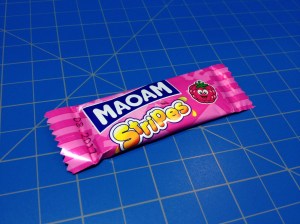
photo-227

*I ate it; it was good (like a softer laffy-taffy).
Review – Sharpie China Marker

A ‘china marker’ or ‘grease pencil’ is essentially a hard, fat crayon that is used mostly for temporarily marking nonporous surfaces like glass, plastic laminate, tile, etc. They are an item that used to be pretty popular but have since waned as newer products like dry erase markers for temporary work on board or laminate, and permanent markers for less temporary weather resistance have come on the scene. Yet they still can be very useful when working with glass or porcelain. This being the case I was not surprised to see some in the hardware store, but I was slightly surprised to see that they were ‘Sharpie’ brand. Do they hold up in comparison?

photo-184

The short answer would be “yes”. The Sharpie brand here is just an addition to an older, very standard design by Sanford. The body is just a version of their “Peel-Off” design. I have a fairly old (by surviving china marker standards, since using them destroys them) one that is almost identical in most ways. The body is tightly wrapped brown-ish paper that is sealed with a black, perforated coating. On this coating is all of the relevant information of the product, and beneath it is a small white string. Pulling on this string will create a tear in the coating that can then be used to tear off enough of the inside material to expose the tip if it is worn down. The tip begins exposed with a roughly conical spiral of the paper that provides a nice template when tearing off a bit later. While I do suppose that the item could be sharpened, it would be pretty wasteful and difficult which is why a system like this was developed.

photo-185

As for writing, I have a black version, and it behaves very similarly to a fat crayon. Line width and coverage are dependant highly on how much pressure is applied, but it almost never is a true “line” in that it doesn’t fill in the whole space when writing. It writes well on nonporous surfaces and often on porous ones, being again about as smooth as a crayon. For what it’s intended to write on it is relatively weather-and handle-proof (it can smear) but can be removed with a paper towel and some elbow grease. Nonporous surfaces are a bit more tricky, but in general there is a way to clean it off.

There are only two types of grease pencil/china markers: the mechanical version, and peel-off versions, this one being the latter. It is very hard to mess up a peel-off grease pencil, but it is also hard to innovate in that field. This shows neither. It was competently made, but not entirely ingenious. It lacks any innovation or improvement over the pervious generations, but it does mark what it was meant to mark (china) and more. The price and availability are also quite reasonable. If you desire to acquire a china marker, and don’t mind the fact that the “greasy” (waxy) tip is exposed, then this one will do everything you want it to.

Review – OHTO Sharp Pencil APS-350ES

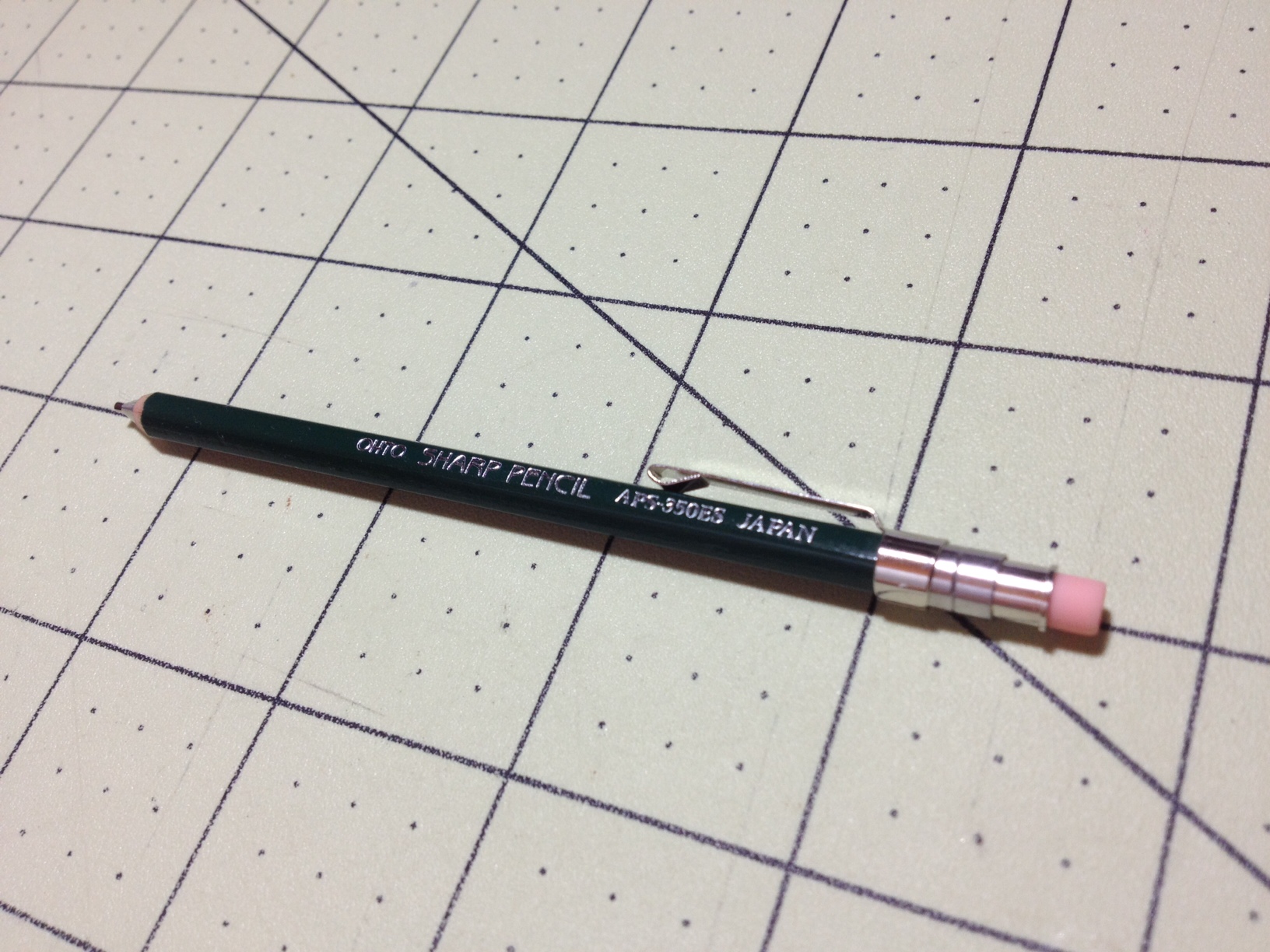
I like tiny, pocket-sized things. Especially writing utensils, like the Fisher Space Pen Stowaway, the cheap touch screen styluses, and now the subject of this review, the OHTO mini Sharp Pencil. All of these happen to be the same size. So the OHTO is cool both in that it matches many other small items you can buy, but it also might be the smallest mechanical pencil I have ever seen, being a little over 4 inches long and less than 3/16ths of an inch in diameter. But at that size will it still work well? Let’s take a look.

photo-162

The design is meant to mimic a wooden pencil. The outside of the pencil is actually made of wood and has a hexagonal design. Mine is in green, with silver printed information on one facet. The tip is sharpened like a wood pencil until about halfway when it is replaced by a metal cone that leads to a very short lead pipe. On the back there is a clip that is a separate piece of metal bent around and friction fit. Beyond that is the click mechanism that is really only usable when the eraser holder is installed. The eraser holder is quite a simple piece of metal that keeps the lead in the feeder, depresses the click mechanism, and holds a very small eraser. The wire-thin piece of metal attaching this piece to the body seems rather flimsy and easy to remove, but I have had no problems with it shaking loose: it simply doesn’t have enough mass. Likewise I have encountered no problems with the quality of any of the components.

photo-163

The lead seems to be HB. I don’t have the package (which is rather understated and nice by the way) with me so I don’t know what it is exactly, but I have no complaints. It writes well, and can be sufficiently dark. The eraser also works surprisingly well for its size, with very little being used to rub away quite a bit, but I wouldn’t say it’s a great eraser. The click mechanism is satisfying and the lead is held very securely in place when one is using the pencil. The clip is also very good for the size, easily holding it in place while not damaging anything.

In the end, for on-the-go sketching or writing I would certainly recommend this product. I also wouldn’t recommend it at all for stationary or desk-related activities. It is very small, and while that makes it portable, it isn’t the most comfortable of writing implements. It will hold up very well in a bag or a pocket, and it looks quite neat in my opinion. I’d just say be careful of the back end being knocked loose and stock up on some extra erasers and lead (it only comes with one of each) as one will likely run through them pretty quickly.

Review – Sharpie Industrial

Sharpie makes permanent markers, but permanent never really means permanent. Of course there are ways to remove traditional Sharpie ink, especially since it, like many modern inks, is alcohol based. So, in order to keep up with their permanent image Sharpie came up with its “Industrial” version. How permanent is it compared to the regular version? Let’s see.

photo-154

The body is virtually identical to that of a regular Sharpie, except for the information printed on it, which has been changed to reflect the more permanent nature and is in red. As far as writing on regular paper goes, it is a bit warmer than standard Sharpie ink, but not really any less or more black. The difference is barely noticeable. Also, like a regular Sharpie, it will not write on wet surfaces.

photo-155

But on to the permanence. I tested the ink on a piece of galvanized steel by making a small mark, letting it dry, and then applying pretty much anything I could think of that might clean it off. It held up remarkably well, but it was mostly resistant, and not fully “anything-proof”. By the end of my test the mark was quite faded but still readable, and it had withstood: water, fire, isopropyl alcohol, bleach, WD-40, ammonia, acetone, De-Solv-It (citrus based gunk remover), Lysol, Gojo hand cleaner (for grease and tar), dry cleaning fluid (because I couldn’t throw the kitchen sink at it), lighter fluid, paint thinner (mineral spirits), and gasoline. So I checked online and in several reviews people said that in laboratory settings the alcohol used would take the marker right off. So I went and attacked it with some denatured alcohol, and sure enough it broke it down to the most pale of lines possible, but it still wasn’t gone. So I tested on some other materials and another piece of galvanized steel. On plastic, the denatured alcohol removed it with very little problem. On aluminum it was also met with little resistance. On a tuna can (which could be either tin, steel, aluminum or a mixture) it was a little tougher but almost all of it was removed eventually. But, finally, on a galvanized trashcan the alcohol met its match, reducing it to a very faded line but it was still unable to remove it entirely. So there is likely some chemical that bonds directly to or gets through the galvanization on such materials.

Barely visible mark after denatured alcohol was applied

Barely visible mark after denatured alcohol was applied

All of this stands to reason. Modern inks are mostly made from an alcohol-based dye solution. This makes them dry faster and essentially water resistant, unlike their former water-based fountain pen ink relatives. But they still fall short of pigment-based inks on permanence, especially when it comes to alcohol, which in many cases will clean up both ballpoint ink and (permanent) marker ink by reactivating it for a short amount of time. Virtually any ink (but not all) will smear, bleed, or be removed when its base is reintroduced. But that’s why we have different bases in the first place.

In specific settings where large amounts of chemicals are continuously applied to surfaces, especially alcohol, these markers won’t work. But there are specialty markers made for work like that. As a general purpose marker that is meant to be used in tasks that are more demanding than standard household ones it works quite well. It does outperform the regular Sharpie and would work sufficiently well for many workplace or “industrial” tasks, but testing may be required before using it on the job.

Review – Sharpie Mean Streak White

I have a pretty liberal definition of what an art supply is. Not quite as liberal as those who say everything is an art supply because (almost) everything you do is art of some kind. But I do think more qualifies as art supplies than the average person does. For instance I would say that everything meant to make a mark is an art supply. And that assumption will be tested here where I take a look at the Sharpie Mean Streak “permanent marking stick”, and see if it has any real art applications.

photo-151

The body is quite large, being about half an inch in diameter. It’s got a good amount of information on the side, but it gets a bit cluttered-looking. The back is a twist knob, like a glue stick. The cap has a slight taper with several ridges for grip. Inside is a pointy cone that can shape or dent the “marking stick” if you put it in slightly wrong. Inside around the “marking stick” (grease, wax, or whatever it is) is a sizable ridge that is quite uncommon on writing implements. There is also no grip section area.

photo-152

There are two ways I can describe this, either as a permanent (wetter) crayon, or a more slick grease pencil. Neither of those descriptions really tell you exactly what these things are. The inside substance comes in a pointy cone that is pretty useless. It’s very putty- or grease-like and when used the point becomes very flat very fast. It writes similarly to a crayon, in that it isn’t easy to control or sharpen. When the tip is flattened beyond a certain point, the base can be twisted to extend the point, but it can’t be retracted, so remember to not twist it too far out (that shouldn’t be a problem unless you’re an impatient reviewer like I am). The feeling it has is very slippery, and quite a bit of material comes off for not a lot of writing, but there seems to be quite a bit of it in the barrel, so running out should not be a major problem.

Performance is a bit disappointing. The white color doesn’t cover very well at all, meaning use in art as either correction or even to mix with other colors is very limited or would require re-application. It can be used as a covering to make things “hazy” but the coating is quite unpredictable. It likes to clump up in certain areas and barely cover others at all, meaning detail work also shouldn’t be done with it. As far a permanence goes, it is, but not wholly. I did testing (not just normal use) on metal and paper. Both were reasonably water-proof, on metal flame did nothing to it and on paper it did resist the flame but once the paper burned it did too (not that anything else would have happened). Then on the metal piece it stood up to WD-40, which has a knack for removing regular Sharpie, but was easily wiped away by isopropyl alcohol. I also suspect it could fairly easily be scraped off or crack easily on pliable surfaces. It does go on whether the surface is wet or dry as advertised and does dry in a fairly short amount of time for how tacky it is to begin with.

I would still consider this an art supply, and it can work well in mixed media, but really it is much more at home in the garage or the toolbox. The tip and lack of sharpening or controlling method means it works quite a bit better when marking large surfaces. It is “permanent” in that it’s hard to purposefully get off, but it doesn’t penetrate and won’t wear terribly well. It’s an interesting item, but certainly not a general use-one.

Review – Fisher Space Pen Stowaway

The Fisher Space Pen has a reputation for being a very good pen, with many models being used by many people for many different things. But I feel that some models of space pen get more attention than others. And for some reason, the stowaway isn’t one of them, but it might be my favorite and I think it’s deserving of a look today.

photo-140 photo-141

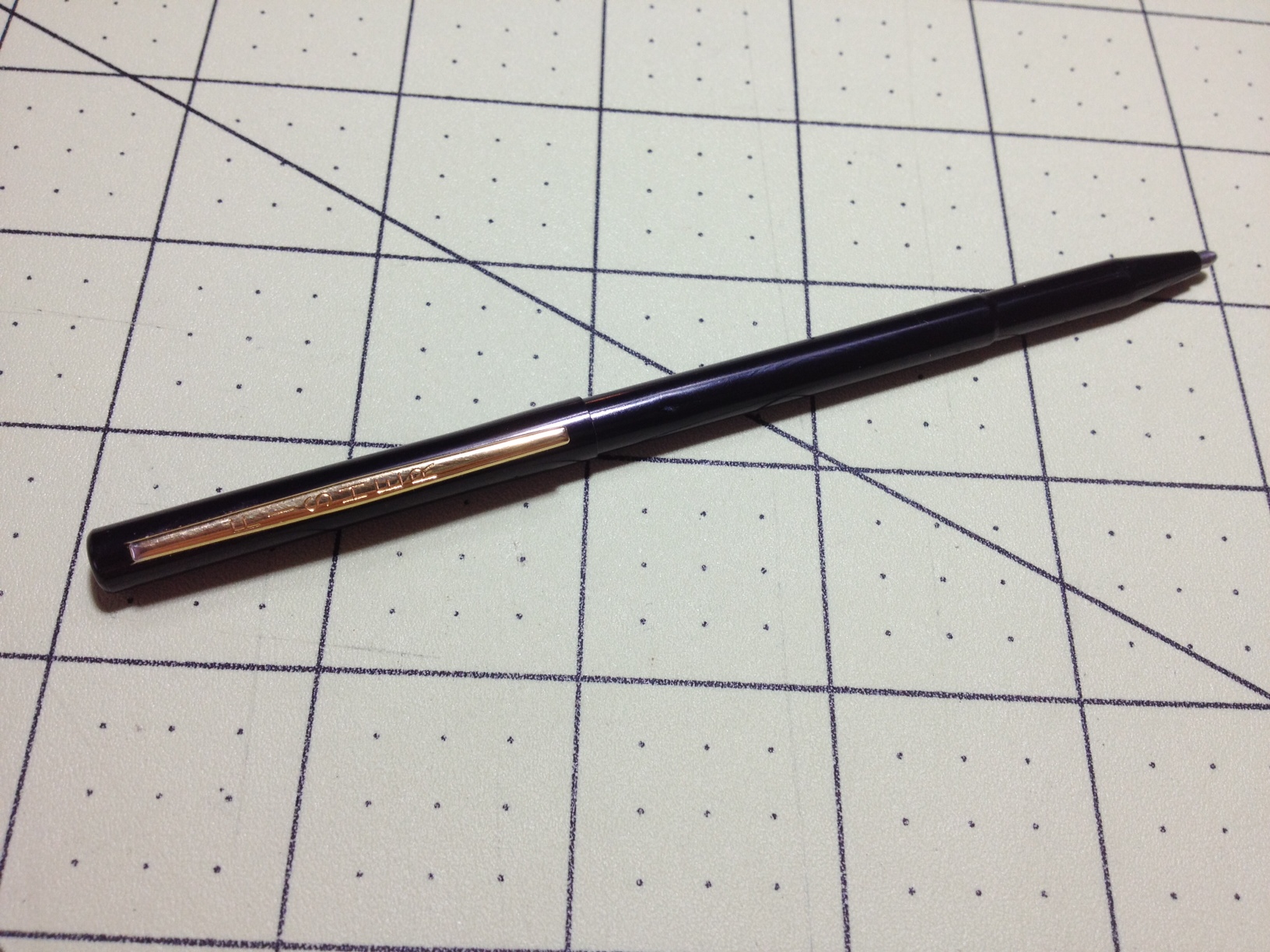
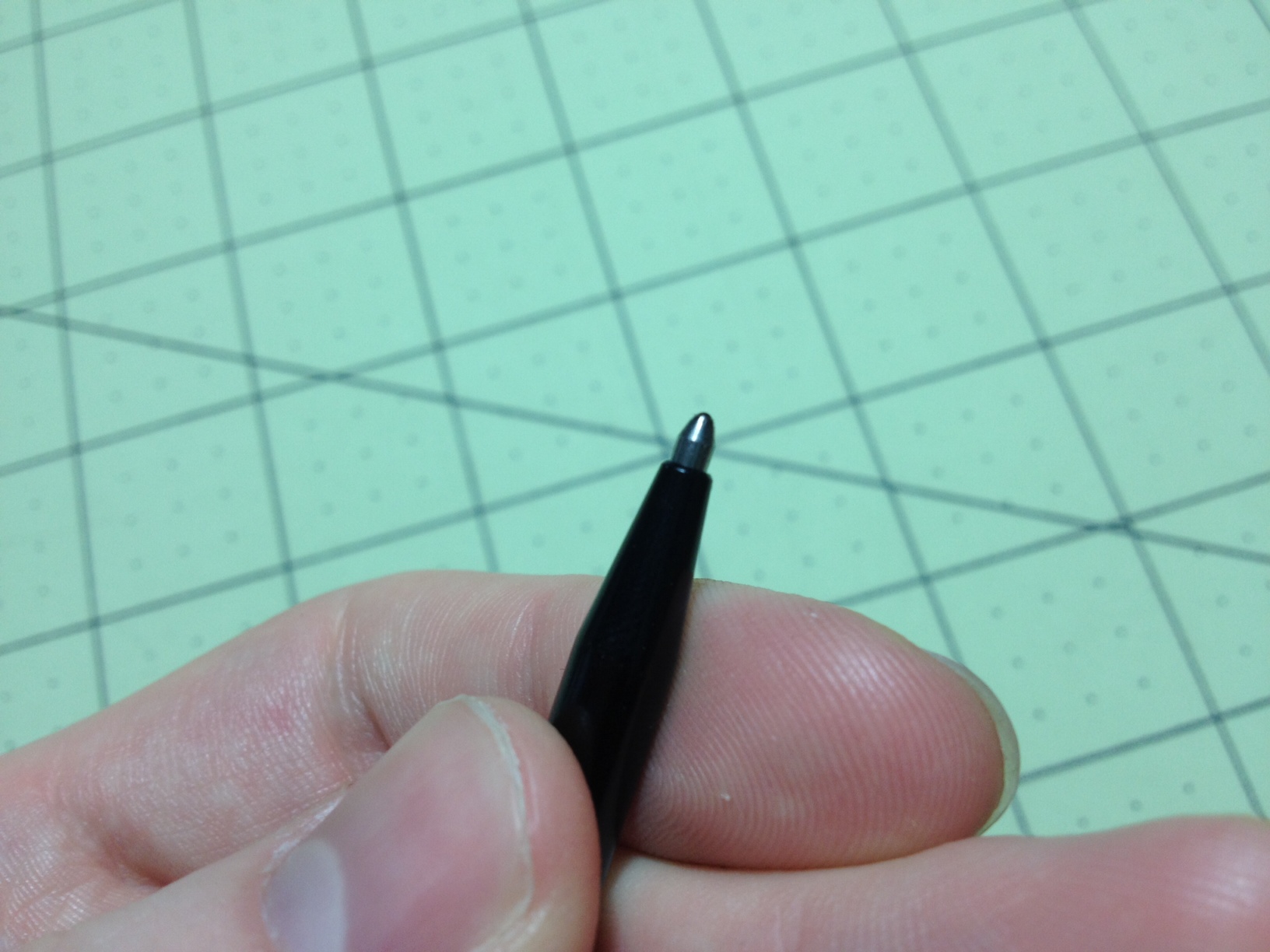
The body is very simple. It’s a black metal cylinder with a plastic end cap and another slightly larger black cylinder fitting over it. Fitted to this top tube is a clip, which is longer than most pen clips I’ve seen and has “Fisher” stamped into it (not much else to say, it works as a clip should). On the section there is a slight but smooth step down, and then a taper to the point.

photo-144

Writing is fairly smooth, though it does require a bit more pressure than some of the more modern pens (but less pressure than the cheap ones). The pen itself is very thin in diameter, meaning one’s hand will begin to cramp if writing more than a few notes. The body is also very short, and generally requires the cap to be posted (placed on the back of the pen) in order to lie in the webbing of one’s hand and be comfortable. This small-ness is very useful when traveling, as this pen can fit just about anywhere (but not an Altoids tin or some similar sized case, which might be why “preppers” don’t use them very often). And even though it’s metal it weighs next to nothing. In most cases it will “stowaway” very easily.

photo-142 photo-143

I really like this pen. It goes with me almost everywhere (and I found an almost identically-sized pencil I will be talking about soon). Its slim body and black color make it very low profile and professional, while its all-metal construction and space pen (underwater, upside down, in space etc.) writing ability make it a very rugged writer. I did dent and scratch mine within a day of owning it, but I haven’t put anything on it since (and besides, that just adds character). The cartridges are even replaceable so you don’t have to throw out the pen each time as with many pens of this size. So, if you’re looking for an on-the-go sketching/writing/note taking pen that could also fit in with any of your other stuff at a moment’s notice, I’d say check this guy out.

Review – Pentel Sharplet-2 .9mm

Recently I was gifted several mechanical pencils from someone who is a fan of larger lead sizes, and they were attempting to convert me. I have to say I’m not convinced, but the pencils themselves were ones I hadn’t had previous experience with. That isn’t really surprising, considering the vast array of mechanical pencils on the market from companies like Pentel, such as the gift I’m looking at today: the Pentel Sharplet-2 in .9mm.

photo-138

The pencil has a very classic and simple design that’s been around the block. At the back there is a plastic, cylindrical cover for the eraser, which is the standard tiny variety and placed over the lead tube. This back bit also serves as the click-advance mechanism. The barrel is the same diameter as the back cover, and consistent all the way down. The clip is one piece of metal that is friction fit around the barrel; it is a little stiff but keeps the pencil where you clip it. The only other features of the barrel are the brand and model information (that is engraved in as well as painted on, making it harder to wear away than on most writing implements), and about an inch of tiny ridges on the “section” (there is no separate section so that is for you to decide) for grip. The plastic cone that screws on the front is straight and unspectacular, ending in a metal pipe that makes the pencil more drafting-friendly.

photo-137

The leads pencils normally come with are all pretty standard, straddling the line between super dark and super light. The wider leads, just by virtue of being larger, require less pressure to write darker, and write (or sketch) in general with a wider and darker line. There are no real problems or tricks one has to get used to when writing. The eraser is similarly plain. It erases well, but can have trouble getting rid of darker or thicker lines like all erasers of its size that come packed in with mechanical pencils. The pencil does come in different versions for lead sizes; these are color coded for easy identification (it looks like there is some variation in the eraser color, as well).

photo-139

Pentel makes a solid pencil, and this is no exception. The design is simple, comfortable, and durable. It’s really a no-frills pencil. Everything is basic and has a function, it’s easy to disassemble and parts could be easily replaced (though it isn’t expensive enough to justify the hassle of that, it certainly isn’t a disposable pencil, though). The mechanism is satisfying to use, the grip is not slippery, the clip holds, and the retro styling makes it look kinda trendy (not that I care). If you want a simple, solid pencil or want to buy a set with easily distinguishable lead sizes, these would fit the bill.

Review – Poppin Fineliners

Poppin is a company that I don’t know much about, but their pens definitely catch the eye. When I saw this set of fineliners (felt tip pens) from them, I knew I had to pick a set up. The packaging and the feeling of the pens themselves appears quality, but do they live up to their first impressions?

photo-118

The outsides themselves are very nice looking. At the bottom is a small inset for posting the cap, which connects via a visible seam to a very smooth and featureless barrel. Underneath the cap are a series of step downs that are quite short and would be uncomfortable to hold, leading quickly to a standard-looking felt tip point, making it more comfortable to hold the pen by the barrel when writing. The cap, when on, has a slight step up from the barrel but is equally pleasantly smooth, and its only features are a dimple in the top and a rather unique u-like clip that looks like a Lamy wire clip that has been flattened.

photo-117

Functionally, the clip is about useless. It doesn’t have any dimple with which to grip, and is spaced farther from the cap than the width of most fabrics, meaning friction won’t be holding it in. The tips themselves aren’t that great, either. Like most fineliners, they do write with minimal pressure, but unlike most they do not give a consistent line. Dots very quickly form when writing or drawing due to having a very fluid ink not well controlled, and when writing fast at times skips can even develop, though this is rare.

photo-119

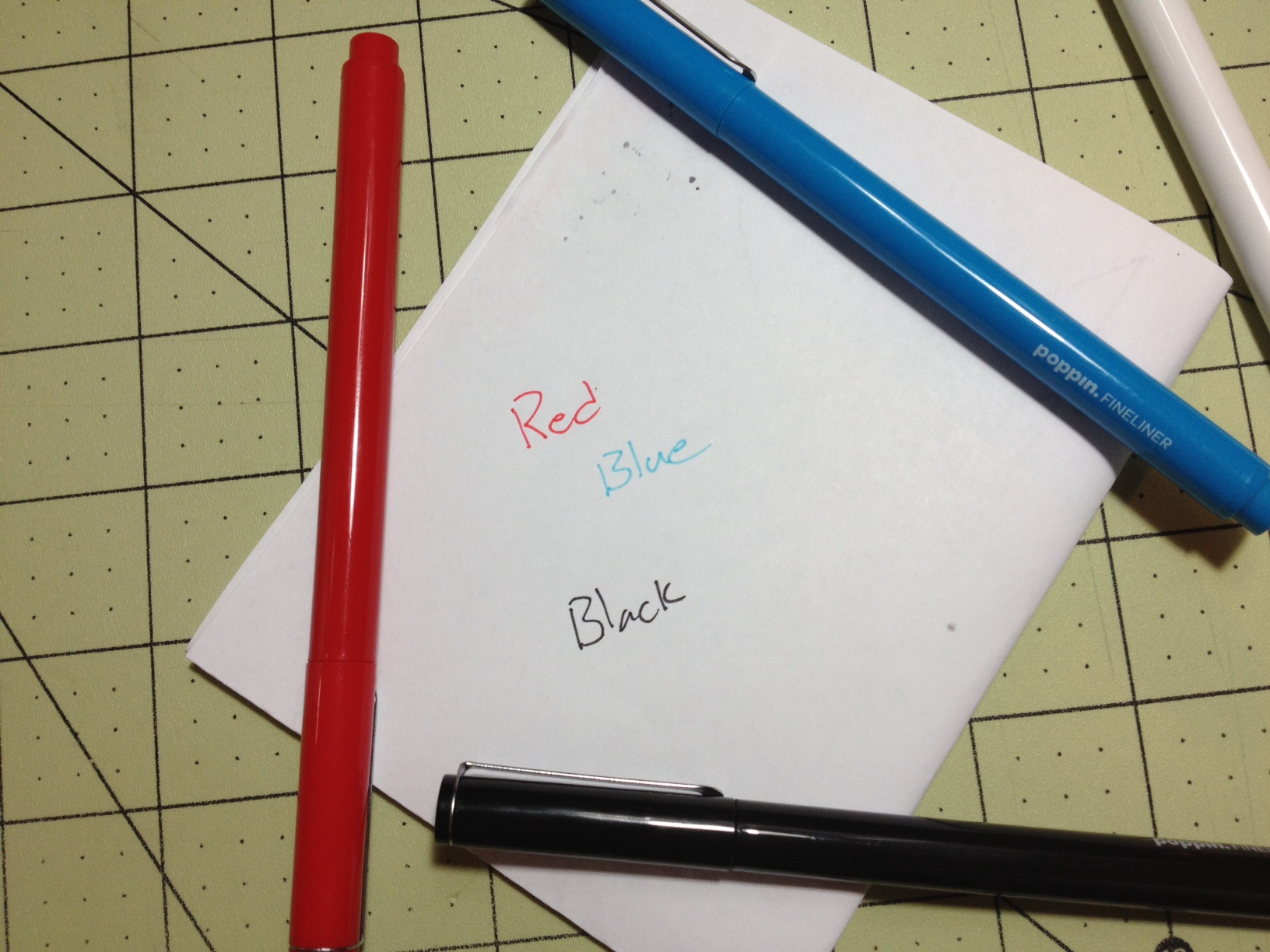
The colors of black, blue, and red are very standard, but the two extra colors are very washed out, blue especially. The blue is very pleasant sky blue when controlled well, but becomes darker quickly. But it still sticks out compared to other office blues. Red is nice and vibrant, though its tone is closer to that of a pink. It’s the least prone to problems as the ink is a bit thinner and less likely to dot. The black is fortunately a black and not a very deep purple or gray as some are. It is slightly on the cool side, which is unusual. The colors do match their corresponding pen bodies fairly well, but the inclusion of a 4th pen that has a white body, but also black ink, is slightly confusing. They unfortunately do bleed through the paper, but have minimal shading and resist water (while they do spread slightly when wet, they remain easily readable).

Overall I think the pens aren’t really up to par with what one can get for their office. They are sturdy and the ink works well, but without functional clips, they must remain at the desk or in a case, and their writing performance leaves much to be desired. The user just ends up with a pen that feels slightly rough and dry. If style and durability are your main concerns (and potentially ease of writing as the ink almost jumps from pen to page on contact) these might work for you. But for those looking for the superior, super-smooth and comfortable writing experience, or a portable reliable writer, these can be easily passed up.