Review – INC Soft Scripts Mechanical Pencils

Pencils for the office, school, or just someone who loses their pencils a lot can get pricey, fortunately there are a lot of inexpensive options out there. But are they even worth it to try? Sure, there are a lot of inexpensive pencils, but if they don’t “pencil” there is no reason to even consider them. INC Soft Scripts are one such pencil on the less expensive side of the aisle. How well do they work?

photo-252

The design here is pretty stereotypical, with the barrel being a thin, featureless tube of black plastic that tapers at one end to a plastic lead pipe. Near this end is a rubber grip in one of a few (5 in my case) colors that is narrower in the middle and has ridges toward the end, both ostensibly to help with grip, and they succeed in being barely noticeable. On the back end is a colored plastic push-advance mechanism (that matches the grip) with integrated pocket clip and eraser holder. This bit can be removed to expose the lead-holding tube that contains 2 extra leads (for a total of 3 per pencil). The clip is nothing spectacular, with most of the necessary information on it, and fairly brittle. But I feel the entire end piece would fling off before it broke.

photo-253

Performance is what one would expect. The HB lead is middle-of-the-road, leaning toward soft, but there’s nothing particularly off about it. I personally don’t use a .7mm size but it is a fairly standard size and makes breaking less of a problem. The eraser is one of the little white ones that will get the erasing done pretty well, but will seem to disappear almost immediately. The clip is serviceable but I wouldn’t recommend using it. And, finally, the mechanism is quite solid and workable; pushing lead out and holding it in place when commanded to do so.

photo-254

They’re easily usable, but far from spectacular, pencils, with their main benefits being the rubber grip (if you happen to like those) and the fact that they are the ones at the store (if indeed they are the ones at the store). There’s nothing really there to recommend them on, but no reason to tell you to stay away, either. They will perform fine for office, school, car, or other tasks where pencils should be inexpensive because of the frequency with which they are broken or lost. In comparison to others at a similar, price it would really come down to personal preference.

Review – Western Family Mechanical Pencils

If you are ever in dire need of a mechanical pencil, and somehow find yourself at a shop that doesn’t sell Paper:Mate Sharpwriters at the price of whatever change you have in your pocket, or even at all, the Western Family mechanical pencils may be a cheaper, and click-advanceable, alternative. But are they actually useable?

photo-234photo-236

The body of the pencils is very simple; a smooth cylinder for the barrel with a tapering and fluted (for grip) cone leading to a plastic nub (lead pipe) at the front (this part is free spinning but doesn’t appear to detach). At the back is a nothing-special click mechanism with an integrated plastic clip (that does indeed clip to things and hold it in place, but is pretty flimsy) and a small white eraser on the back. Removing the eraser (which actually fits down inside almost all of the click mechanism) reveals the inner lead-holding tube, which comes stocked with one extra lead per pencil. The entire click mechanism can also be removed for more direct access.

photo-235

The performance is nothing to write home about. The HB 7mm lead is, as one would expect, fairly soft but not too soft, and a bit wide for people like me (I prefer 5mm, but I can live with 7). The eraser does indeed erase: it gets rid of most regular graphite marks but can be used up very quickly. The barrel of the pencil feels sturdy, but the ends are flimsy and plastic-y with tolerances that aren’t very tight.

photo-237

Overall the package is fairly bare-bones, but functional. I wouldn’t use them as my main pencils, but they’d work in a pinch. For only a few dollars you get 10 pencils (in 5 terribly boring colors) with 2 leads each and a body and eraser that will hold up probably no longer than it takes to use those 2 leads (the clip being the weakest link there). There is nothing particularly appealing aesthetically about them and no information (like lead size) other than “Western Family” printed on them. They’ll work for scattering about for use if you can’t find your normal pencil or for loaning to people who don’t care about the pencil (like at the office, or playing D&D) but I can’t recommend them for any other reason.

Review – Lihit Lab Pen(cil) Case

I might be a little bit late for the back-to-school season, but I do have a pencil case I wanted to talk about. Most pencil cases tend to be of the “dump everything in and fish it out” variety, even if the only hold a few pencils. The rarer breed is the organizational pencil case (that isn’t attached to some other “organizer”). One of the simplest, least expensive, and easiest to get a hold of versions of this is the Lihit Lab Pen Case (I can’t find a certain model name {maybe Teffa?} or number that seems to fit {maybe A7551-24?}). Is it worth it?

photo-201photo-205

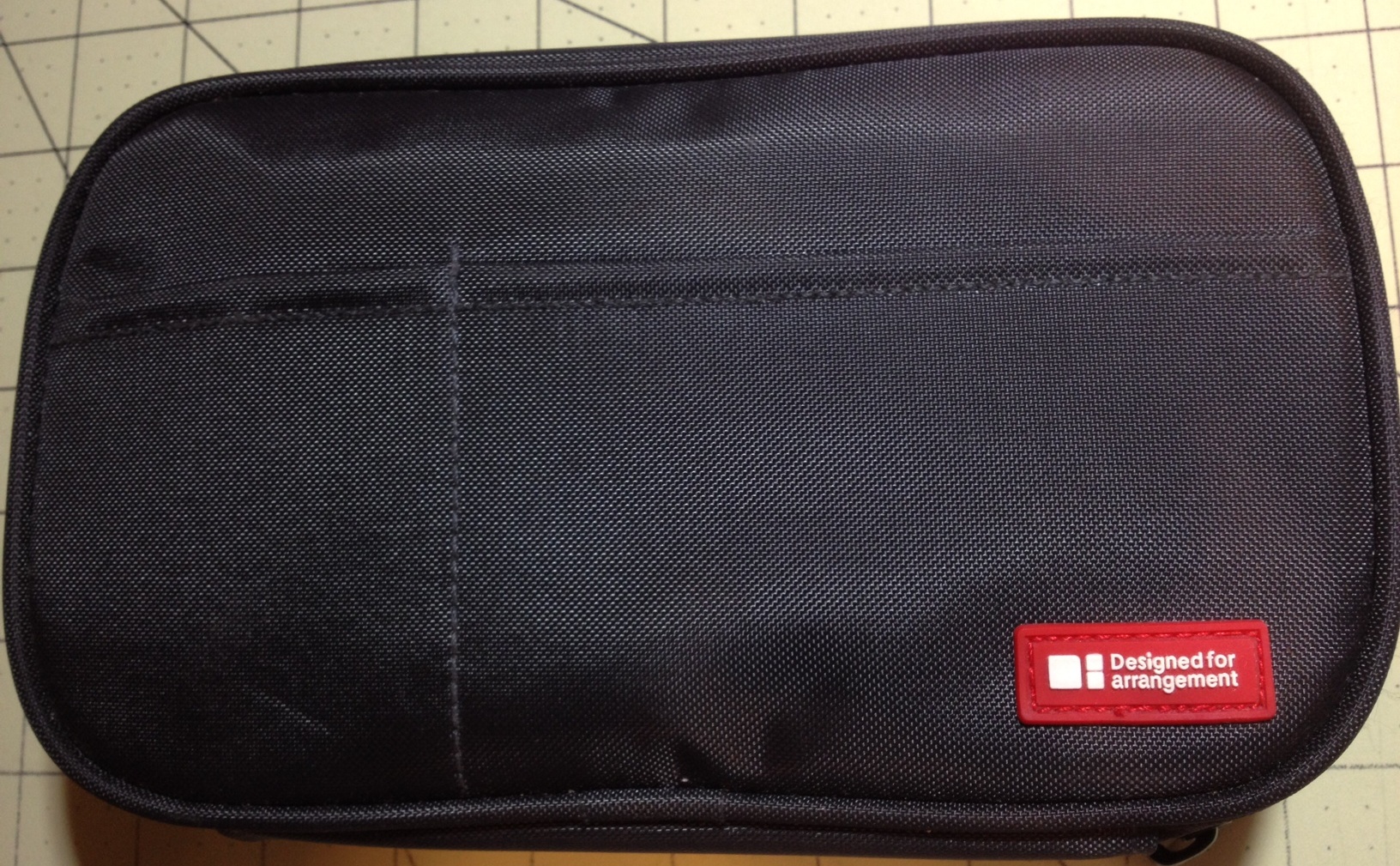
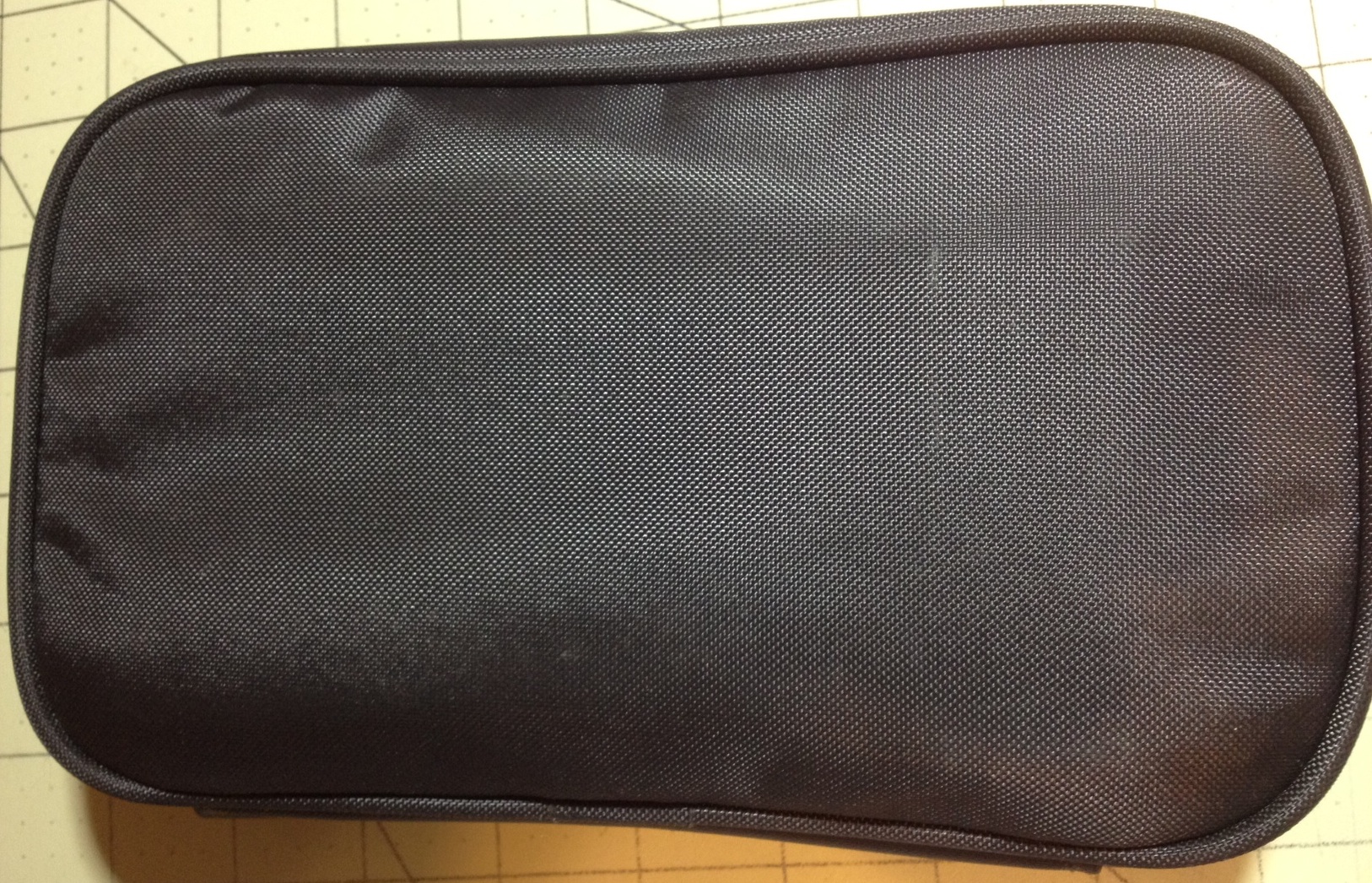
The outside of the case looks pretty standard (mine’s black, but there are lots of available colors), the back is blank and the front has two almost-useless pockets with a small rubber “designed for arrangement” badge. The (double) zipper is roughly in the center of the bag (and it even has the same logo as the front badge on it) and it feels very sturdy and secure, though it has no “brand-name” on it. The hinge is made of a double layer of the same fabric as the rest of the case and shows no sign of wear from several months of use. The whole package comes in at about 8”x4½”.

photo-204photo-198

The inside is a brown version of the same color polyester fabric (regardless of outside color). On the inside of the front there are two roughly inch-wide bands to hold in pens, and on the back inside there is a simple mesh covering about half the area (to hold other items). There is also a center divider/organizational area that is strangely attached to the inside of the back half and not in the middle. I suppose that would have interfered with the hinge, but its placement near the back (really it just favoring one side) can be a problem at times. The front of this divider has another inch-wide band (higher up this time) and a thin pocket (not mesh) at the bottom, and the back has three mesh pockets, the top two being slightly larger than the bottom one.

photo-202

So the configuration of the whole case is to hold pens in the front and other art/office supply things in the back. This works pretty well, especially since the back can hold either. I have 24 pens or pen-like things in mine* and 10 (or so, paper clips are counted as one thing) other things including an eraser, Swiss Army Knife, stapler, pencil sharpener, notepad etc. It fits everything nicely and is very flexible with its organization. I was surprised with what I could fit in it (almost everything I wanted), and I’ve been carrying it around wherever I need pen(cil)s for months now and it shows no sign of stressing the material or really any wear whatsoever.

photo-199

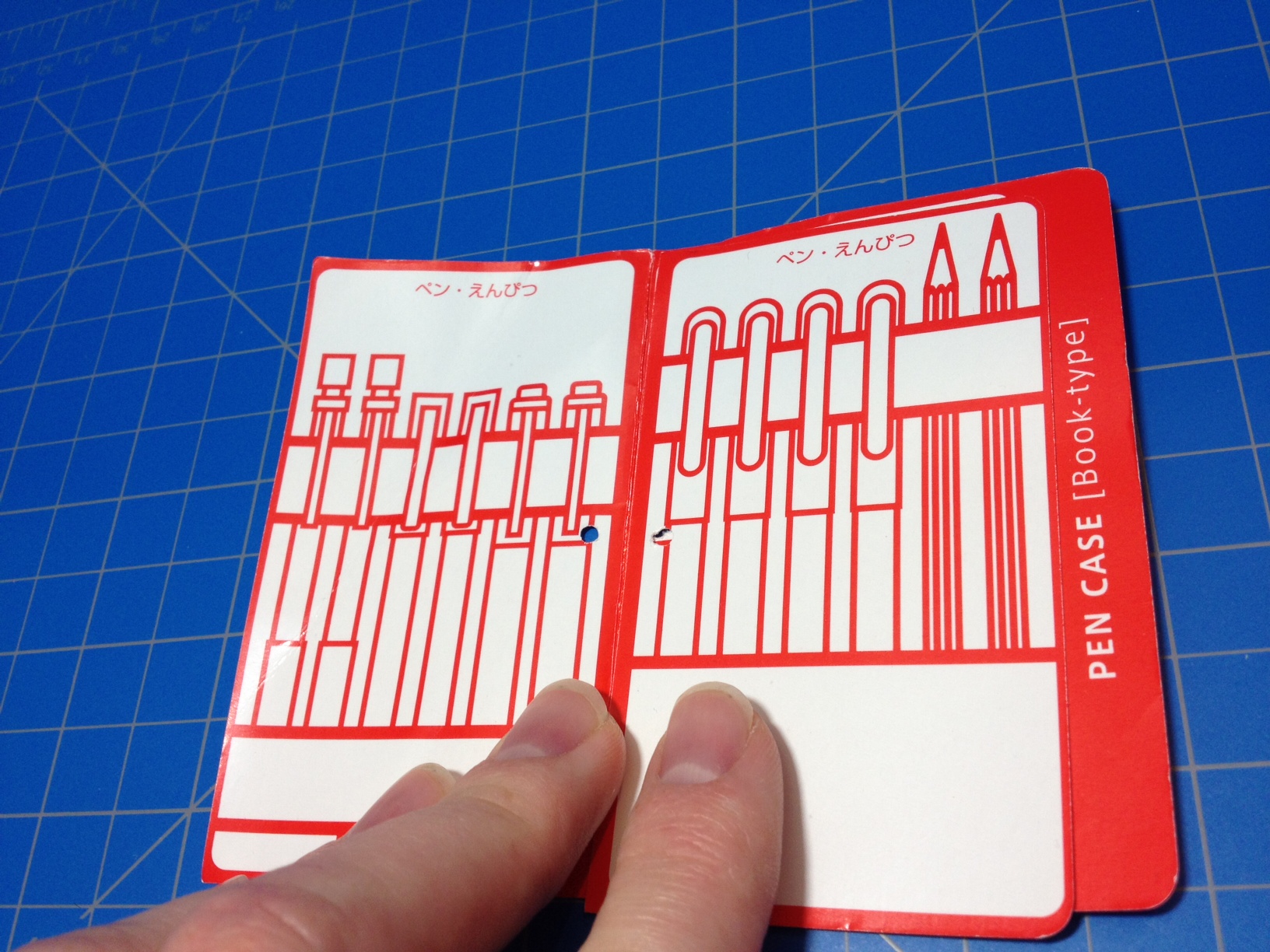
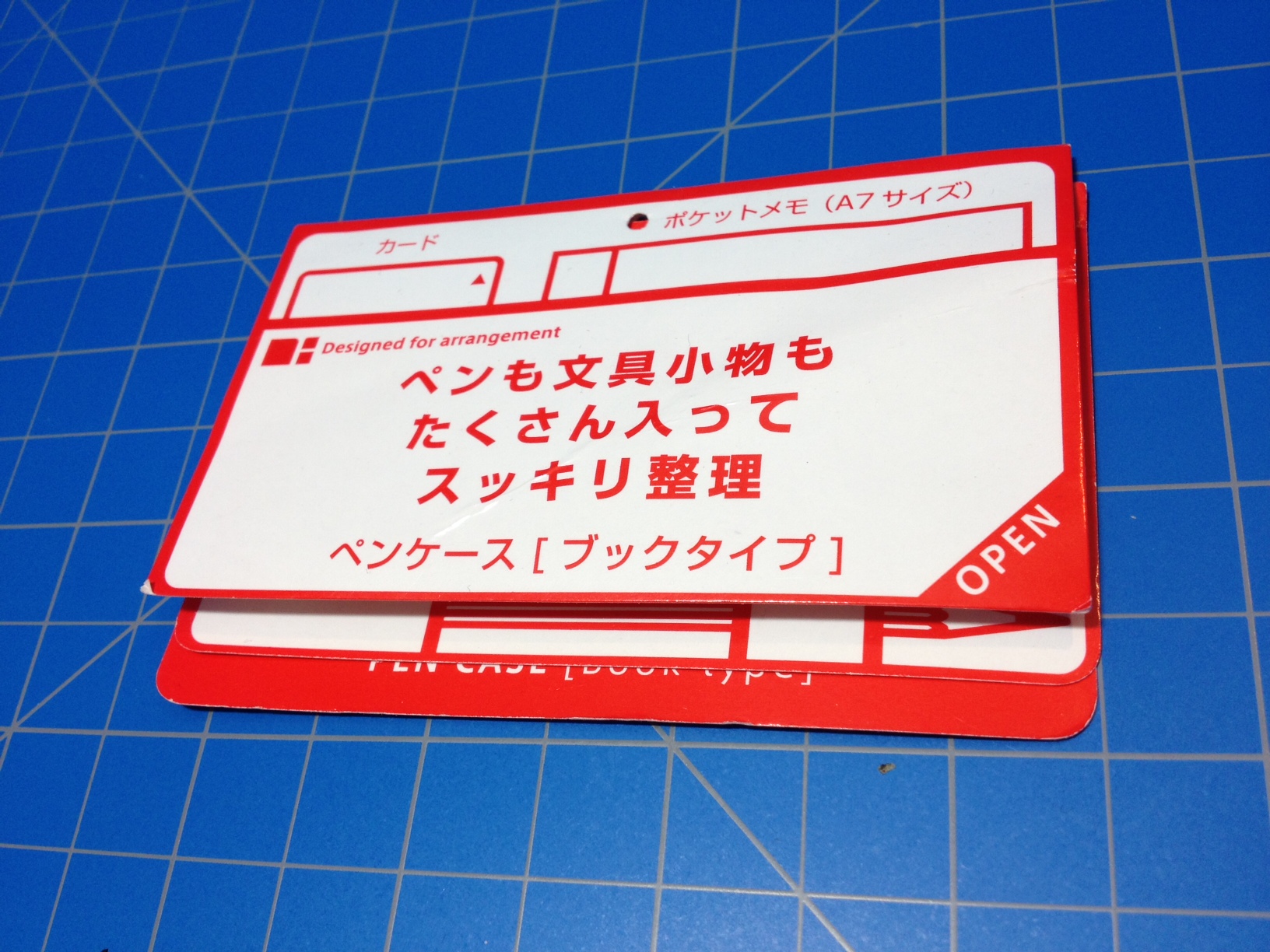
My concluding thoughts could just be “it is the pencil case I use, and I don’t see that changing soon”. And that would be true, I really like this case, it is perfect for my exact usage scenario, but due to its popularity and the number of photos of it I see online, it looks like it could fit quite a few usage cases. It’s inexpensive relative to other cases its size (it probably helps that there is no packaging needed, but it does come with a cute little card that folds out as a representation of how to use the case), it’s durable, flexible (both in the physical and organizational sense), and it’s attractive. I’d definitely recommend it as an upgrade to the regular zipper bag most people use.

photo-233 photo-232 photo-231 photo-230


* Pencil Case Full Contents List

    • 2 Pentel Pocket Brushes
    • Pigma Brush
    • 2 Tombow Duos (N95, N60)
    • Liquid Accent Highlighter
    • Sharpie Twin Tip
    • Autopoint All American in Blue (Caran d’Ache Sketcher Non-Photo Blue Pencil)
    • Pigma Graphic 1
    • Pigma Micron Technical Pens (005, 01, 02, 03, 05, 08)
    • Le Pen 0.03 (003) Technical Pen
    • Tombow Mono Zero Eraser (Round 2.3, Rectangular 2.5×5)
    • Scotch Tape Roll
    • Pad of Generic Sticky Notes (3”x2”)
    • Twist Ties x2
    • Paper Clips x5 (Insulated)
    • 4 inch Ruler
    • Pentel .5 HB lead
    • Pentel Graphgear 500 .5
    • Swingline Tot 50 Mini Stapler
    • Staedtler Mars Plastic Eraser (With Plastic Case)
    • Victorinox Super Tinker**
    • Zebra F-301 (Black, Blue, Green, Red)
    • Paper:Mate Liquid Paper Correction Pen (Signo Angelic White Gel Pen)
    • Kum Pencil Sharpener

28785

Last two photos from Jetpens.com (http://www.jetpens.com/Lihit-Lab-Teffa-Pen-Case-Book-Style-Black/pd/7665) I just had to include a photo of the "booklet" and originally couldn't find mine.

Last two photos from Jetpens.com (http://www.jetpens.com/Lihit-Lab-Teffa-Pen-Case-Book-Style-Black/pd/7665) I just had to include a photo of the “booklet” and originally couldn’t find mine.

Review – Sharpie Mini

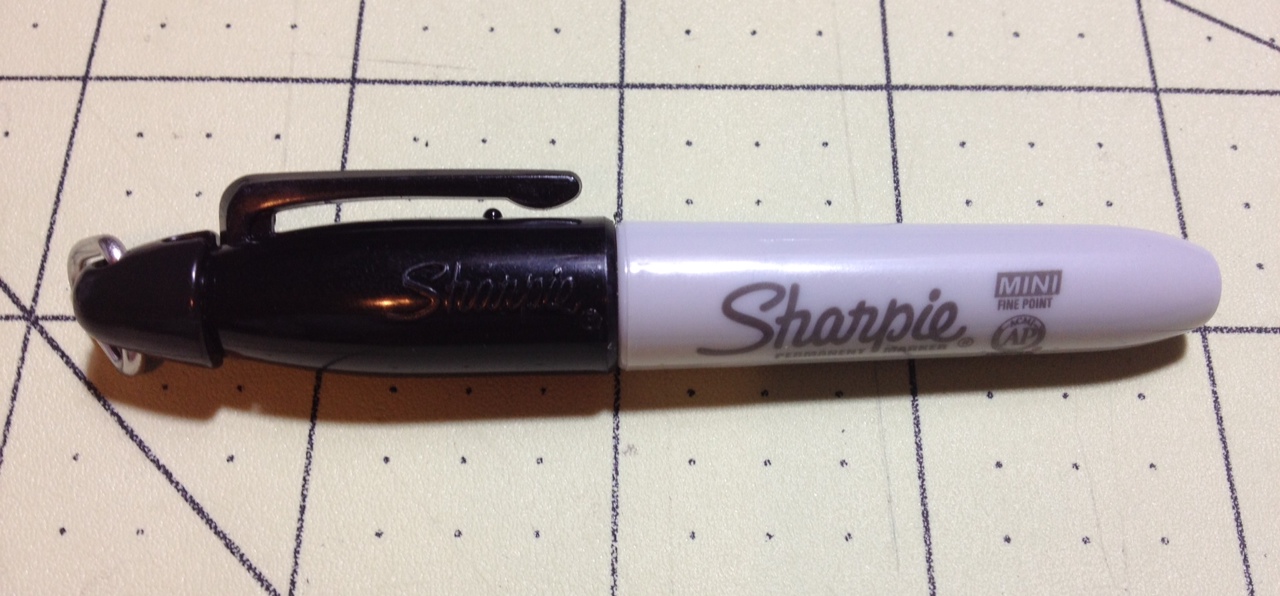
I really like Sharpies, and I have talked about them a few times before. There’s a reason they’re so popular, and as they continue to become more used they are diversifying their product range. One such product that came out a while ago is the Sharpie Mini, which is, as the name would imply, much shorter than the average Sharpie.

photo-149

It has the same starting and ending diameters as the regular sized Sharpie, with an extra part on the tip that snaps on with a lanyard “ring” (triangle). Both the cap and body have been reduced in size, but proportionally the cap is larger. The clip is very similar, but shorter, and works well enough but not fantastically. The necessary information is still printed on the side.

photo-150

The size is quite small, at 3 and 11/16ths inches capped, down from a standard Sharpie’s 5 and ½ inches. Most people would find the uncapped marker uncomfortable to hold without posting, and it’s still only tolerable when it is. The odd shape of the cap and grip make it strange to hold. The rest of the writing is all the same as a regular Sharpie, with a cool black line, very permanent but not perfect (archival) qualities, a nice tip, fast drying, and the ability to smoothly put down a ton of ink.

There’s not much more to say than that they’re smaller Sharpies. And if you like Sharpies but want a more portable option, here it is. The only downsides are they are somewhat awkward to hold, and have less ink. I personally didn’t like the lanyard ring, but that just pops right on and off, so it’s no problem. I have Sharpies around with me a lot because they’re so versatile, and this is a great little thing to decrease their needed carrying size with.

Review – Pentel Sharplet-2 .9mm

Recently I was gifted several mechanical pencils from someone who is a fan of larger lead sizes, and they were attempting to convert me. I have to say I’m not convinced, but the pencils themselves were ones I hadn’t had previous experience with. That isn’t really surprising, considering the vast array of mechanical pencils on the market from companies like Pentel, such as the gift I’m looking at today: the Pentel Sharplet-2 in .9mm.

photo-138

The pencil has a very classic and simple design that’s been around the block. At the back there is a plastic, cylindrical cover for the eraser, which is the standard tiny variety and placed over the lead tube. This back bit also serves as the click-advance mechanism. The barrel is the same diameter as the back cover, and consistent all the way down. The clip is one piece of metal that is friction fit around the barrel; it is a little stiff but keeps the pencil where you clip it. The only other features of the barrel are the brand and model information (that is engraved in as well as painted on, making it harder to wear away than on most writing implements), and about an inch of tiny ridges on the “section” (there is no separate section so that is for you to decide) for grip. The plastic cone that screws on the front is straight and unspectacular, ending in a metal pipe that makes the pencil more drafting-friendly.

photo-137

The leads pencils normally come with are all pretty standard, straddling the line between super dark and super light. The wider leads, just by virtue of being larger, require less pressure to write darker, and write (or sketch) in general with a wider and darker line. There are no real problems or tricks one has to get used to when writing. The eraser is similarly plain. It erases well, but can have trouble getting rid of darker or thicker lines like all erasers of its size that come packed in with mechanical pencils. The pencil does come in different versions for lead sizes; these are color coded for easy identification (it looks like there is some variation in the eraser color, as well).

photo-139

Pentel makes a solid pencil, and this is no exception. The design is simple, comfortable, and durable. It’s really a no-frills pencil. Everything is basic and has a function, it’s easy to disassemble and parts could be easily replaced (though it isn’t expensive enough to justify the hassle of that, it certainly isn’t a disposable pencil, though). The mechanism is satisfying to use, the grip is not slippery, the clip holds, and the retro styling makes it look kinda trendy (not that I care). If you want a simple, solid pencil or want to buy a set with easily distinguishable lead sizes, these would fit the bill.

Review – Kutsuwa STAD Pencil Holder

Okay, I’m going to admit here that I don’t really know the name of this product as the only English I could find on the package was a URL, “made in China”, and STAD. But I do know it’s a pencil holder, so there is that. From my research I’ve found that this is a less-common or less-popular model (as in I couldn’t find it online at all). So I feel the need to say this is not a review of the “one-push” model.

photo-130

Pencil holders have been around for a while, and there are quite a few options to choose from. In fitting with my style, I got the cheapest one (okay it was given to me, but I think that sentence suits me. I haven’t been able to find a price on these, but I bet it isn’t much). After all, it’s just a metal tube to hold a stubby pencil; can it being cheap really hurt it very much?

photo-131

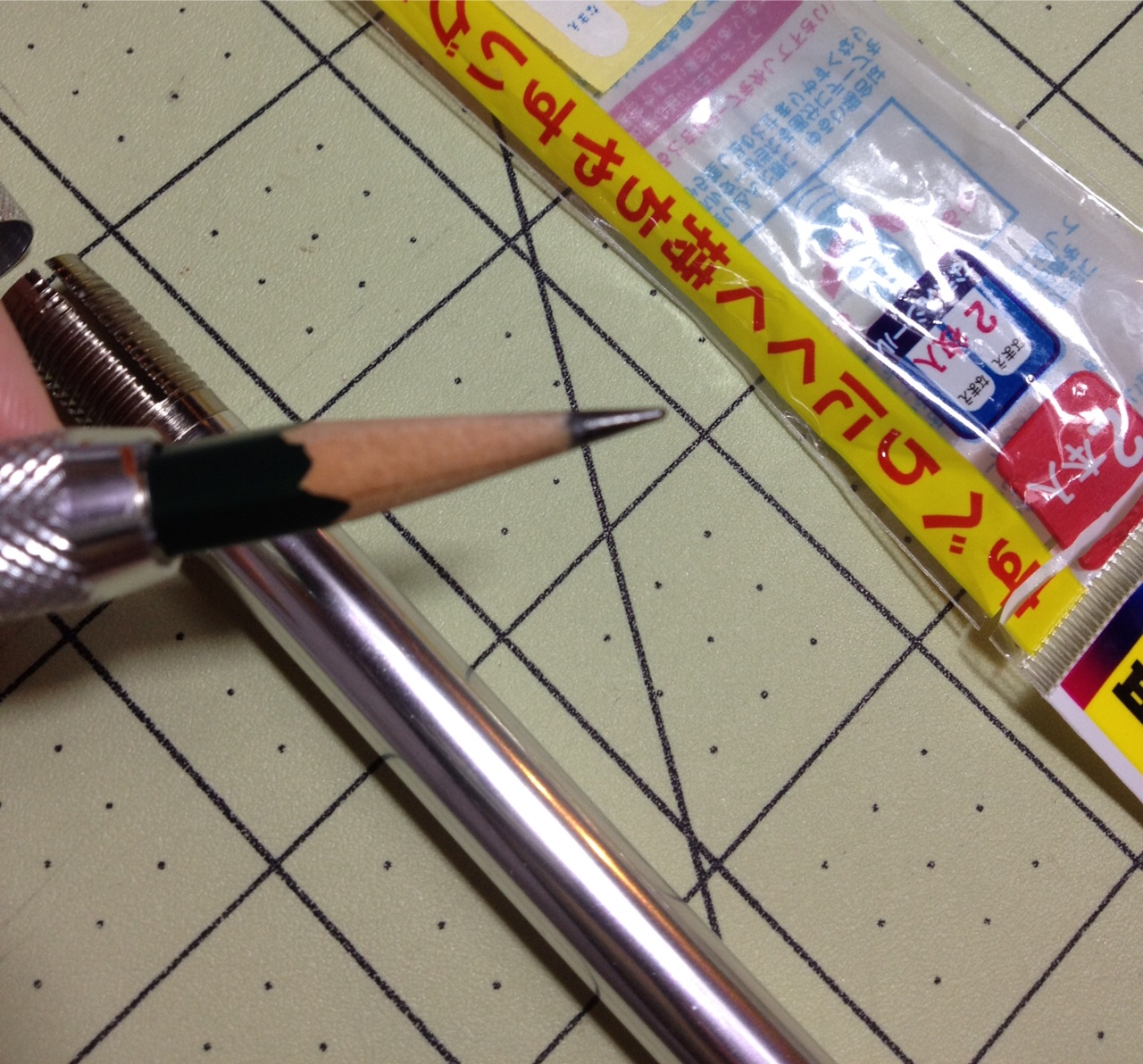
The item comes in a two pack with some labels that you can stick on the side when the pencils (or whatever you’re using) information is covered up or sharpened away. There are only two labels so use them wisely. The holders themselves are very simple: they are two pieces of aluminum, a straight barrel with a stop-bump followed by some threads with cuts in them that allow the second knurled cylinder, which is tapered on the inside, to screw on and force it to act like a collet, holding the pencil in place. The finish is smooth save the knurling and resists major scratching but is quite shiny and reflective.

The pencil is held quite securely inside the device. There is the tiniest amount of give even when tightened down as far I as think I could go before damaging either the pencil or the holder. It is easily enough to allow for comfortable writing or drawing and (fairly) easy sharpening. I’m sure one could throw it hard enough to knock the pencil out, but that isn’t a normal-use scenario. Being dropped from desk or hand height won’t hurt the holder or have the pencil fly out, but it might hurt the pencil. The grip works well enough, but it is a bit slippery, the length of the barrel is enough to allow one to rest it in the webbing between their thumb and forefinger on most hands, though it isn’t the most comfortable or ergonomic. It also seems a bit front heavy with the back of barrel empty when the pencil gets very short.

To be short, no, being cheap didn’t hurt this product very much. It doesn’t feel weighty or expensive, but it does do its job. It holds a pencil that would otherwise be very uncomfortable or hard to control in a way that makes it at least tolerable to work with. It’s simple to use, and easy to handle. And with how cheap it is, I would say it would certainly be worth looking at. It isn’t as nice as the more expensive ones, but if one isn’t very picky, like me, and if you happen to find one, get it.

Review – Huion 17.7” Light Pad (L4S)

There have been some huge leaps in lightbox technology in recent years. I’ve owned 3 lightboxes in my time, one being a repurposed dental x-ray box, the second being a traditional style box and the third being this which I bought as a possibly temporary replacement for my more traditional-style box. But I might not be swapping back so soon.

Their photos look a lot better than mine

Their photos look a lot better than mine

The Light Pad itself is a rectangular prism that measures 17 7/8” diagonal and 14 1/8” x 10 5/8” x 3/16”, meaning it covers quite a large area, but is very slim. The workable white/translucent area has markings on the side indicated in centimeters 12 ¼” (31cm) x 8 ¼” (21cm) with a ½cm margin. The non-workable black margin is about ¾“ all the way around the pad and it’s only features are the power button and a logo. On the side of the device next to the power button is a micro USB port that is only used for power (this version has no internal batteries), and a red LED will come on when the device is correctly connected. On the back of the device there is some modest information and nicely padded feet that prevent the pad from sliding around when being used.

photo-123

Using the Light Pad is a breeze. Simply touching the power “button” lights up the entire workable area to the highest brightness setting (which isn’t very bright, and being shone through a white plastic makes it much less glaring on the eyes). Touching and holding the button will start the pad lighting up, and releasing the button during this will keep the pad at the current brightness setting. This setting is remembered and the next time one starts the device it will light up at the chosen setting unless you hold the button down again. The working area accommodates A4 and Letter sizes well, and the light on the brightest setting easily works with 2 sheets of 110lb cardstock. The plastic the surface is made from is very smooth, but resists sliding and scratches. The feet are also very nice and the device is stiff enough that it doesn’t bend around them under normal use (I still wouldn’t go stacking things on it).

photo-122

I don’t think I’m going to be going back to the more traditional lightboxes anytime soon. In my opinion the only advantage they offer is an angled working surface, which is a feature I never really used. The Huion Light Pad is a great lightbox; it’s sufficiently lighted and durable enough to be easy to work with, thin enough that is stores easily, and draws very little power. Its overall workspace footprint is very small, and its job is done almost flawlessly. I do find the red LED indicator light to be annoying but I can’t think of a better way to do things and it is much less troublesome than other indicator lights I’ve had to deal with. I also have no use for the multiple brightness settings but I suppose it’s better to have it than not. Still, the device has become a permanent feature of my workplace and I would recommend anyone looking for a lightbox to look at these cheaper and thinner LED alternatives to the traditional boxes.

photo-134

Review – Office Depot Ballpoint Pens

Most stores have generic in-store brands or store branded products for various merchandise. That is the case here, with these Office Depot branded ballpoint pens. I don’t know what they cost originally, but they were marked down twice to 50 cents and then 3 packages for $1. Which means I picked up 30 for a $1. There are very few things I wouldn’t say are a good value for that price (I’d probably say stale gum was worth 30 pieces for $1) so it would be hard for these things to let me down. So let’s see how they perform.

photo-114

The bodies of the pens are super simple. They are round and straight with a cap on the end to hold the ink cartridge in on the back, and a slight bump (to hold the cap on) followed by a taper and then the point of the front. The cap is fairly generic with an integrated clip that works but isn’t great. They are all made of translucent plastic that matches the ink and have “Office Depot” printed on the side.

photo-115

Writing is surprisingly smooth, especially for mediums (they’re a bit broader than normal mediums I would say) and at times they can write with minimal pressure. The packages say “No skip guarantee” which isn’t true, but it wouldn’t be for any pen. It blobs after a certain amount of writing time but I don’t know a pen that wouldn’t, and it’s less than expected. They do tend to have (sometimes severe) startup issues though, especially the longer they are left capped, as do most cheap ballpoint pens.

photo-116

The colors are fairly standard office colors, nothing at all natural looking. The black is just off-black and slightly warm. The red is deep and doesn’t shade much, but still very noticeable. And the blue is quite dark, but still differentiate-able from the black except in the lowest of lights. All are essentially waterproof and dry quickly.

Overall, I’d say the pens are probably worth it. They have no frills, and likely a high margin of error. Any problems, though, and the pen can simply be tossed. They do come with wax-sealed tips, meaning they will last longer in storage, but after that they need to be used fast before they dry up. The bodies are sufficiently hardy to last easily for the life expectancy of a pen like this. The cap seals, the clip holds, and the tip writes. Everything’s functional and unspectacular. If you’re running a business where pens are needed frequently by customers or employees, or you’re just forgetful and lose your pen, these are cheap and they work until they disappear. But they won’t be impressing anyone.

Review – Faber-Castell Pitt Artist Pen Brush Manga 6 Color Set

I’m not a Manga artist. And I usually don’t use color in my art. Mostly because it’s hard, like using brush pens is hard. What I’m trying to say is that my perspective on this particular set of art implements might not be the view of the average person who might find them very useful. With that said, let’s take a look at this set of Faber-Castell Pitt Artist Pens, the Manga 6 Color Brush set.

photo-90

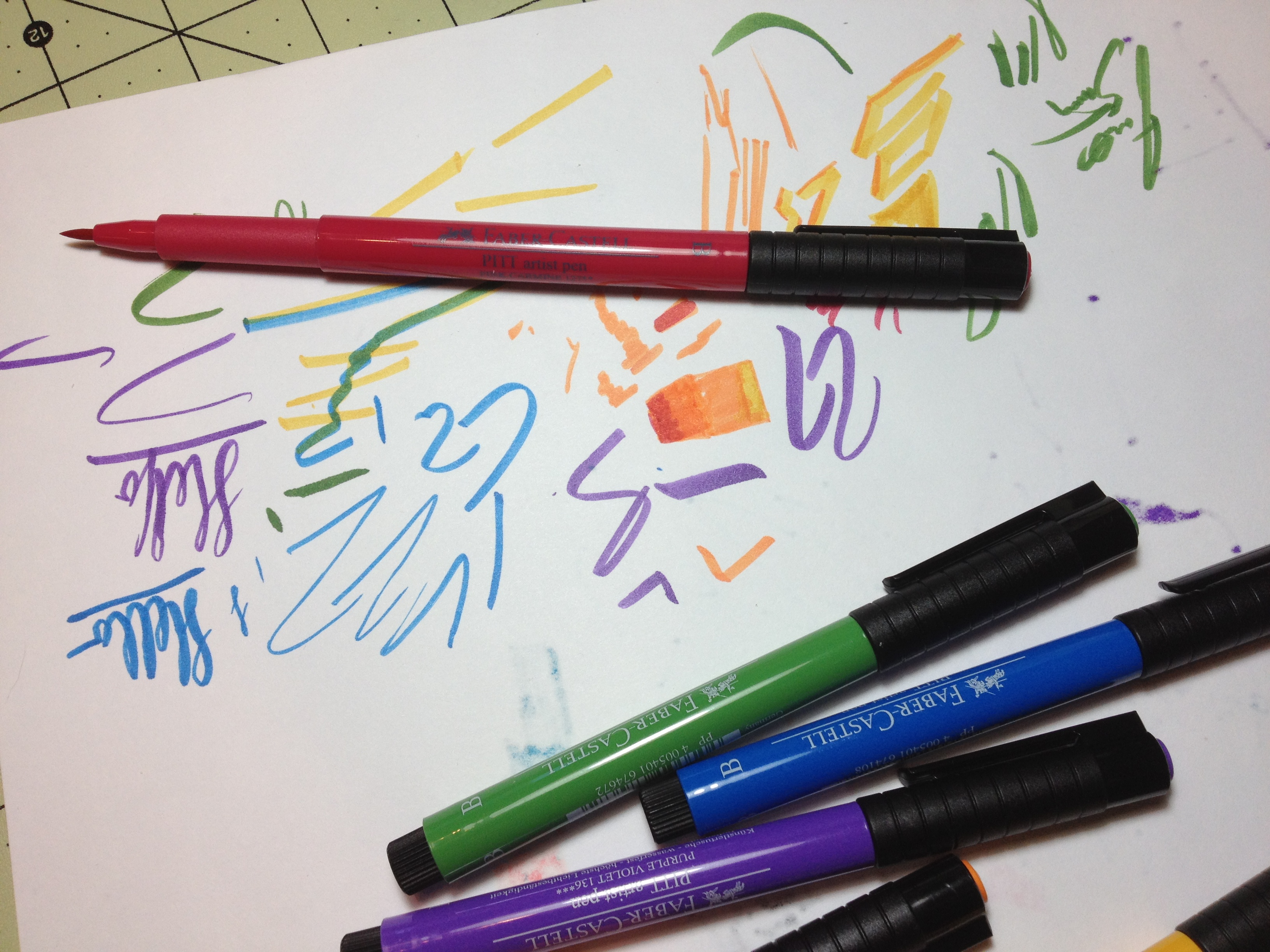
The pens themselves are fairly plain. There is an indication of the size (“B” for brush, in this case) on the top of the cap. The cap has a set of groves running around it with a shiny finished top and clip. The clip is the same piece of plastic as the cap and does its job in an unspectacular way. The body is straight until the very end, which protrudes as a fluted section for posting, at which it’s effective. The body contains all of the needed information in several languages, which makes it seems a bit too crowded, but I can’t really complain. The section is slightly textured, which is wonderful; it isn’t slippery or uncomfortable. After that is a tapering section for the cap seal and the brush point itself. The cap seals and holds well onto this point.

photo-92

The brushes themselves aren’t of the bristle variety, but are more like a flexible porous point. This makes them much less finicky, and better for a disposable item like this one, as they would wear out faster than a bristle brush. Their flexibility is nice, going from a medium point to one several millimeters wide with relative ease, and they can be bent to some pretty severe angles without any long-term damage being done. The amount of ink they lay down is good. It increases with the pressure on the tip, and makes a full line. At times it skirts on “not enough”, and layering will definitely change the color significantly. Sharp turns with the lighter colors will leave a darker area on the corner. On office paper this amount of ink will bleed though, especially at the ends, but on cardstock there is barely show through.

photo-93

The six colors themselves are a decent selection, but not great: Dark Naples Ochre is a nice, natural looking yellow. Orange glaze is a bit pale and not really a color that is found in many places. Pink Carmine is a bit too dark and is hard to use. Purple Violet, besides having a redundant name, is dark and pleasant, but again not very natural. Phthalo Blue is a great looking lake or ocean blue, but is a bit dark for most uses, and Permanent Green Olive is quite dark and olive, which is more suited to deeply forested areas or jungle than to plains or some more common areas. Still, the colors interact with each other very well, and they dry fast, but do mix on the paper, meaning one can get interesting color combinations while still having their pens keep relatively clean.

photo-91

Overall, the set is a good set to introduce oneself to the Pitt artist brush pens. It has a nice simple selection of colors that allows for experimentation and can be used for the base of a larger set. But I certainly wouldn’t consider it a complete set for creating an art work. Many more colors would be needed, and more tailored to one’s specific purpose. For instance, there is very little here to make skin tones with, which would be very important in Manga. They’re very good pens, but the set is incomplete.

Addendum: I failed to mention the water/smear proofing of these pens when I first completed this post. Both of which are very good. When interacting with other inks or materials the lines generally stay solid, which is good for resilience but bad for blending. When hit with water the lines don’t move, but they do bleed a tiny bit of pigment.


Review – Bull & Stash Notebook Travel Stash

Bull & Stash was a kickstarter for a notebook company that I only found out about because my brother was excited about it. The particular product he was looking at still hasn’t entered regular production, but I figured I’d test out one and see if they were any good in general.

photo-72

The basic idea is that the notebooks have removable pages. This way, different types of paper can be used, and notes can be organized after they’re written, both inside and outside the notebook. This is accomplished by having two posts on the back of the notebook that have removable screws to allow paper to be put in an out.

photo-70

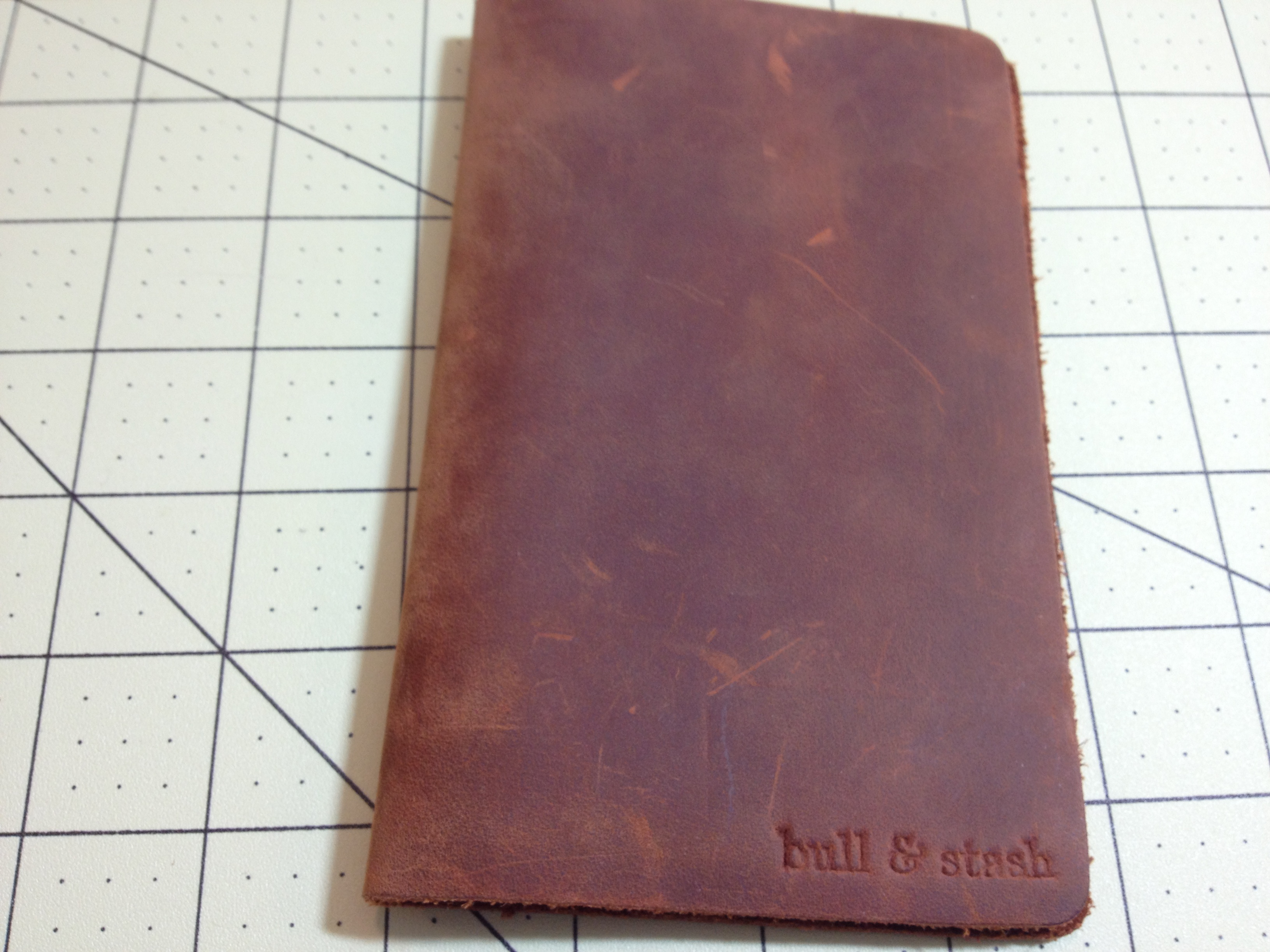
The cover is a simple slab of supple leather with two holes in the back, and a logo stamped on the front. I’ve seen some complaints that the logo is stamped unevenly, and while it is on mine this doesn’t bother me. The cover did have an unsightly curl when I first received it (the back and front didn’t match up) but this has gone away with use. On the inside, the hardware is simple, and it screws down a flimsy cardboard piece with a place for basic lost and found information. Inside this is the paper. Around 40-45 pages can fit in at a time, but I’d recommend fewer. The cardboard and leather cover do provide enough stability to write on in most situations, but I wouldn’t be taking long notes or more than a few without a stable writing surface. The cardboard is also prone to bending, decreasing the stability over time.

photo-73

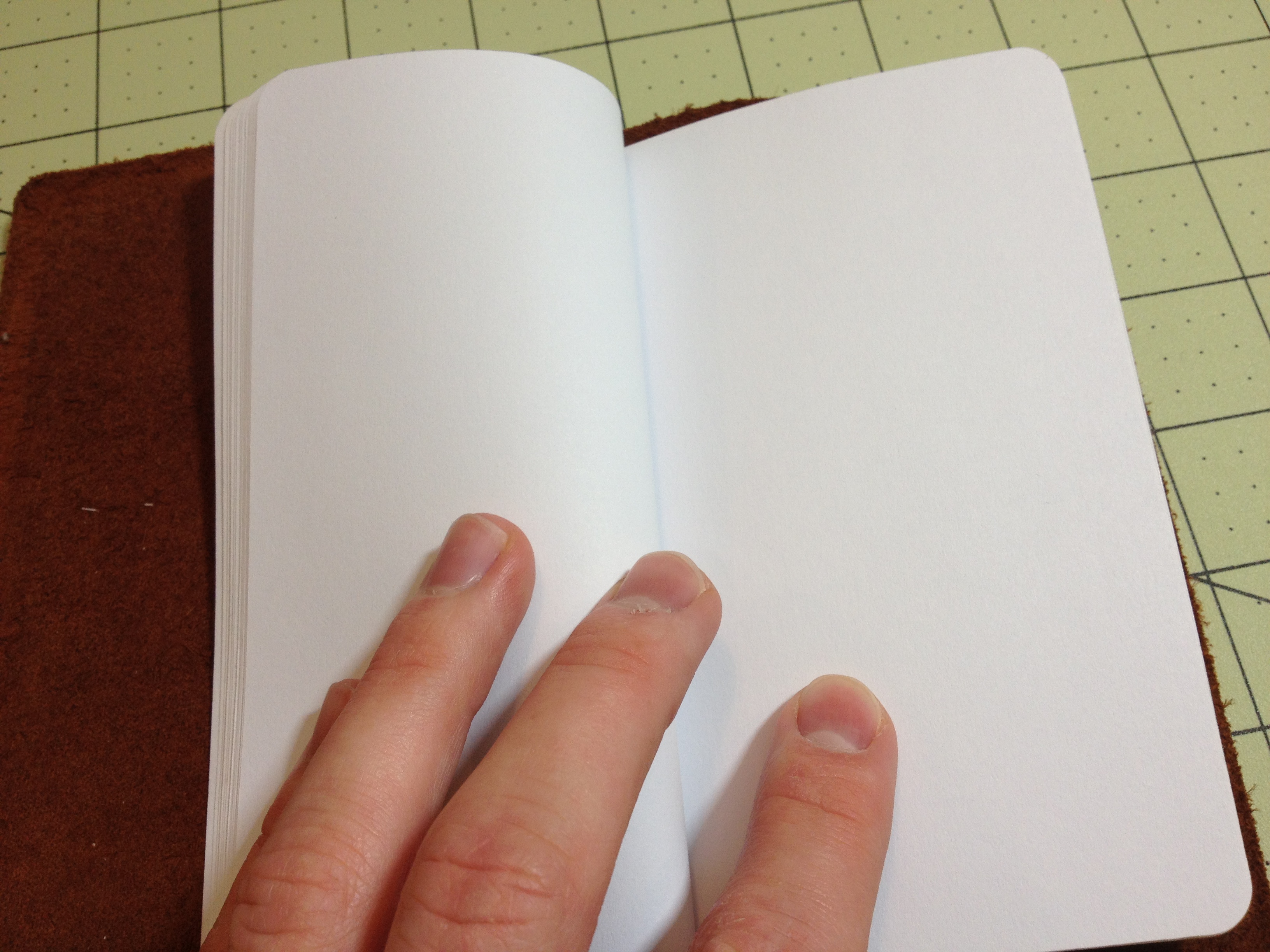
The paper is all right. It is fairly bleed resistant, but prone to feathering inks. The graph and lined refills are only printed on one side, which is fine by me because I only use one, but others might find it annoying. It would be difficult to use both sides in this book, though, because the hardware makes flipping through pages difficult. I’d remove the first few pages regularly to prevent them from being destroyed, and I can say that writing on the back of a page is almost impossible. The hardware also cramps the writing space. If things were a little smaller I’d be more happy.

photo-71photo-69

In the end, it’s a solid first attempt. It seems more like a portfolio builder, though, and I don’t know how supported the books will be. There are little inconsistencies and design problems that make me shy away from recommending the books. It’s not worth the current asking price to me if the cardboard and stamp quality aren’t fixed. And the edges of the notebook aren’t finished very well, leading to a very strange appearance. It definitely will last a long time: the leather and steel hardware aren’t going anywhere. But it just seems like the designers dropped the ball a little bit. It’s almost too simple and feels like it’s slapped together from existing items. Maybe my problems with the hardware are solved in the larger version, but I doubt it. Until a more usable and better finished version is released, I’d hold off.