Review – Master Mechanic Carton Cutter

With so many options, one carton cutter review just wasn’t enough, and I am now back to review one that has a higher price. But does that make it better quality?
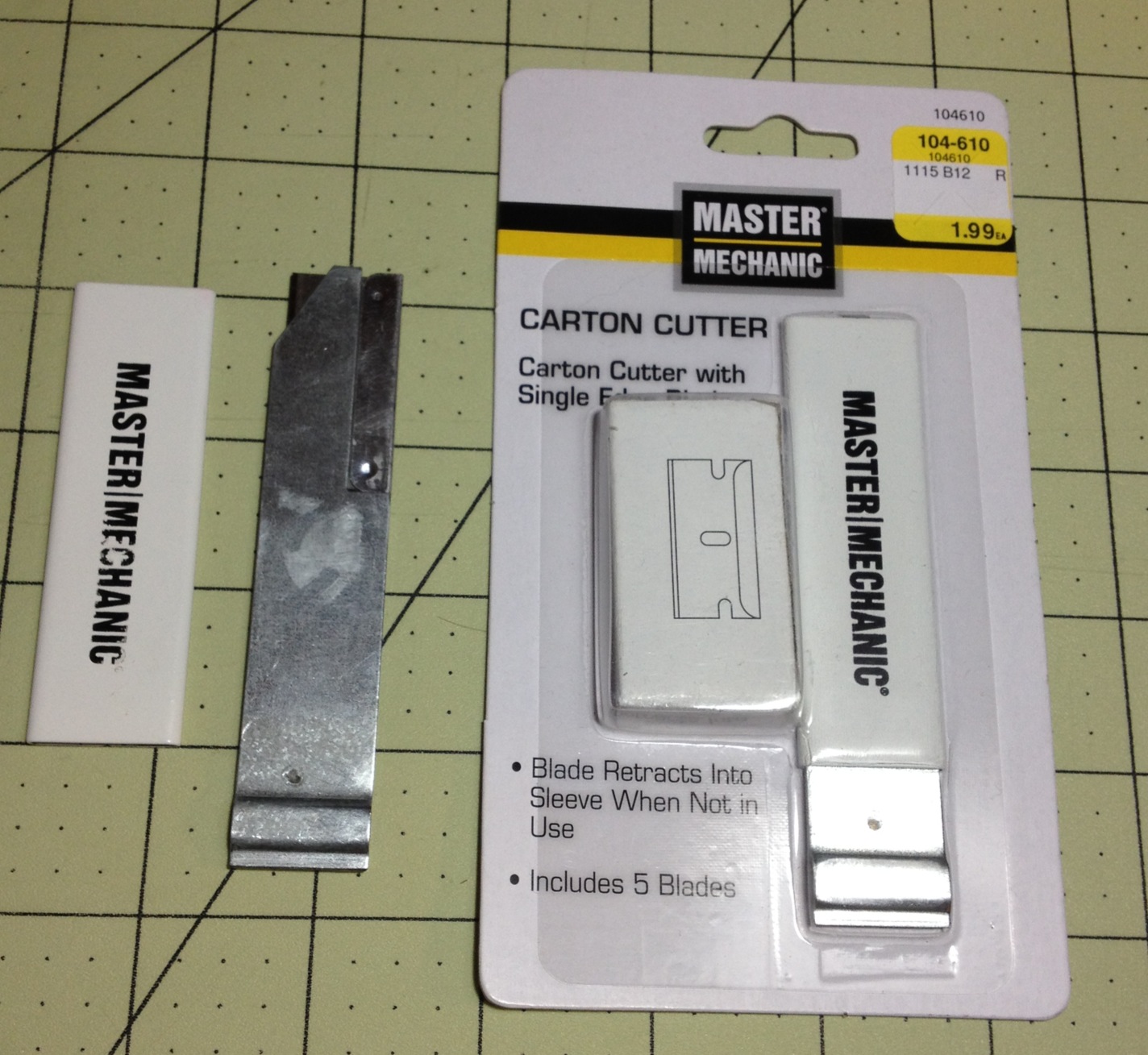
photo-127

The short answer is yes: it is better quality, but I’ll just go over a few things. The cutter has a bent and nicely shaped/joined sleeve made out of an unknown metal (probably steel), with an insert that is a folded piece of metal that will hold a razor blade. It also has a cutout “spring” that creates the tension instead of the body doing that, making it more pleasant to use. The sleeve also has a nice, easy-to-hold white paint applied, which makes it easier to see. The Master Mechanic logo that is printed on top of this looks nice but wears off easily and looks unsightly when it does.

photo-128

Use is easy and smooth, tapping (a hard surface) both to deploy and retract the blade-holding mechanism (placing the back on a hard surface and pushing firmly will deploy the blade, and doing the reverse with the blunt part of the front will retract it), but it does have a way it “likes” to go in and works better that way. The razor blades that are included are also slightly better than the cheaper knife, but in general one won’t get much use out of single-edge razor blades, which are sharp but cheap and prone to snapping or deforming.
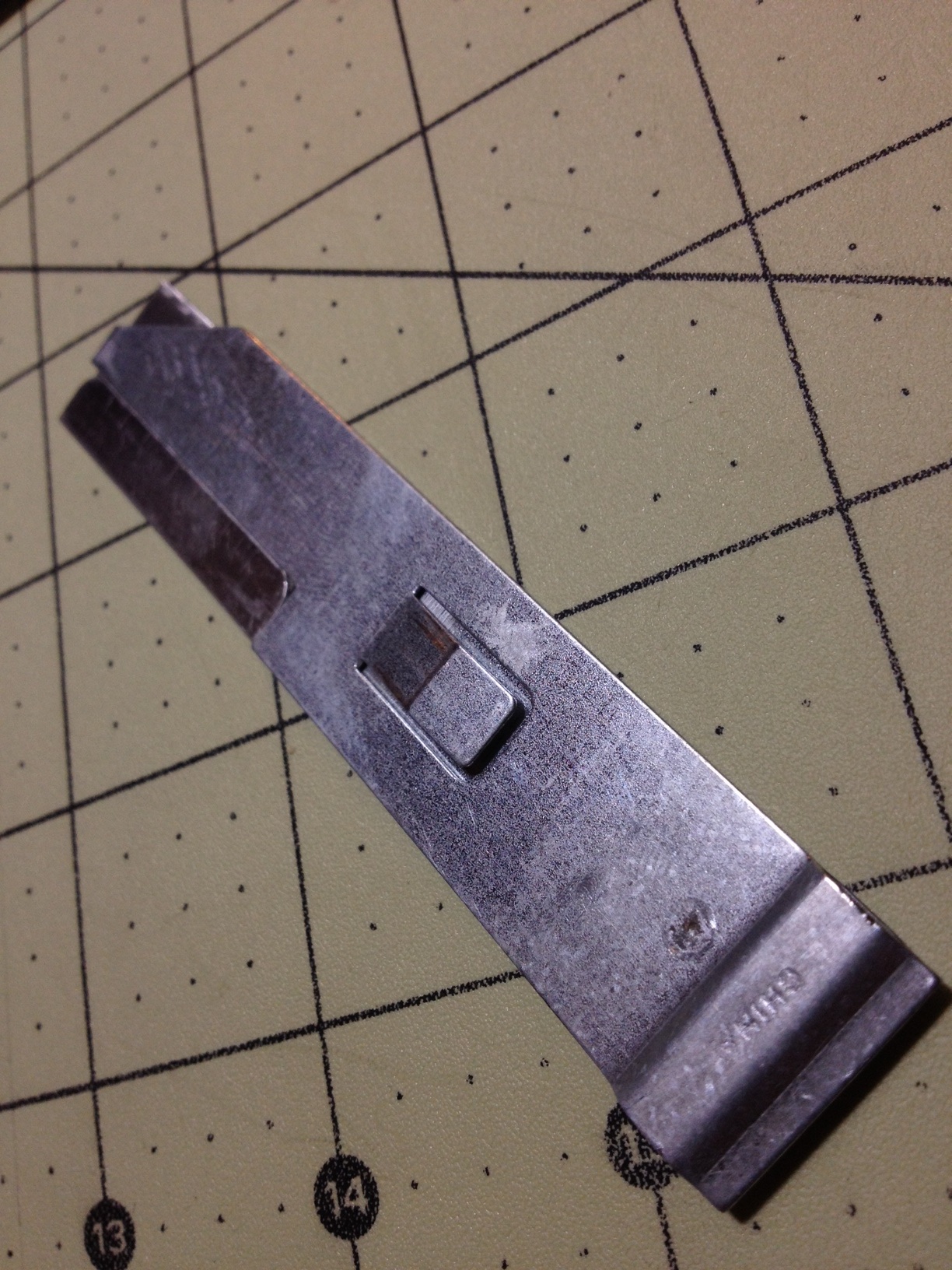
photo-129

Is it worth it to buy a better version of such simple product? Probably not for most people. While this is a better carton cutter than cheaper ones, it isn’t really less dangerous or easier to use per-se. The fit and finish are as good as one could reasonably expect on a product this cheap; the amount of friction on deployment is constant; and the device will likely last for a long time. Still, a carton cutter isn’t a tool most people will be worrying about, and the less expensive ones would be easier to replace if they were misplaced or damaged.

Review – Tach-It Metal Tap Knife (Carton Cutter)

Depending on the size or type of art (or craft) works one is doing, carton or box cutters may or many not be on one’s radar or considered a useful tool. But even if one isn’t using them for opening supplies or actually during the art-making process, it still isn’t a bad idea to have one around since they’re cheap and easy to use. The dozen-for-five-dollars that these are priced at might be a bit larger set than most people would need, but it’s still inexpensive enough that it wouldn’t be hard to pick up.

photo-124

Tap knives are one of the simplest types of box cutter. On this model, the outside sleeve is a single aluminum piece that has been bent around on itself. Inside is another piece of aluminum that has been folded with a cutout at one end and a flare at the other. A standard single-edge razor blade fits in the cutout end (and can be replace by sliding the insert out of the housing) while the flare prevents the knife from protruding too far forward.

photo-125

Use is simple. Tapping the back of the knife against a hard surface will extend the blade until it is stopped by the protrusion on the back. And when the cutting is done, the front of the knife can be tapped on a hard surface to retract the blade. Very little of the blade is exposed making it fairly safe to cut with, and it’s held in securely enough that I wouldn’t worry too much about accidental deployment of the blade. How well it cuts and how long it lasts depends on the razor blade used. And the ones that come in the package are not the greatest. The points are especially brittle, and while they can keep an edge for a decent amount of time, they will crack and split with too much stress.

As far as a cheap, effective, and simple box cutter goes, they work well enough. The fit and finish leave something to be desired: the edges are rough, the tolerances vary quite a bit, and no surface is smoothed and finished, but they are so inexpensive they are practically disposable. They cut, they’re reasonably safe, and they could last quite a long time since there’s not much too them. One could get better quality, but I’m not convinced you’d really need to.

Review – Huion 17.7” Light Pad (L4S)

There have been some huge leaps in lightbox technology in recent years. I’ve owned 3 lightboxes in my time, one being a repurposed dental x-ray box, the second being a traditional style box and the third being this which I bought as a possibly temporary replacement for my more traditional-style box. But I might not be swapping back so soon.

Their photos look a lot better than mine

Their photos look a lot better than mine

The Light Pad itself is a rectangular prism that measures 17 7/8” diagonal and 14 1/8” x 10 5/8” x 3/16”, meaning it covers quite a large area, but is very slim. The workable white/translucent area has markings on the side indicated in centimeters 12 ¼” (31cm) x 8 ¼” (21cm) with a ½cm margin. The non-workable black margin is about ¾“ all the way around the pad and it’s only features are the power button and a logo. On the side of the device next to the power button is a micro USB port that is only used for power (this version has no internal batteries), and a red LED will come on when the device is correctly connected. On the back of the device there is some modest information and nicely padded feet that prevent the pad from sliding around when being used.

photo-123

Using the Light Pad is a breeze. Simply touching the power “button” lights up the entire workable area to the highest brightness setting (which isn’t very bright, and being shone through a white plastic makes it much less glaring on the eyes). Touching and holding the button will start the pad lighting up, and releasing the button during this will keep the pad at the current brightness setting. This setting is remembered and the next time one starts the device it will light up at the chosen setting unless you hold the button down again. The working area accommodates A4 and Letter sizes well, and the light on the brightest setting easily works with 2 sheets of 110lb cardstock. The plastic the surface is made from is very smooth, but resists sliding and scratches. The feet are also very nice and the device is stiff enough that it doesn’t bend around them under normal use (I still wouldn’t go stacking things on it).

photo-122

I don’t think I’m going to be going back to the more traditional lightboxes anytime soon. In my opinion the only advantage they offer is an angled working surface, which is a feature I never really used. The Huion Light Pad is a great lightbox; it’s sufficiently lighted and durable enough to be easy to work with, thin enough that is stores easily, and draws very little power. Its overall workspace footprint is very small, and its job is done almost flawlessly. I do find the red LED indicator light to be annoying but I can’t think of a better way to do things and it is much less troublesome than other indicator lights I’ve had to deal with. I also have no use for the multiple brightness settings but I suppose it’s better to have it than not. Still, the device has become a permanent feature of my workplace and I would recommend anyone looking for a lightbox to look at these cheaper and thinner LED alternatives to the traditional boxes.

photo-134

Review – Field Notes Bic Pen

Field Notes is a company that makes great notebooks, and they’ve always added a bit of a more personal touch to things. One of the ways they did that was by having branded pens and rubber bands readily available (I believe at some point in their orders, single pens and rubber bands were thrown in for free, but they can be purchased in larger packs easily.) The pens aren’t very expensive and fit very well with the brand’s style just on looks, but do they perform as well as the paper?

photo-120

The pen is actually just a branded Bic Clic pen, which isn’t a bad thing really. The entire design is a pleasant taper from the middle, where a ring separates the two halves of the pen. On the top there is a chrome-ish simple clip with Bic’s information on it, and a similarly-colored thin clicking mechanism (which give a very satisfying “click” when used). On the front of the pen, the ballpoint protrudes when the mechanism is depressed and the Field Notes information is printed on the barrel. The only colors of the pen are black, silver, and white, making the whole thing quite understated but also very nice.

photo-121

The writing is standard Bic writing. It is smooth enough, black enough, and steady enough to be serviceable in the vast majority of scenarios. It is a medium point, which is usually too broad for me, but definitely is unspectacular and fits with what most people are comfortable with. The ink is, of course, essentially waterproof once dry, with minimal skipping or blotting. I’m not particularly impressed by the writing, but I’m certainly not disappointed.

I’m sure the Field Notes Company did a bunch of research to find both a good enough and inexpensive enough pen for their brand that they wouldn’t have to try to make in-house. And I think they succeeded. The pens are dependable enough, sturdy enough, and simple enough to be almost entirely unremarkable (in both a good and a bad way). They fit the utilitarian image of the company, and are worth having at least as a backup pen.

Review – Poppin Fineliners

Poppin is a company that I don’t know much about, but their pens definitely catch the eye. When I saw this set of fineliners (felt tip pens) from them, I knew I had to pick a set up. The packaging and the feeling of the pens themselves appears quality, but do they live up to their first impressions?

photo-118

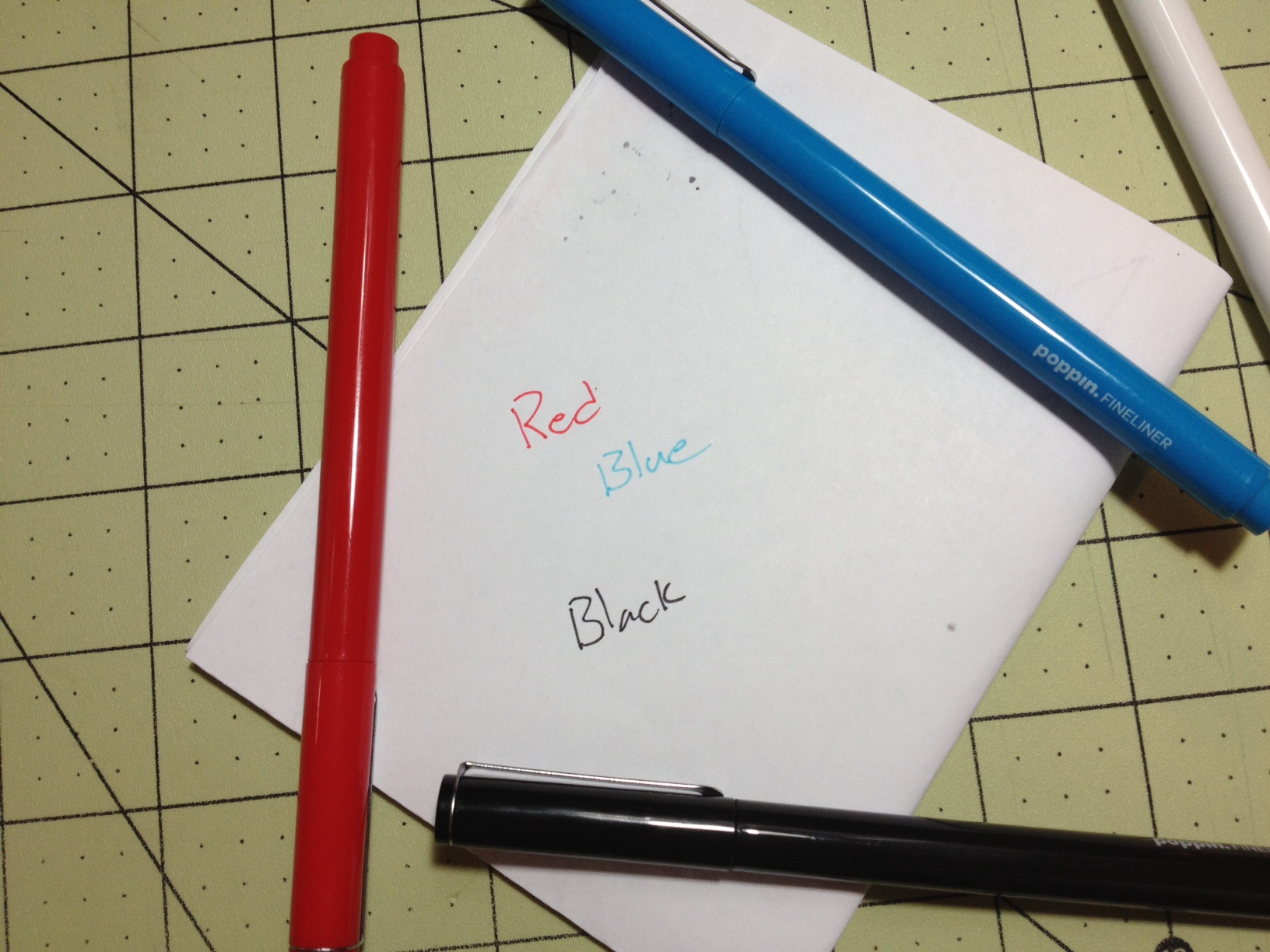
The outsides themselves are very nice looking. At the bottom is a small inset for posting the cap, which connects via a visible seam to a very smooth and featureless barrel. Underneath the cap are a series of step downs that are quite short and would be uncomfortable to hold, leading quickly to a standard-looking felt tip point, making it more comfortable to hold the pen by the barrel when writing. The cap, when on, has a slight step up from the barrel but is equally pleasantly smooth, and its only features are a dimple in the top and a rather unique u-like clip that looks like a Lamy wire clip that has been flattened.

photo-117

Functionally, the clip is about useless. It doesn’t have any dimple with which to grip, and is spaced farther from the cap than the width of most fabrics, meaning friction won’t be holding it in. The tips themselves aren’t that great, either. Like most fineliners, they do write with minimal pressure, but unlike most they do not give a consistent line. Dots very quickly form when writing or drawing due to having a very fluid ink not well controlled, and when writing fast at times skips can even develop, though this is rare.

photo-119

The colors of black, blue, and red are very standard, but the two extra colors are very washed out, blue especially. The blue is very pleasant sky blue when controlled well, but becomes darker quickly. But it still sticks out compared to other office blues. Red is nice and vibrant, though its tone is closer to that of a pink. It’s the least prone to problems as the ink is a bit thinner and less likely to dot. The black is fortunately a black and not a very deep purple or gray as some are. It is slightly on the cool side, which is unusual. The colors do match their corresponding pen bodies fairly well, but the inclusion of a 4th pen that has a white body, but also black ink, is slightly confusing. They unfortunately do bleed through the paper, but have minimal shading and resist water (while they do spread slightly when wet, they remain easily readable).

Overall I think the pens aren’t really up to par with what one can get for their office. They are sturdy and the ink works well, but without functional clips, they must remain at the desk or in a case, and their writing performance leaves much to be desired. The user just ends up with a pen that feels slightly rough and dry. If style and durability are your main concerns (and potentially ease of writing as the ink almost jumps from pen to page on contact) these might work for you. But for those looking for the superior, super-smooth and comfortable writing experience, or a portable reliable writer, these can be easily passed up.

Review – Office Depot Ballpoint Pens

Most stores have generic in-store brands or store branded products for various merchandise. That is the case here, with these Office Depot branded ballpoint pens. I don’t know what they cost originally, but they were marked down twice to 50 cents and then 3 packages for $1. Which means I picked up 30 for a $1. There are very few things I wouldn’t say are a good value for that price (I’d probably say stale gum was worth 30 pieces for $1) so it would be hard for these things to let me down. So let’s see how they perform.

photo-114

The bodies of the pens are super simple. They are round and straight with a cap on the end to hold the ink cartridge in on the back, and a slight bump (to hold the cap on) followed by a taper and then the point of the front. The cap is fairly generic with an integrated clip that works but isn’t great. They are all made of translucent plastic that matches the ink and have “Office Depot” printed on the side.

photo-115

Writing is surprisingly smooth, especially for mediums (they’re a bit broader than normal mediums I would say) and at times they can write with minimal pressure. The packages say “No skip guarantee” which isn’t true, but it wouldn’t be for any pen. It blobs after a certain amount of writing time but I don’t know a pen that wouldn’t, and it’s less than expected. They do tend to have (sometimes severe) startup issues though, especially the longer they are left capped, as do most cheap ballpoint pens.

photo-116

The colors are fairly standard office colors, nothing at all natural looking. The black is just off-black and slightly warm. The red is deep and doesn’t shade much, but still very noticeable. And the blue is quite dark, but still differentiate-able from the black except in the lowest of lights. All are essentially waterproof and dry quickly.

Overall, I’d say the pens are probably worth it. They have no frills, and likely a high margin of error. Any problems, though, and the pen can simply be tossed. They do come with wax-sealed tips, meaning they will last longer in storage, but after that they need to be used fast before they dry up. The bodies are sufficiently hardy to last easily for the life expectancy of a pen like this. The cap seals, the clip holds, and the tip writes. Everything’s functional and unspectacular. If you’re running a business where pens are needed frequently by customers or employees, or you’re just forgetful and lose your pen, these are cheap and they work until they disappear. But they won’t be impressing anyone.

Review – Parker Jotter Stainless Steel

There are many pen brands out there, specializing in various things. Most Americans who know more than nothing about pens would recognize the Parker brand as a longtime quality maker. One of the least expensive, most accessible, and longest running products they make is the Jotter ballpoint/gel/rollerball pen that utilizes Parker’s own refill type. I have here the “all stainless steel” version, how does it hold up?

photo-113

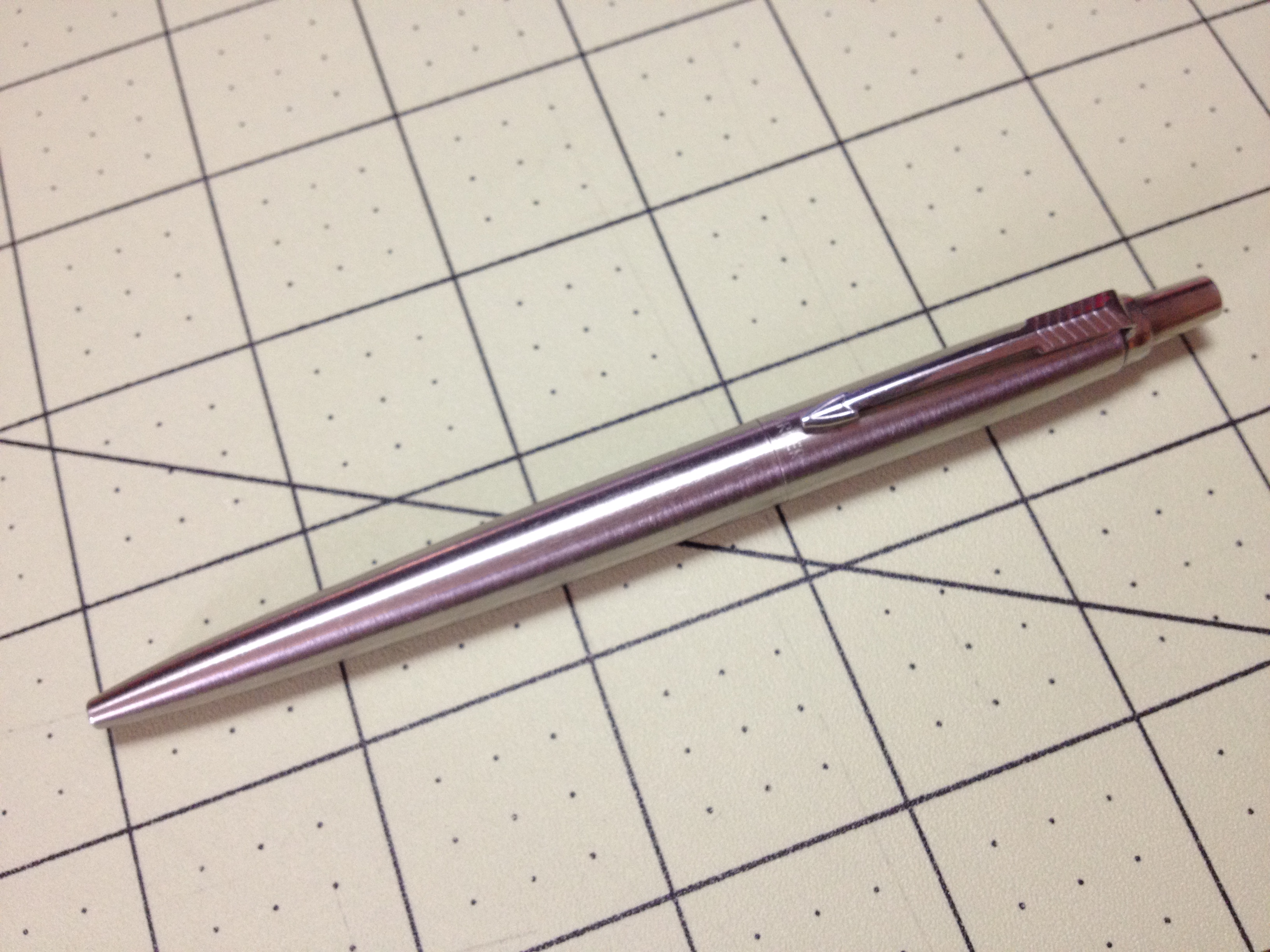
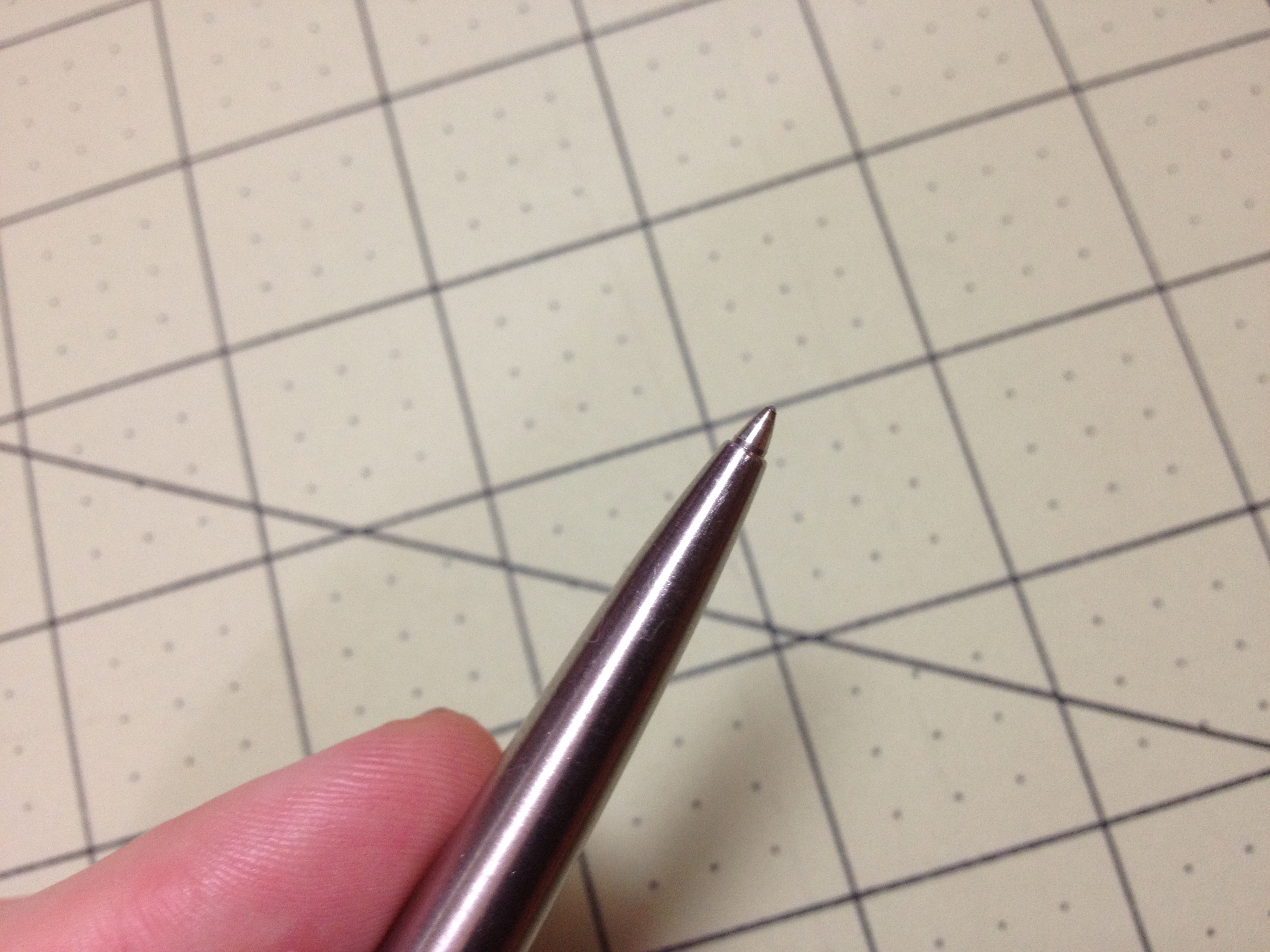
The pen itself is obviously all stainless steel. At the back is a very pleasantly tapered click button, followed immediately by the clip shaped as the famous Parker arrow. The pen from there slowly bulges and then tapers down to the end where it almost seamlessly meets with the pen’s point when it is not retracted, with only a slight seam 1/3 of the way down the pen where it is unscrewed to be refilled.

photo-112

Now I can’t speak to the Parker brand refill this pen came with as I don’t remember how it wrote and I currently have a Monteverde refill inside (that writes very well, as I said in my review). But I can talk about the feel and sturdiness, both of which are superb. The click mechanism is a bit different and it just feels not as advanced as some of the more modern pens, but it is very solid and satisfying. There’s nothing wrong with it, it just feels older (like using one of those drafting pencils that have been in production for 60 years). And the steel finish is very easy to grip, while beings stylish and well-wearing. Scratches and such barely show up, keeping the pen looking nice and professional for some time.

Overall it’s a great pen, and for the price (a little more expensive for the “all stainless” one) it is easily a great value as one pen could last a lifetime (though refills might not be cheap). It’s hardy, with a time tested, solid mechanism, and while it doesn’t look as nice or handle as well (or have as many expensive materials) as the more expensive ballpoints out there it still looks professional, fits in with both modern (stainless) and retro (colors) styling, and can take a rough and tumble life. It’s a tough little trooper.

Blog 11-3-15 – Things are late, and unfortunately will continue to be late

Hello followers and viewers. I value my schedule highly, and I believe I have done a good job over the last long while of keeping up with that schedule. That being said, if you view my content with any regularity you will have seen that I have been late the past few weeks on a few things, and have unfortunately exceeded previous records of my own lateness. This is especially not fun for me with my comics, which I consider the core of my online content.

Now I don’t want to just make excuses, but I have had a few things happen recently that have made progressing more difficult. I moved into a “limbo” situation that has not gotten resolved as quickly as I had hoped, and makes my work and living environments undesirable from a “getting things done” or “moving around comfortably in clear spaces” kind of way. I’ve also had to change jobs to one with irregular hours that prevents me from being in “work mode” for my various comic and article writing/drawing. And finally I have a large project I’ve been working on with a very hard deadline that is very behind schedule. I’ll talk about that more as it nears completion.

So with all of those things I was still able to be on top of things for a while, but it wasn’t going to last. And it looks like things will be problematic for a little while longer. I hope you can bear with me while I work this out, and I hope to have all of the items I have been late on and caught up to all of the new content by the end of November, but it might end up closer to the end of the year. I hope you enjoy the content regardless and I hope your holiday season is less stressful than mine is going to be.

Best Wishes,

Austin Smith

www.Dragoncompany.org

www.Dragonfunnies.com

www.Artsupplycritic.com

Review – Slant Collections Mini Journals Preppy Stripe

I’m not exactly the type of person to be found in Tuesday Morning (the store) but I did find myself in there one day, and there was quite a bit of interesting stuff. And being someone who has been drawn to the stationery aisle since I was little I found myself in the stationery section, where I found a set of Slant Collections mini journals, this particular set in the discontinued “preppy stripe” (it was Tuesday Morning, after all). Let’s take a look.

photo-107

The books themselves are 3¼ x 5¼ inches, just smaller than a Moleskine pocket book. The cover feels like plastic-coated cardboard and in this version has a very simple design that comes in 3 colors. It is a single piece bent around and stitch-bound onto the 70 inside pages. These pages are lined with a thin 7mm ruling that is the same color as the main cover color, printed on a very white background.

photo-108

The paper itself is quite thick and a medium roughness. It is very bleed-and feathering-resistant despite this. Fountain and other liquid ink pens are handled well, and with most other writing utensils both sides of the paper can be used, though at this size I wouldn’t recommend that. The cover and binding are very well done and hold up (the stitching looks very slightly unsightly at times) and the corners are nicely rounded to prevent the corner bending that some books get. On the table the book lies adequately flat and while the cover does bend out of shape it bends back just as easily.

In the end I have been surprised by these little notebooks. They are hardy, easy to carry, great writing things. It has taken me some time to review them as they weren’t good enough to replace any of the books in my normal rotation (but that’s more because I prize consistency, a book would have to be head and shoulders above to get met to move something out of my rotation). I enjoyed using them very much (even the pink one) and if all of the Slant collection journals are as good as these were I’d consider more in the future.

Review – Rhodia Pads

I’ve been using Rhodia products for years now, and the way that I was introduced to them was their famous pad-style books. I got one as a gift and used it almost every day in school (only almost because I wasn’t taking notes with it but writing down ideas). And I’ve had a few around ever since. Let’s take a look at what made them so widely used and praised.

photo-104

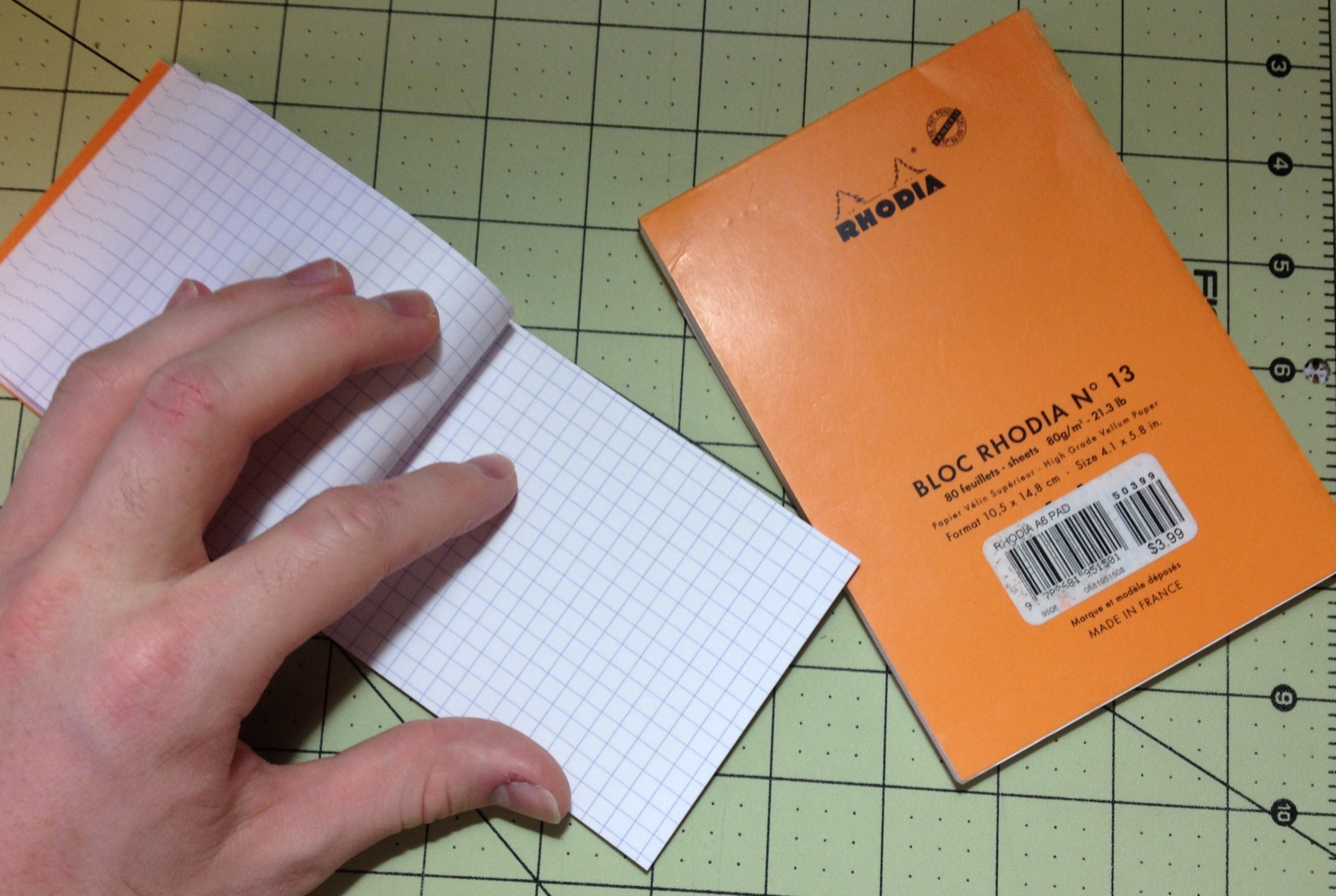
The pads themselves are simple, and have very few differences between the sizes. They are an orange rectangle, with one or two heavy-duty staples in the top and 3 creases on the cover to allow it to be folded over the spine easily and cleanly. Both the front and back have the Rhodia tree logo, with the back one being smaller and above some of the book’s specifications (in metric and imperial) and usually a price tag/bar code. Inside there are perforations on the top of each page, and with the thickness of the paper and the quality of the perforations, tearing out pages is easy, but they do not tend to fall out with hard use.

photo-105

The size of the paper in each book varies, and it comes in line or graph versions (dot in the premium editions, and unfortunately no blank). The ink used is a light blue-ish purple that doesn’t interfere with ink or pencil, the line paper is a bit darker. The paper is vellum and very ink resistant, meaning long dry times but little feathering, bleed through, and page crinkling. Show through can still be a problem, but most ballpoints and fountain pens write very well on the paper with almost no side effects. Paints and markers such as Sharpies are where the paper starts to not hold up as well, but the minimal crinkling, and the lack of bleed-through is still a very good performance. The coating on the paper also allows for very smooth writing, but one might have to press down hard with less wet pens.

photo-106

I might have already given away my opinion of the books in the first paragraph, but they are lovely. The writing experience is super smooth and pleasant; the worry that one might have with other papers when writing with liquid ink pens in non-existent. The binding is hardy and the cover wears very well with minimal things to be problematic. I’m generally not a fan of covers that fold over the top of the book, but I make an exception here. They make great traveling journals, school notebooks, coffee shop list makers, etc. And they can survive both fountain pens and being tossed around in a backpack. If the styling was a bit more my speed I would carry one around all the time. Still they are very versatile, and for the smaller ones, fairly inexpensive.