Review – Cross Jotzone Notebook and Pen

Notebooks are quite handy things, but most of the common ones look a little unprofessional. If the standard spiral and composition books won’t work for you, and Moleskine just seems a little cliché, maybe Cross has the answer for you with its Jotzone series of notebooks.

photo-242

I feel I need to put a bit of a disclaimer here at the front. I usually carry a notebook around with me and try to get through about a quarter of the pages before I do a review on it (that’s why I’ve done so few notebook reviews: it takes time), but on this one I certainly didn’t get anywhere close to that, for reasons that will be explained in a moment.

photo-246

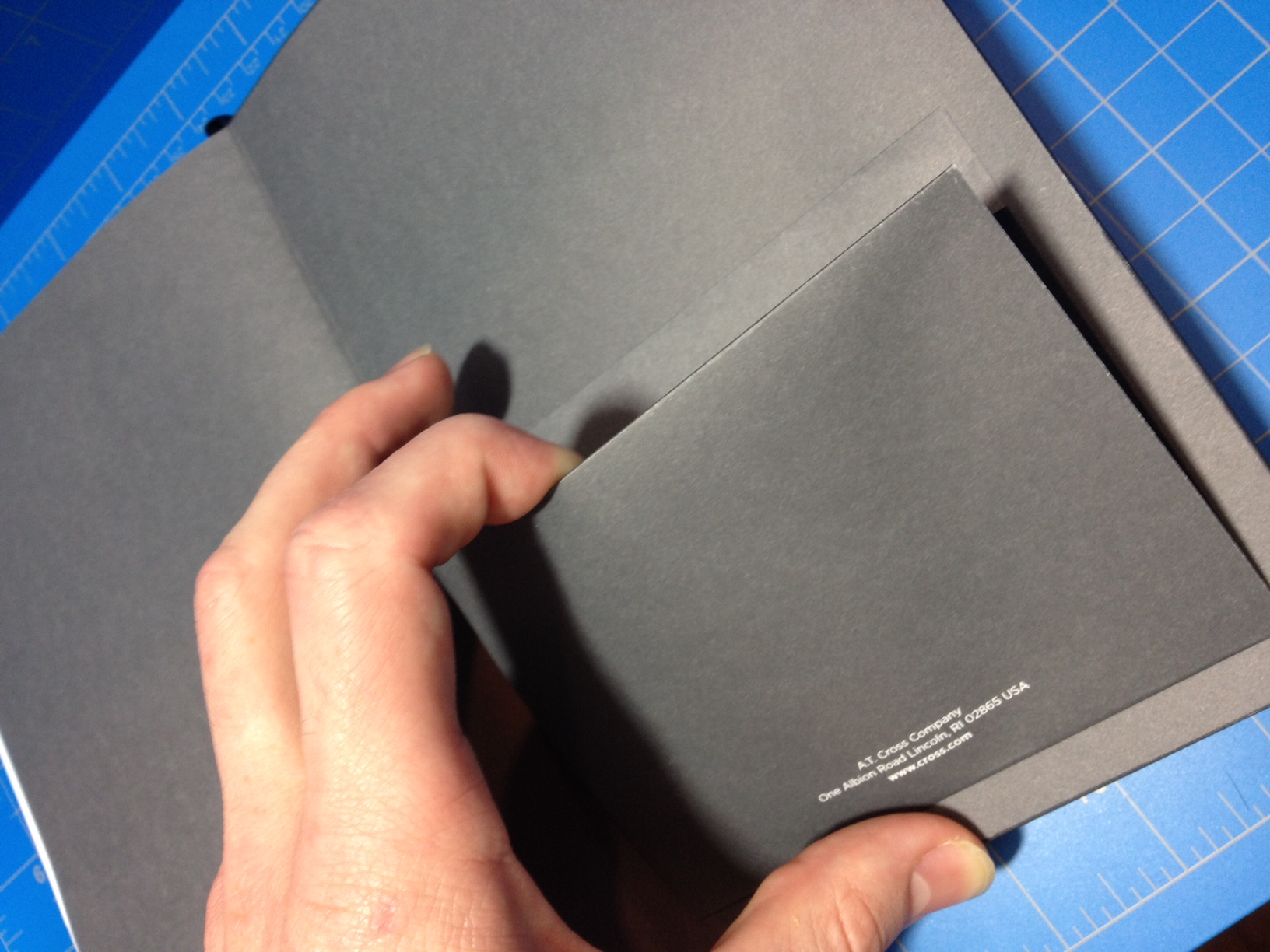
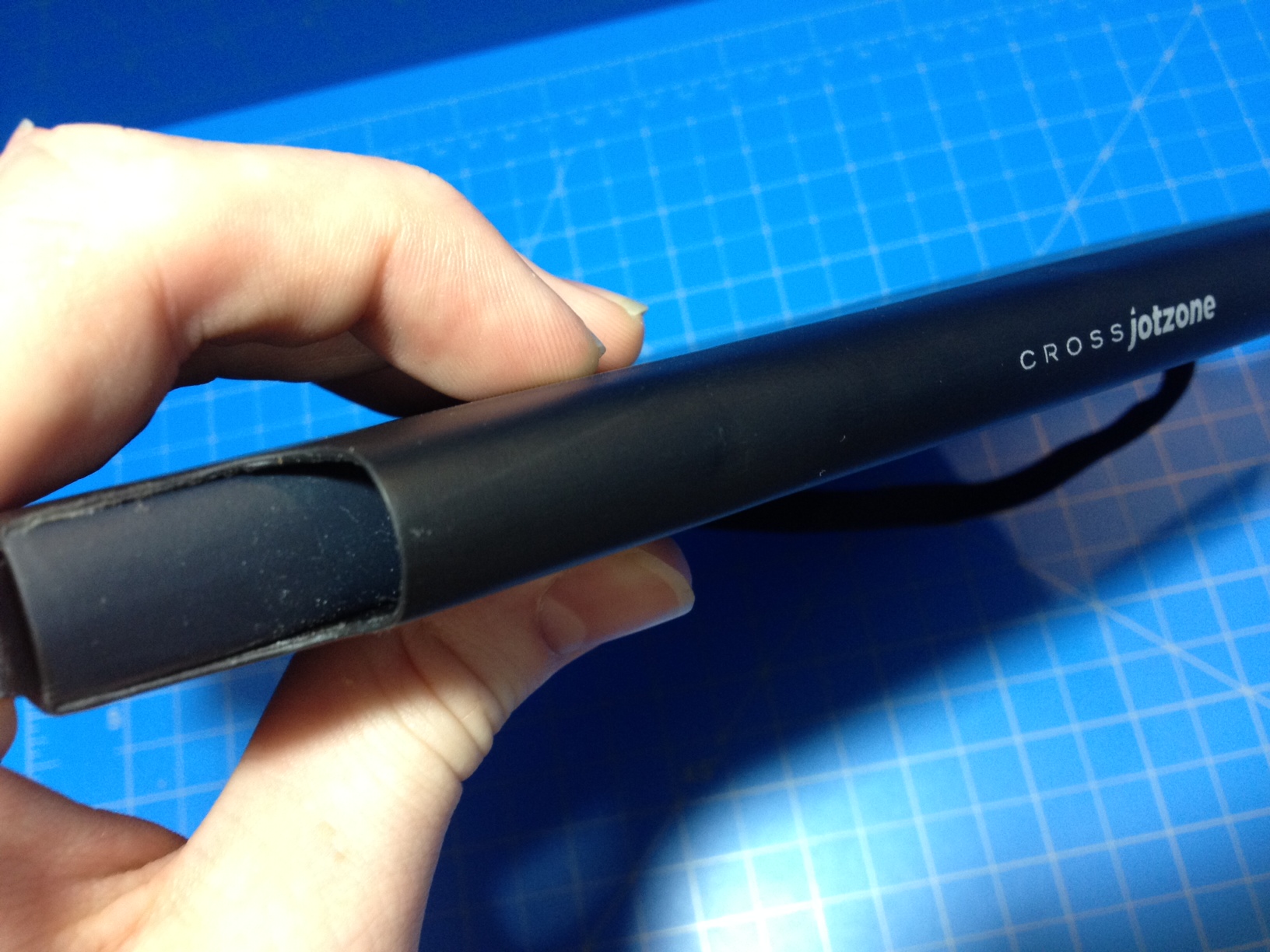
The cover of the book is a nice, smooth faux-leather, black save for a triangle on the lower right of the front where the color varies (mine’s blue). It covers the full 5.5” x 7” paper part of the book, with a ½” extra bit around the spine, which is hollow, creating a “tube” where pens can be stored (it also helpfully says “Cross Jotzone™” on the spine) . “Cross” is nicely but subtly stamped both on the back and the triangle in the corner. An elastic band is attached to the back in a novel way, so that when it is being used to hold the book closed it lines up with edge of the colored triangle. Inside there is nothing special behind the front cover, but inside the back is a small, simple cardboard and paper pocket. It is attached so it is accessed from the top, a decision that with its small size seems to have been made only to avoid comparisons with Moleskine.

photo-249

The paper is very good, a nice 100gsm (70lb) that is smooth, but not too smooth in my opinion (it certainly isn’t as smooth as the Clairefontaine paper fountain pen people love). It handles fountain pens and liquid roller balls quite well; with minimal feathering and show-through under normal usage conditions (I’ve done no test with flex pens or triple broads) and the dry time isn’t that bad, though far from instant. The pages themselves are nice and white with a ¼” grey ruling that stops before the page ends, and a stupid grey triangle in the corners right under where the triangle is on the cover. This area helpfully says “Cross Jotzone™” on every page, and it’s supposed to be where you put your quick summary notes or something so you can easily riffle through the pages and find what you’re looking for. I think this is dumb (and I hate pre-printed words on the pages of my notebooks) but nobody asked me and the paper is good enough that I could easily ignore that (and the ruling that is far too large for me).

photo-247

But now for the reason I haven’t used the book that much, and wouldn’t buy another one. I admit it’s quite petty but I use my notebooks a lot, and I want them to look good. That’s why I still use Moleskine classic hardbacks, it’s very hard to find a notebook that resists damage (page corners bending, cover denting/ripping/bending etc) better than those books. And this one is, cosmetically speaking (it feels easily strong enough to not fall apart structurally before being used up) is the worst I have encountered. After sitting for a day or two in my bag, with the only other items in the bag being non-spiral notebooks the cover became covered (no pun intended) with irreversible scratches and scrapes that are quite noticeable. Basically, if you want to maintain the “Cross” professional look, it’s a desk notebook, and I have reviewed it like a desk notebook. It’s a pretty good if gimmicky one, but I personally couldn’t stand to look at the satin faux-leather cover getting so beat up over time (and I wouldn’t recommend using the spine pen holder, as its made out of the same, easily damaged material). I feel like it wasn’t really thought out, and is more of an “executive gift” that no one is expected to really use, and that’s a shame because it comes with a great pen.

photo-248photo-250

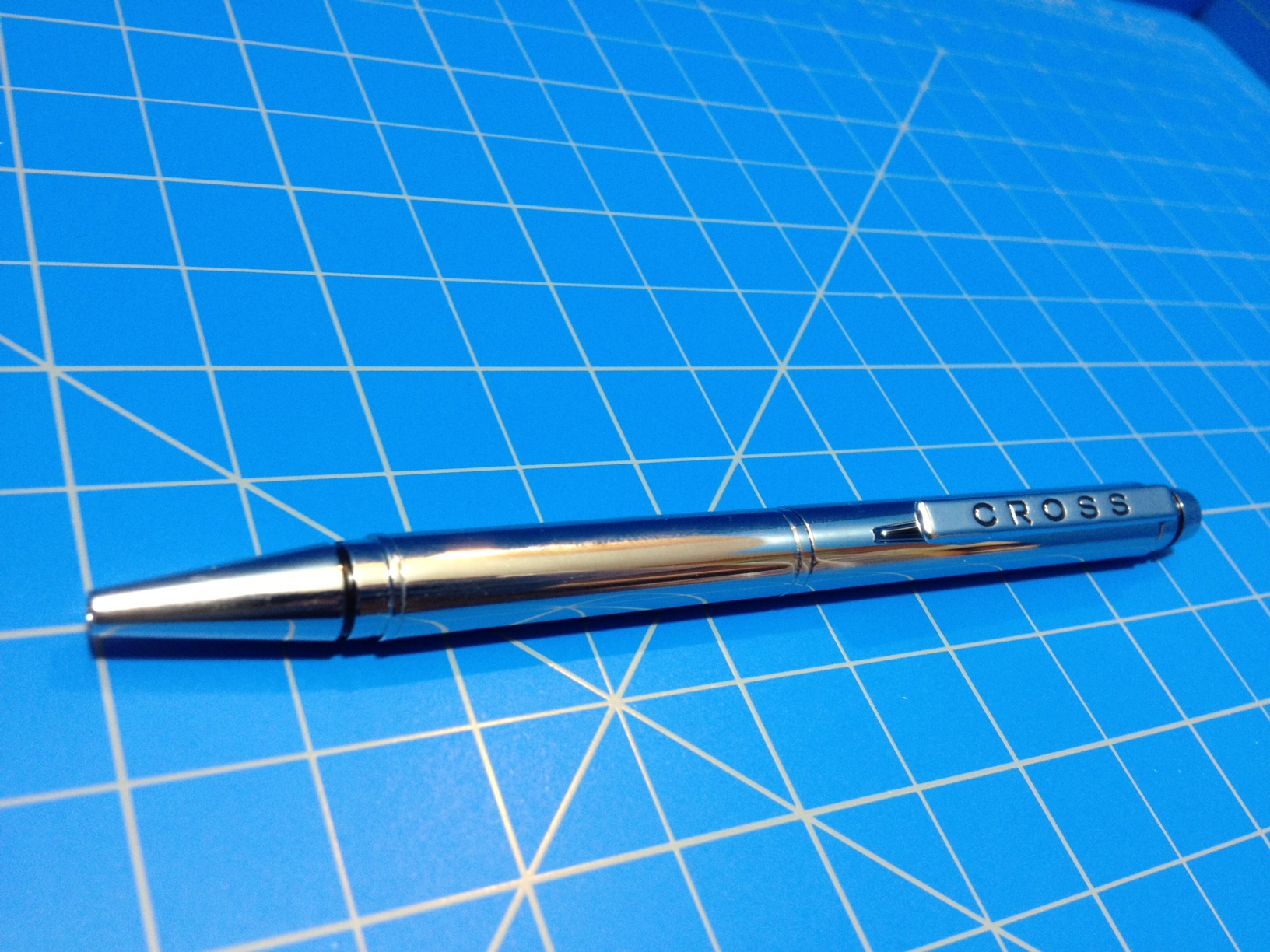
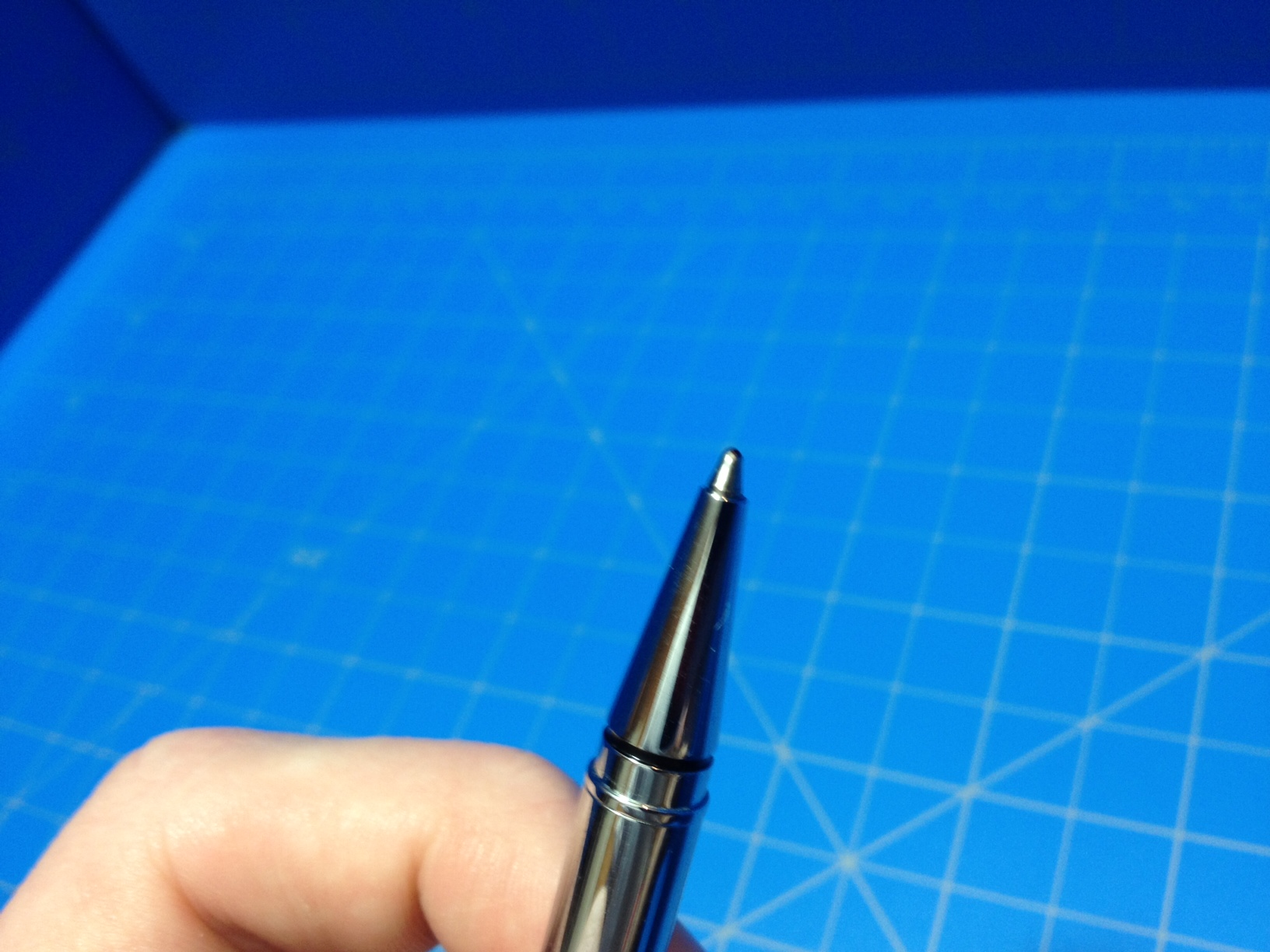
The pen is a very simple chromed metal pen (I would say steel from the weight, it’s quite heavy for a pen of its size) with a smooth cylindrical non-tapering barrel. There is pointed-ish cap finial at the back and a cone at the front leading to the point. It’s retractable, with a twist action, and there is a clear mark and band signifying where the pieces come together (and it is the smoothest action I have ever felt in a pen). The adornment and the clip are minimal, probably to be inexpensive, and while it’s a little ugly, the simplicity makes it easy to overlook. The cartridge is a short version of the standard Cross cartridge in a medium point. It, like most Cross pens, is very smooth, in this case especially when writing cursive. It does have some startup problems, especially when left unused for a time, but that problem can be solved by using it more or getting a new cartridge.

photo-245

In the end it’s an alright notebook, and a good pen. I wouldn’t purchase them for myself, but it does make a very nice looking gift, and it’s functional, with good paper and a nice writing pen. It’s a desk notebook, and a heavy desk pen (but I like the weight) made of good quality materials, but essentially with a disregard for useabilty. I can recommend them as desk materials, but not as daily users.

Review – Art & Parcel (September 2016)

Art & Parcel is a monthly subscription service for art supplies from H. Blyth & Co. It’s like a Lootcrate, but for art supplies; so it’s way better than a Lootcrate (my opinion). But with so many of these monthly-blind-subscription-service things around, what makes this one special enough to look at? (Answer: Art supplies) And is it worth it to get one?

photo-217

(Couple of notes here: I got this parcel for free {and even though I got to pick one, I didn’t get the one I picked, so the picking part won’t influence the review} for review, and I live in the US where the “subscription” part of this service is unavailable. From what I can tell that means that I would have to pay up front as a lump sum to get my parcels, instead of being able to pay by the month, this also means that shipping cost is terrible to get them here, £16 (About $20) is a steal for these products, and the shipping in the UK is a great deal too, even throughout the rest of Europe it doesn’t exceed the price of the items like it does coming to the US)

photo-226

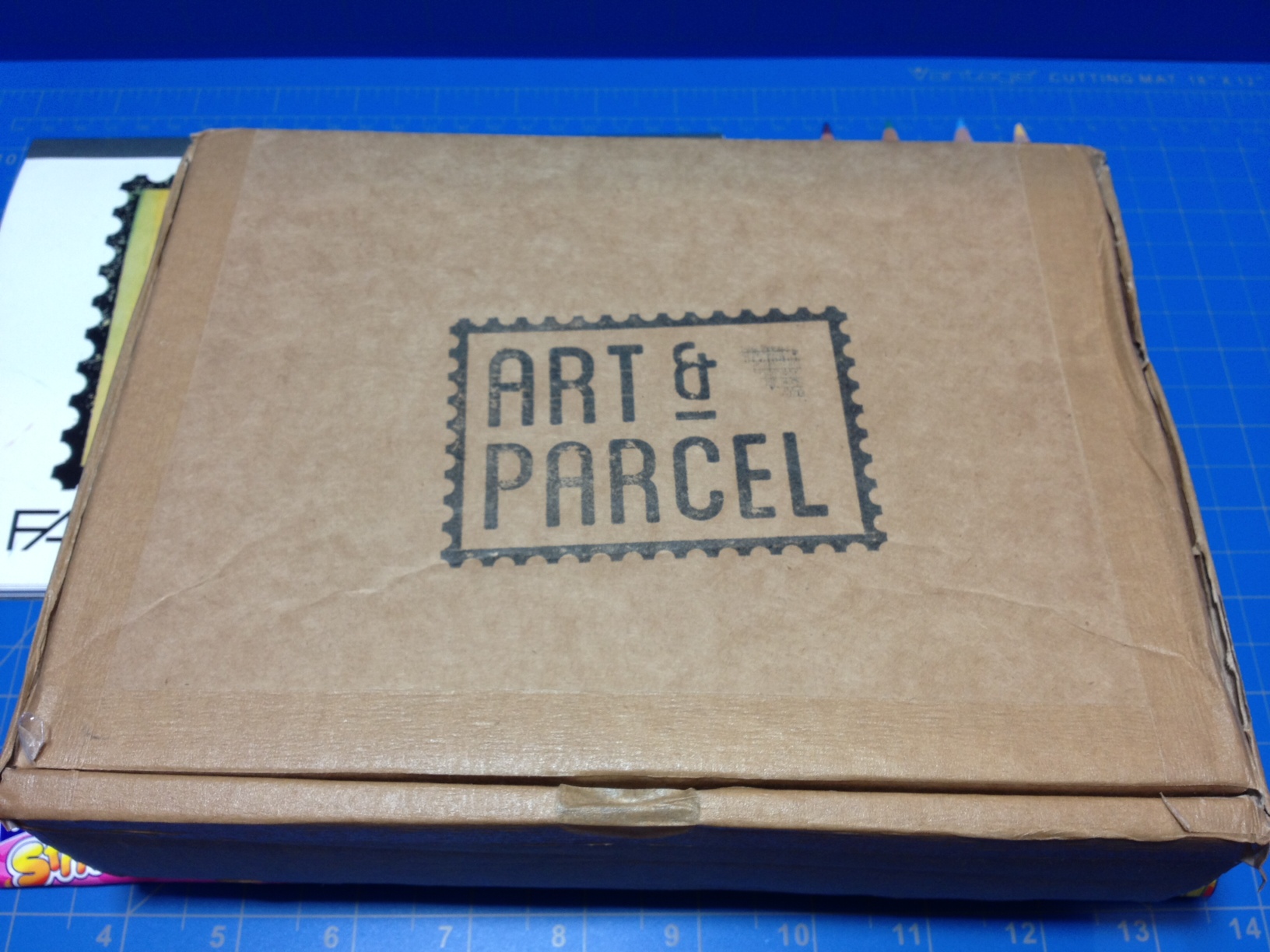
The one I am going to be looking at today is September’s parcel, which is focused mainly on colored pencils, but first I’ll talk quickly about the packaging. Mine was shipped in a bubble envelope, inside of which was a very nice cardboard box that was very well sealed with brown tape. On the top the Art & Parcel logo is printed very plainly, and on the bottom in pencil there is the month. (My box was a bit dented, but this is likely from the post office as, due to my schedule, the box had to be sent through the post twice) Inside is a nice packing slip that explains everything that is in the box along with its regular retail price (if that’s anything to go on you save a pound or two from buying the items individually in this set). All of the materials are neatly and securely wrapped in a newsprint/tracing paper that is sealed with a sticker of the Art & Parcel logo. It is all very well executed and nothing got damaged.

photo-220

The first items in this box were four Faber-Castell Polychromos pencils. I am no stranger to these pencils (they were the subject of one of my first {and not as well written} reviews), though I don’t have these particular colors: Naples Yellow, Light Phthalo Blue, Chrome Oxide Green Fiery (wonderful name that), and Red-Violet. I think the choice of colors is a bit strange, but they are definitely useful, and give a better representation of the pencils abilities than a plain RGB or RYB would have. There’s not much more to say there since they are some of the best colored pencils around. One thing I do really like about them is the fact that they layer so that some colors can somewhat be on top of other colors, unlike the cheaper colored pencils where they’re pretty mutually exclusive.

photo-225

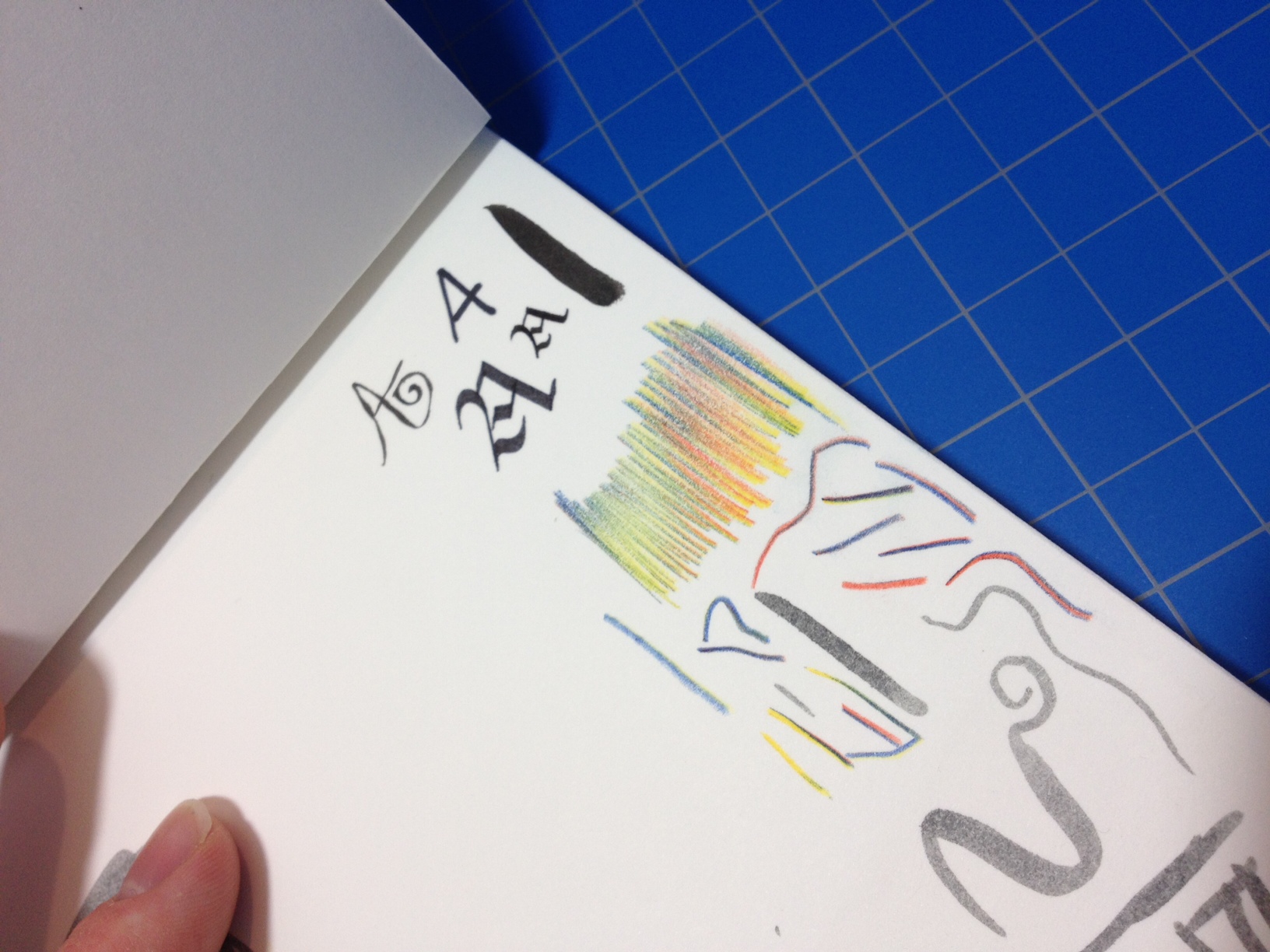
Next is the KOH-I-NOOR Hardtmuth Magic pencil, which is basically a fat colored pencil that has a “lead” made up of the 3 RYB colors. This means that as you write or color with the pencil it changes, and the colors mix together to create a nice gradient effect. In practice the yellow mixing with both the red and blue works great, but the purple almost looks black and rarely shows up, and getting a nice solid version of one of the primary colors is very difficult, so the gradient looks more green and orange than anything else. I would bet that with some practice and odorless mineral spirits with a blending stick that it could produce wonderful effects, but I would still have trouble finding a use for it.

photo-224

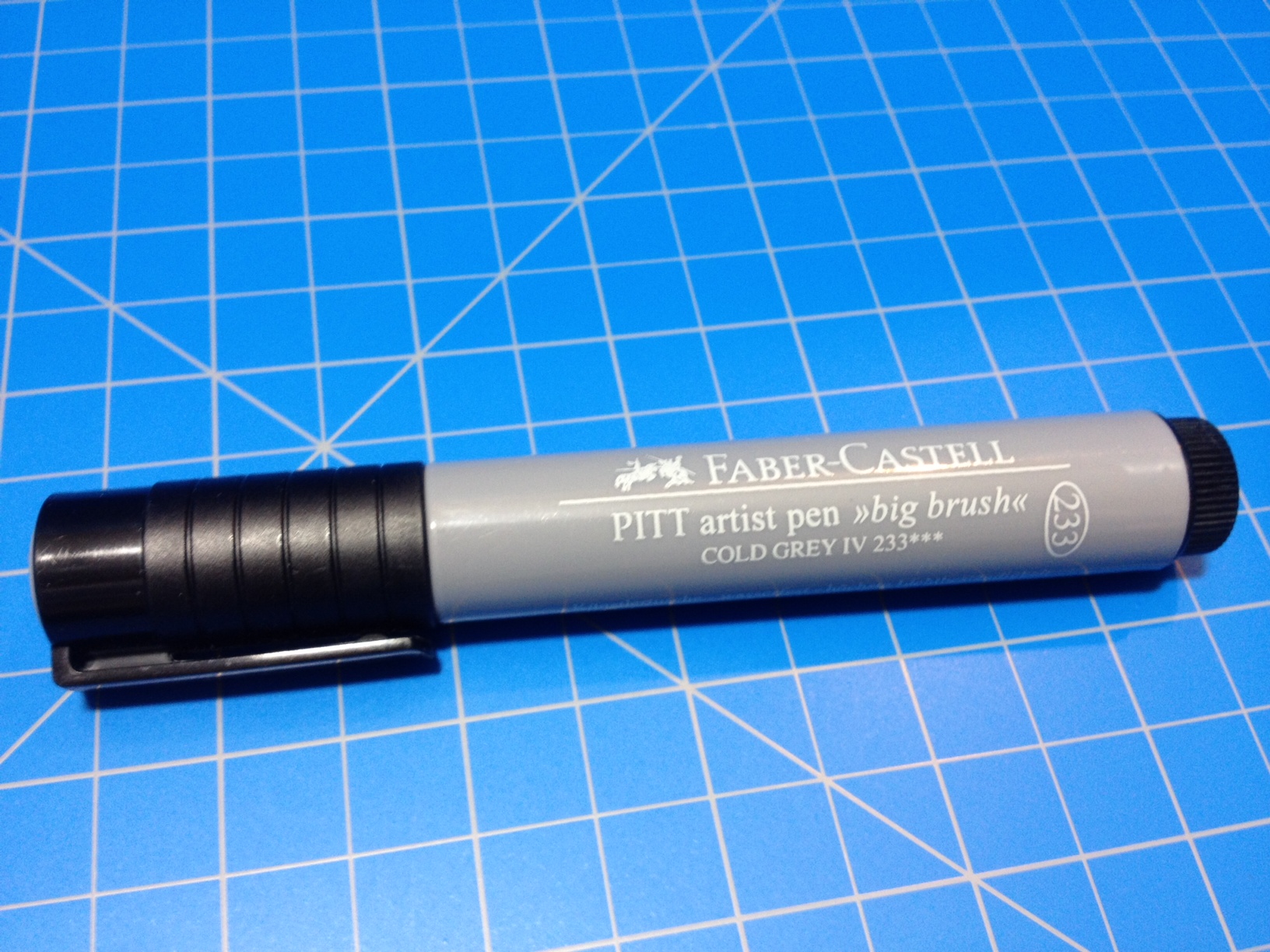
Third up is another Faber-Castell product; one of their Pitt Artist Brush Pens, another item I’ve looked at in the past, though this is a different version. It’s a “big brush” and the body of the pen is over a half inch in diameter, a bit chunky for me but still very easy to hold on to and surprisingly comfortable. The color is “Cold Grey IV” which seems to be in the middle of the grey family, and the brush is very fat, going from lines of about ½mm to almost 5mm. It’s also got all of the stuff you want out of an ink: waterproof, lightfast, and archival quality. But I’m not really sold on how it fits with the rest of the stuff here. It is a grey, which makes it more like a pencil when sketching, but going over the same place multiple times does make it darker. It’s just strange to me, but then again I have a very different style to most people, and playing around with a new brush pen is always fun.

photo-222 photo-223

And the final item included is a 10-sheet pad of watercolor paper. It’s made by Fabriano but has the Art & Parcel logo again on the front. It’s A5 size, which is about 6” x 8” and is a hefty 300gsm. It handily took everything I threw at it without flinching, bleeding, or feathering. Sharpies, calligraphy pens, and brush pens push most papers to the limit, but this stuff is truly meant for paint (watercolor at least), which I don’t have too much of lying around (in accessible areas, I did have some tempera and it handled that very well), but it seems easily capable of handling it. A liberal application of water will turn it in to one big slight buckle, but that’s about it. My only complaint is that there are only 10 sheets.

photo-218photo-219photo-221

Overall I’m very satisfied with this box. It’s well worth the money and provides several products that work in tandem, allowing you to start creating right out of the package without having to look for more materials. From what I can tell, this is true of the previous parcels as well, but each one comes based in a different medium. The subscription would be relatively inexpensive way to try out something that might not be in your comfort zone without having to do a lot of research or spend time picking out and ordering products. It was honestly really hard for me to try and pick out a parcel I wanted. The recent ones at least were all super cool (and they can be purchased even after the subscription goes out, so nobody needs to miss out like with other sub boxes) and I’d be signing up right now if shipping to the US didn’t more than double the price (damn the postal service(s)). I really like this box. It’s given me a bunch of cool stuff to play around with (and a Haribo candy to eat*) and if the idea of getting a bunch of high quality art goodies in the mail every month appeals to you I would recommend it.

photo-227

*I ate it; it was good (like a softer laffy-taffy).

Review – Lihit Lab Pen(cil) Case

I might be a little bit late for the back-to-school season, but I do have a pencil case I wanted to talk about. Most pencil cases tend to be of the “dump everything in and fish it out” variety, even if the only hold a few pencils. The rarer breed is the organizational pencil case (that isn’t attached to some other “organizer”). One of the simplest, least expensive, and easiest to get a hold of versions of this is the Lihit Lab Pen Case (I can’t find a certain model name {maybe Teffa?} or number that seems to fit {maybe A7551-24?}). Is it worth it?

photo-201photo-205

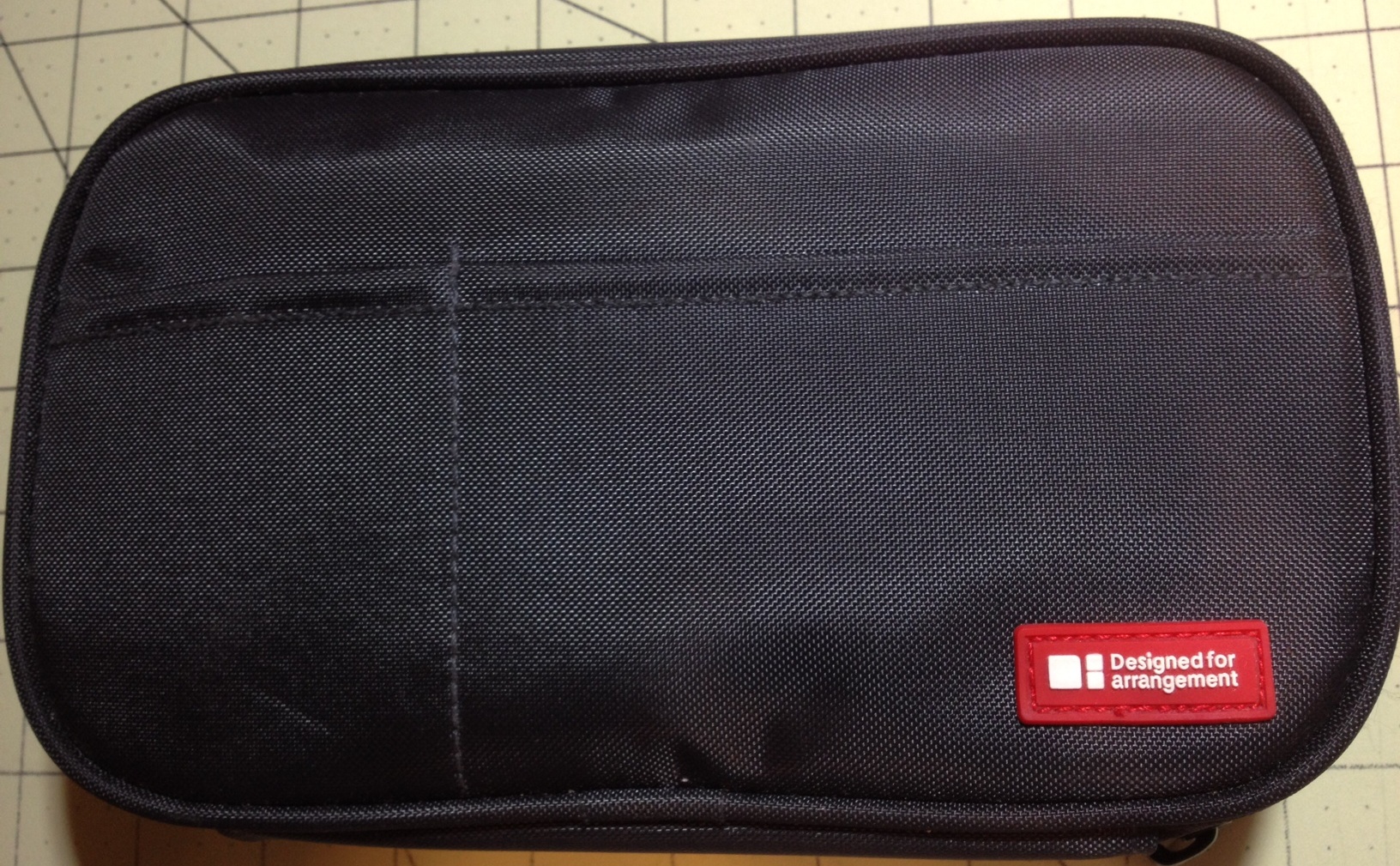
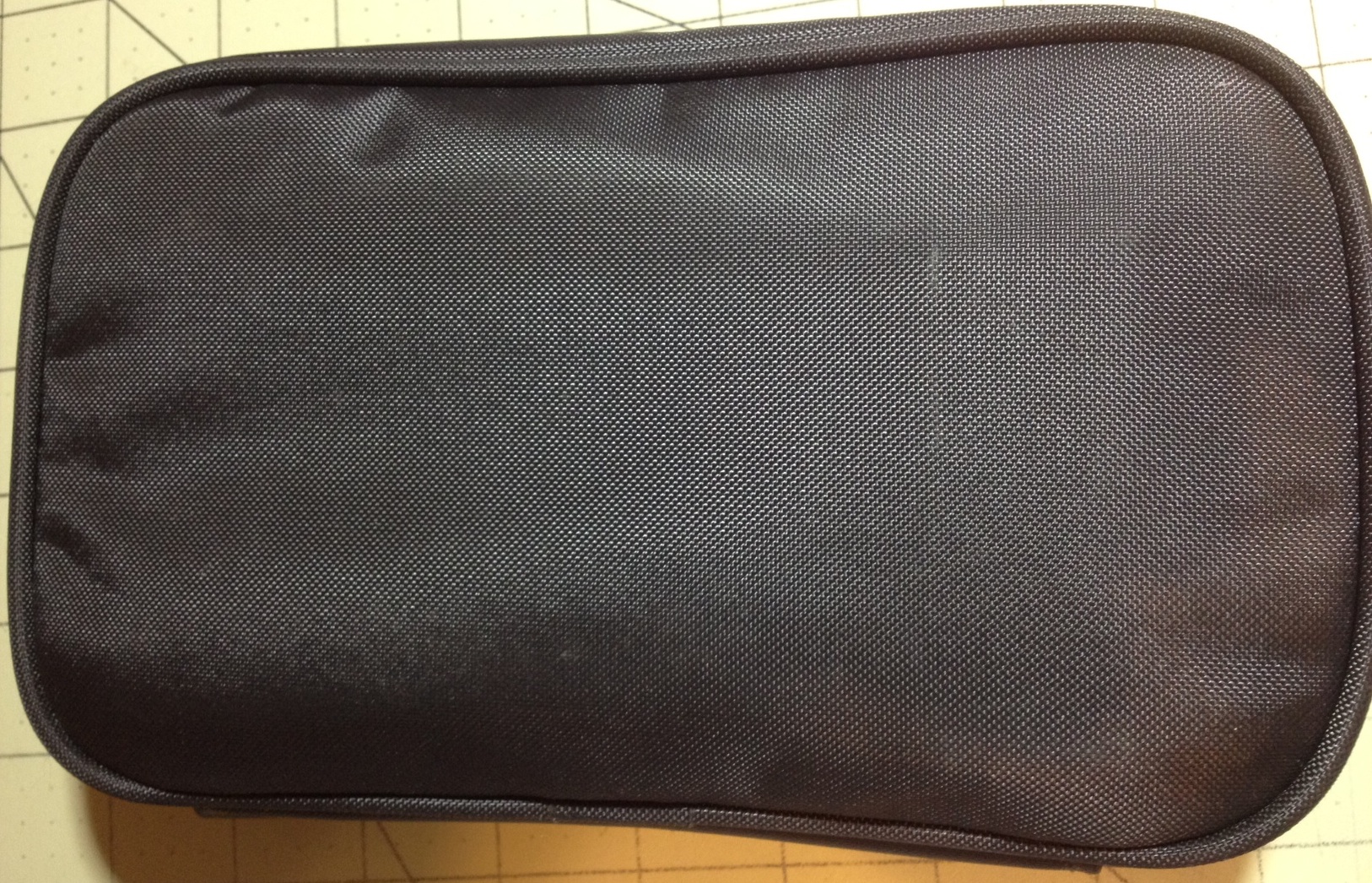
The outside of the case looks pretty standard (mine’s black, but there are lots of available colors), the back is blank and the front has two almost-useless pockets with a small rubber “designed for arrangement” badge. The (double) zipper is roughly in the center of the bag (and it even has the same logo as the front badge on it) and it feels very sturdy and secure, though it has no “brand-name” on it. The hinge is made of a double layer of the same fabric as the rest of the case and shows no sign of wear from several months of use. The whole package comes in at about 8”x4½”.

photo-204photo-198

The inside is a brown version of the same color polyester fabric (regardless of outside color). On the inside of the front there are two roughly inch-wide bands to hold in pens, and on the back inside there is a simple mesh covering about half the area (to hold other items). There is also a center divider/organizational area that is strangely attached to the inside of the back half and not in the middle. I suppose that would have interfered with the hinge, but its placement near the back (really it just favoring one side) can be a problem at times. The front of this divider has another inch-wide band (higher up this time) and a thin pocket (not mesh) at the bottom, and the back has three mesh pockets, the top two being slightly larger than the bottom one.

photo-202

So the configuration of the whole case is to hold pens in the front and other art/office supply things in the back. This works pretty well, especially since the back can hold either. I have 24 pens or pen-like things in mine* and 10 (or so, paper clips are counted as one thing) other things including an eraser, Swiss Army Knife, stapler, pencil sharpener, notepad etc. It fits everything nicely and is very flexible with its organization. I was surprised with what I could fit in it (almost everything I wanted), and I’ve been carrying it around wherever I need pen(cil)s for months now and it shows no sign of stressing the material or really any wear whatsoever.

photo-199

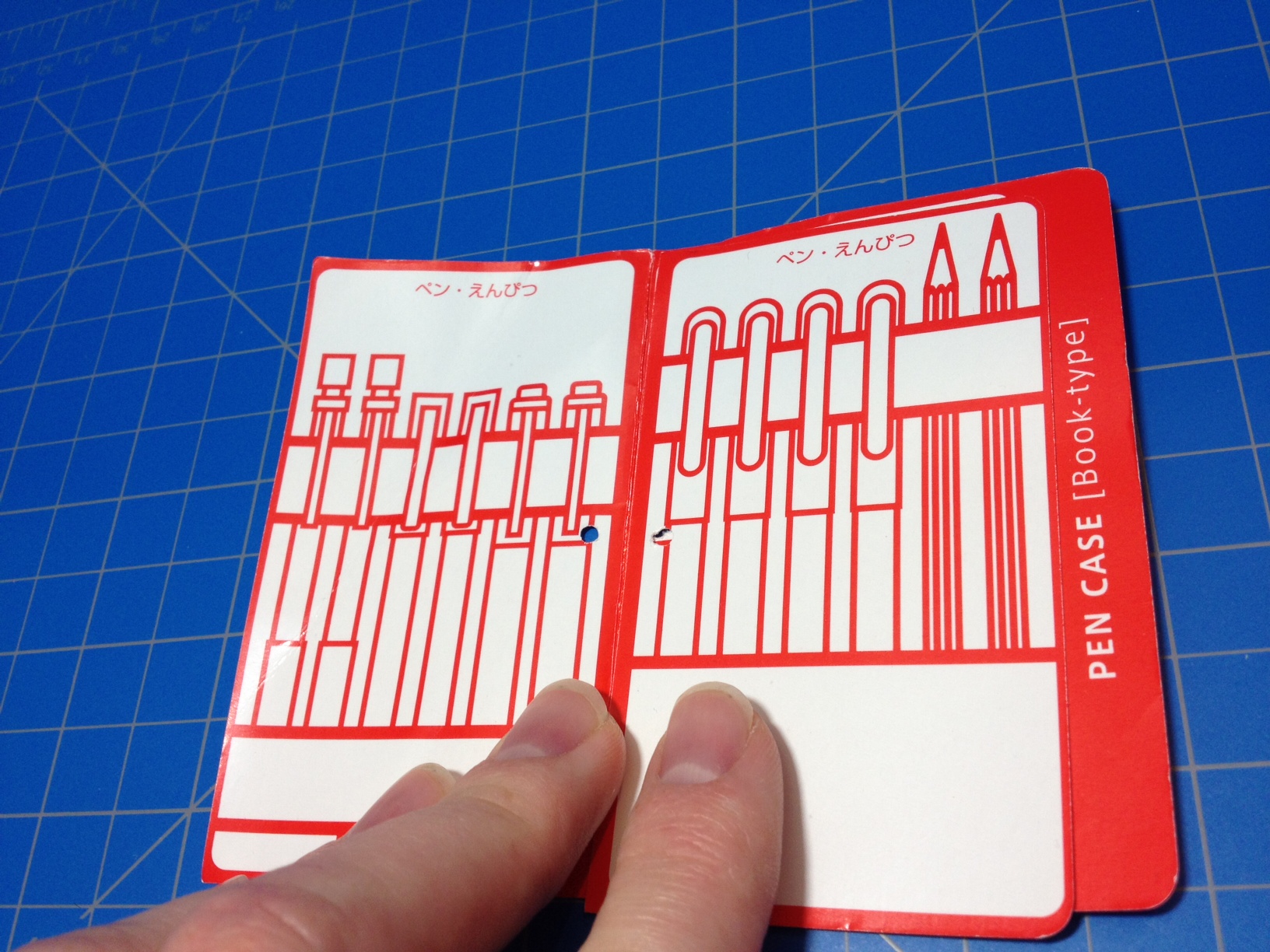
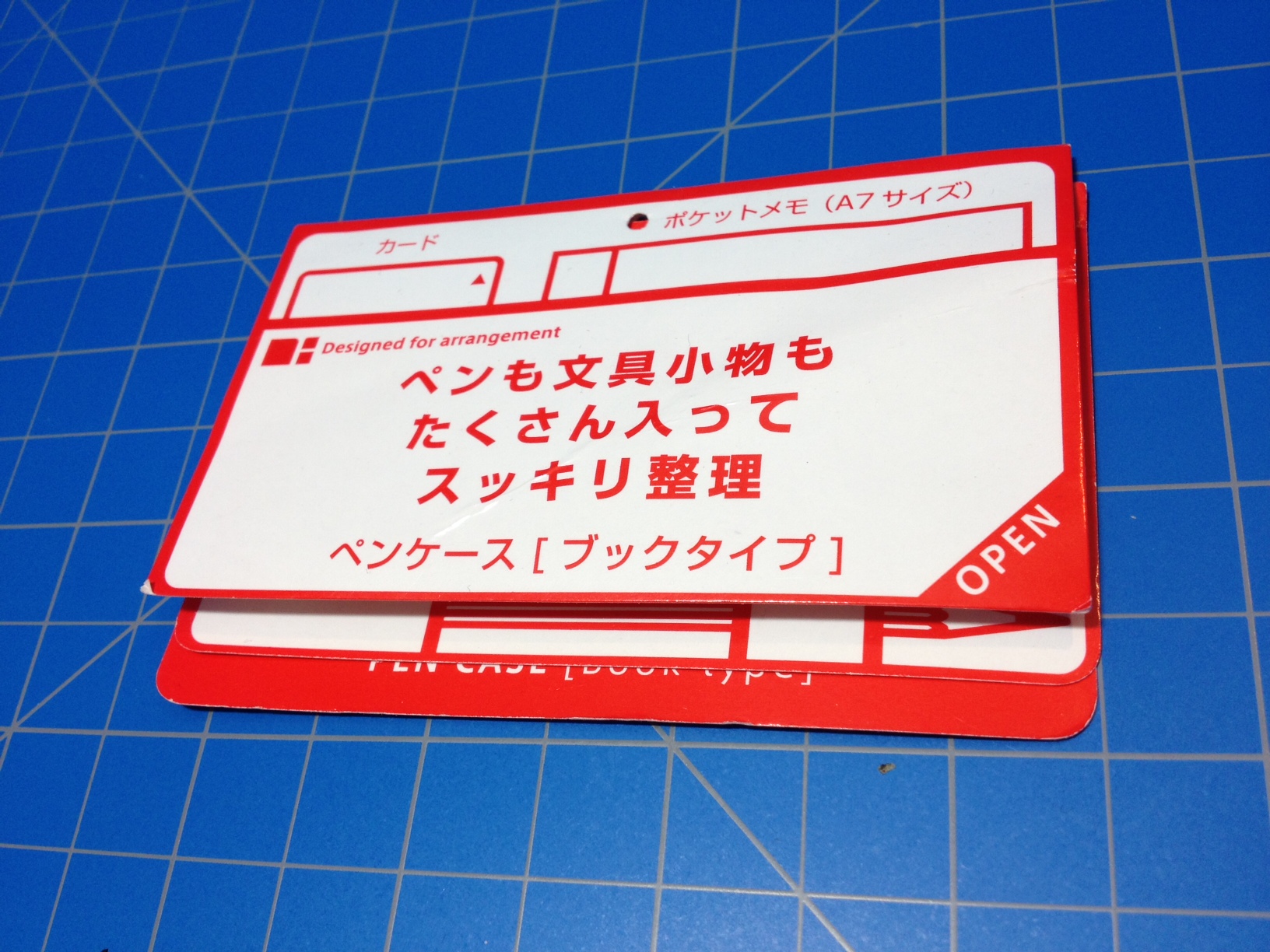
My concluding thoughts could just be “it is the pencil case I use, and I don’t see that changing soon”. And that would be true, I really like this case, it is perfect for my exact usage scenario, but due to its popularity and the number of photos of it I see online, it looks like it could fit quite a few usage cases. It’s inexpensive relative to other cases its size (it probably helps that there is no packaging needed, but it does come with a cute little card that folds out as a representation of how to use the case), it’s durable, flexible (both in the physical and organizational sense), and it’s attractive. I’d definitely recommend it as an upgrade to the regular zipper bag most people use.

photo-233 photo-232 photo-231 photo-230


* Pencil Case Full Contents List

    • 2 Pentel Pocket Brushes
    • Pigma Brush
    • 2 Tombow Duos (N95, N60)
    • Liquid Accent Highlighter
    • Sharpie Twin Tip
    • Autopoint All American in Blue (Caran d’Ache Sketcher Non-Photo Blue Pencil)
    • Pigma Graphic 1
    • Pigma Micron Technical Pens (005, 01, 02, 03, 05, 08)
    • Le Pen 0.03 (003) Technical Pen
    • Tombow Mono Zero Eraser (Round 2.3, Rectangular 2.5×5)
    • Scotch Tape Roll
    • Pad of Generic Sticky Notes (3”x2”)
    • Twist Ties x2
    • Paper Clips x5 (Insulated)
    • 4 inch Ruler
    • Pentel .5 HB lead
    • Pentel Graphgear 500 .5
    • Swingline Tot 50 Mini Stapler
    • Staedtler Mars Plastic Eraser (With Plastic Case)
    • Victorinox Super Tinker**
    • Zebra F-301 (Black, Blue, Green, Red)
    • Paper:Mate Liquid Paper Correction Pen (Signo Angelic White Gel Pen)
    • Kum Pencil Sharpener

28785

Last two photos from Jetpens.com (http://www.jetpens.com/Lihit-Lab-Teffa-Pen-Case-Book-Style-Black/pd/7665) I just had to include a photo of the "booklet" and originally couldn't find mine.

Last two photos from Jetpens.com (http://www.jetpens.com/Lihit-Lab-Teffa-Pen-Case-Book-Style-Black/pd/7665) I just had to include a photo of the “booklet” and originally couldn’t find mine.

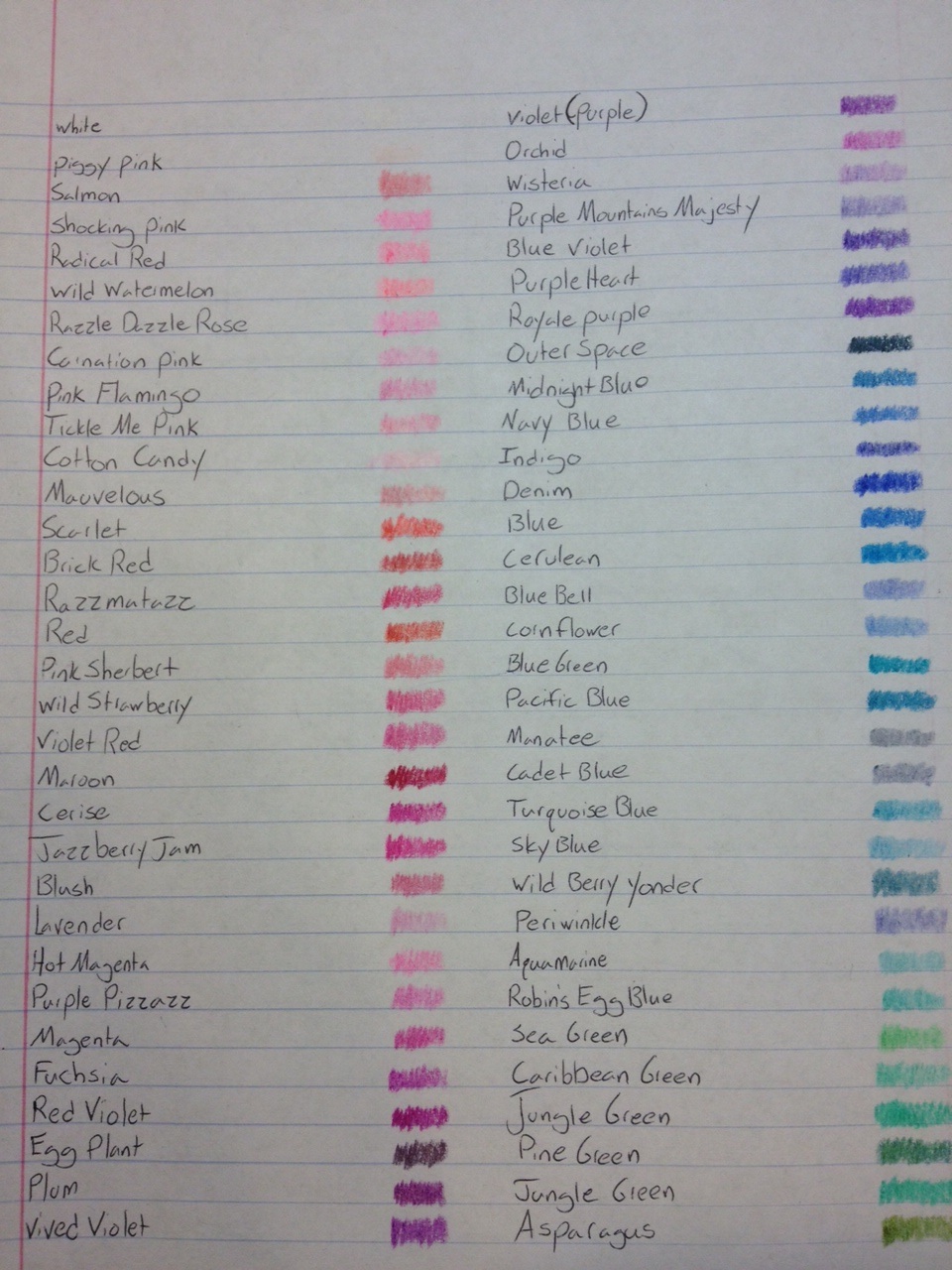
Review – Crayola Crayons (120 Crayon Box Part 2 – Purples, Blues, and Greens)

This is part 2 of my review of every single color in the Crayola 120 crayon box. I’m going to be taking a look at some purples, the blues, and some greens. In case anyone was wondering, the colors are roughly sorted so that they flow as smoothly as possible from one color to the next, although this is trumped by the wrapper color. So even if I think it’s more red, if it has a purple wrapper it went in the purple section. And now, let’s begin.

photo-175photo-174

Plum – Plum is a nice, deep purple that evokes the fruit to an extent. It is a bit less red than the plums I’ve typically seen, and it isn’t as dark as others, but it is a recognizable version, suitable for royal robes and flowers, that covers quite nicely.

Vivid Violet – I’m not sure what makes this violet any more “vivid” than the others, but it is a nice, decent covering color, that is very similar to “plum” and has a similar enough use range to even be used as a highlighting color.

Violet (Purple) – It seems strange to me to have two names for this color and only this color, but it is a classic. It covers decently and is the classic purple color, suitable for most purple applications (not skin, as I learned when I was in kindergarten).

Orchid – As a type of flower that has many color variations, I would say that at least this color is similar to parts of various orchid flowers. It is a redish-blue-purple, if that makes sense. It’s lighter than other purples, but with streaks of blue seeming to come through and making the whole thing a cool, nice color suitable for use in most flowers.

Wisteria – Much more on the nose, wisteria does capture a much better picture of the flower it is emulating, as well as crayon could do. The color is a gentle light purple with visible streaks of blue running though it. It captures almost perfectly the look of many wisteria flowers, but unfortunately, even though it covers well, it wouldn’t be used for much else.

Purple Mountains Majesty – This crayon color may win my award for least favorite name. I have no idea what “purple mountains majesty” even is really, or how it would be represented in color form. I guess this would be it, and it is a pale, lilac-esque purple with alright coverage. I couldn’t think of an real uses beyond flowers, even mountains in the distance are typically different purple shades, but this could work.

Blue Violet – Is essentially a bluer version of red violet, or, I suppose more accurately, a bluer version of the regular violet color. It very much feels like the color with more blue added, making it darker and cooler. It’s fine at covering but has what appear to be streaks of darker and lighter color running though it, making it a very interesting color to look at, but not one with many uses.

Purple Heart – Doesn’t particularly look like the badge. But it is a nice dark-ish purple color. It’s quite on the blue side, making it very pleasant to look at but, like many, difficult to find a place to use. It also covers about as well as most other purples.

Royal Purple – The last true purple on the list, Royal Purple doesn’t disappoint. It’s a nice, deep, fairly well-covering purple, that I would take over the standard violet most any day. Sadly, its uses might be regulated to the adornment of Kings and Queens.

Outer Space – An interesting and close to-apt-color name. “Outer Space” is really a dark blue, a little darker and blacker than Prussian Blue. It has a black and purple space-like quality to it, and it covers well enough to be a good night sky. Most other uses would simply be a Prussian replacement.

Midnight Blue – I’m not quite sure, but I think this would have been a more apt name for “outer space”. As it stands, it is a nice blue, and a dark one, but it isn’t very dark, and certainly not a midnight-y color. I do like it, it covers pretty well and it looks like a nice denim color (a color that will be coming up soon) and it would have a wide variety of uses since it is so close to the color of jeans.

Navy Blue – I’ve seen better navy blues than this one, but it is pretty apt. It’s a darker, but less saturated blue. It doesn’t quite evoke the standard navy “deep sea” color, but it does a pretty good job for a crayon. It covers sporadically and seems to have stripes of lighter and darker color. Still it would make a good color for jeans, flowers, and water from pools to oceans.

Indigo – This color looks quite strange. In comparison to the other colors here this one seems to jump off of the page; it’s almost watercolor-like. It is a very smooth, well, indigo color, but it tends to have spots where the crayon stopped moving. It covers well, and is quite dark, lending it to lots of uses from flowers to bodies of water.

Denim – Denim is a very good name for this color. It looks like a pair of raw, unworn denim jeans. It covers well, and has a similar paint-like effect to “indigo”. It is not only perfect for jeans, but it could also easily match the basic dark blue color that many vehicles come in.

Blue – Another classic color, the blue here is pretty standard, though I suppose that’s to be expected from the color that basically set what ‘blue’ is for the world of elementary school. The color is nice, middle-of-the-road, and it covers well enough (though probably the worst out of the blues). It works well for anything from shirts to oceans to cartoon dogs.

Cerulean – Cerulean is one of the few colors that isn’t named after anything in particular (not even a town in Pokemon). Here it is depiceted as a thick, light blue, like the color of a Caribbean sea (or those pictures of clear freshwater lakes). It covers very well and is a great color to use in a situation where you want the blue to “pop” off the page.

Blue Bell – I’m not sure if this really qualifies as an ice cream color, but I’d like to think it is. Blue Bell is a nice, gentle, well-covering blue with a hint of a darker purple. It’s a good color for skies, clouds, mountain ranges, and foaming water.

Cornflower – I don’t think this color replicates its namesake as well as it could, but the radiance flowers display is hard to replicate. This is a light, well-covering blue that leans to the white side of things, making it good for skies, clouds, and of course, cornflowers.

Blue Green – A fitting, name, if not the best descriptor, “Blue Green” is a slightly greenish blue, as opposed to a bluish green suggested by the name. It’s a nice sea and tropical color, the kind that many summer items are made of. It covers decently but is a bit splotchy.

Pacific Blue – Having recently visited the Pacific Ocean, I can say that this is not the color I saw there. But the color of the ocean changes by the season, and this color fits the bill. It covers well enough, with only small granules of white space. And its darkish/slightly stormy look makes it perfect for oceans both in the summer and fall, as well as the stormy sky.

Manatee – The best way to describe this color is grey, with a blue tinge. It does resemble the skin of the animal, but not too a tee. It covers quite well, and is a fairly unintrusive hue. It can easily find a use for animals such as rhinos, elephants, and of course manatees; as well as sidewalk and swimming pool pavement.

Cadet Blue – Besides reminding me of a Modest Mouse song, “cadet blue” is a good color. It is quite grey, but not as grey as the previous manatee. It’s got a little more blue in it that shines though just enough. It covers very well, but has a bit of a splotchy-fibrous look to it. It would work great for a cadet’s uniform, faded jeans, or sea creatures.

Turquoise Blue – I don’t know why Crayola took their opportunity to create a turquoise and made it “turquoise blue”. It seems a bit of a waste, but it does look like a bluer, lighter version of the stone. It covers well, but it isn’t that spectacular. It would work for coloring turquoise-like stones, jade-like stones, greenish bodies of water, and clothing.

Sky Blue – Another very good color name, this blue is indeed a very close approximation of the color of the sky (or at least what color it looks like it is). It’s pretty much the stereotypical light blue color people think of as sky blue (very similar to Crayola’s other sky blue in pencil form). It covers well enough (and the non-covered areas blend in easily since it’s so light) and it would work well to color water in dishes, fighter jets, babies’ clothes, and of course the sky.

Wild Berry Yonder – An interesting take on a color name “wild berry over there” is only slightly better than “purple mountains majesty” in being a bad name. And I wouldn’t imagine the color this name represented being blue, but it is. A muddy sky blue as I would call it, it is a blue that has had grey rather than pure white mixed in. It does cover decently and would work for coloring dirty jeans, muddy water, or a dusty sky.

Periwinkle – Another one of those flower colors that because of the varying nature of flowers is unable to be 100% accurate, “periwinkle” is also a standard color, which the crayon does not deviate from. It’s a light blue with a touch of purple and yellow (which doesn’t really make sense but sure). It doesn’t cover as well as other blues but it works, and it’s a good ice, cloud, clothing, or flower color.

Aquamarine – Another nice blue color that covers very well. “Aquamarine” is a slightly green blue that looks like a warm tropical ocean or lake. It’s light and smooth in texture, giving it a pleasant look. It’s another fun summer color but unfortunately it doesn’t have many uses.

Robin’s Egg Blue – Looking like a slightly darker shade of the last color, this one is indeed very similar to the eggs of a robin (again, allowing for natural variation). It’s another well-covering, very pleasant looking, somewhat useless color. It is vibrant and wants to jump off the page, but it also looks more oily, like a pastel if that’s what you want.

Sea Green – While it might look like some sea, “sea green” does not represent a sea I would want to go near. This bluish green (or greenish blue, it’s kinda blurring the line) covers pretty good, but is lighter and harder to see (no pun intended). It works well for underwater foliage, plants in direct sunlight, and limes.

Caribbean Green – A similar motif, but not quite the same style, “Caribbean green” is slightly more blue than “sea green”, looking like a slightly greener and darker “aquamarine”. It’s a good water color, but its coverage isn’t as much as some of the others in this set. It would work well for underwater plants and tropical bodies of water.

And that’s part 2, looking at the second group of 30 colors from the 120 Crayola crayon box, next time it’ll be another 30.
Review – Alvin Isometric Graph Paper (8½ x 11)

One of the hardest things in art and design is getting perspective down. And while many organic things can be fudged to look fine, there are some times where a more precise and technical perspective must be used. That’s where isometric graph paper comes in (at least for 2-point perspective), with rulings that serve as guides for simple-but-precise shapes rotated at 45 degrees (or hexes). The particular brand I’m looking at today is Alvin.
large2-87

The paper comes in a pad of 30 sheets with a cardboard back and cardstock cover. The “spine” is simply glue that allows pages to be easily torn off. The paper itself is a pretty standard 20 lb weight that resists bleed-though on ballpoints and smaller felt tips. Rollerballs, larger felt tips, Sharpies, and the like will bleed, but not terribly. Show through is pretty bad, and the second side has no graph so I can’t recommend the back for use.

photo-172

The graph has a ¼ to ½ inch border around the edge with some basic information printed on it. The graph is just under 10 ½ inches by 8 ¾ inches, with lines coming from the border at 30, 90, and 120 degrees every quarter inch. The lines are a light blue and will not show up on simple scanner, and very faintly on more modern scanners when set to greyscale. Still, they can be easily removed and don’t photocopy well, meaning the drawing or diagram can stand on its own.

The grid is very helpful in creating simple outlines for 3D shapes and places, or hexes for board games and tile patterns. The paper is pretty unspectacular but it’ll get the job done. I have no clue about its archival properties, but since they aren’t advertised I’d say they’re minimal at best. They’re a fun thing to mess around with and a useful classroom tool, but they might be left behind for more serious art and design.

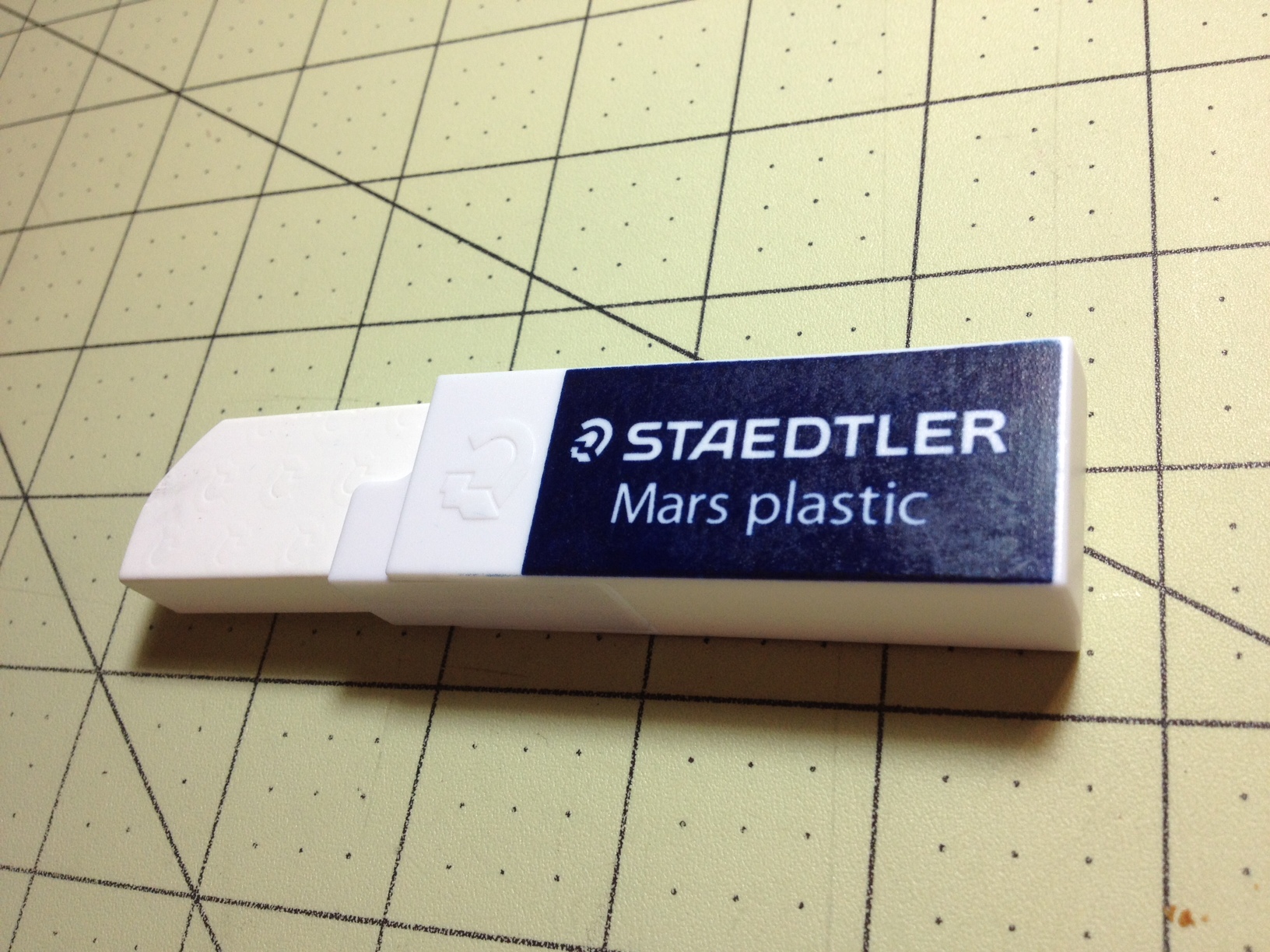
Review – Staedtler Mars Plastic Eraser

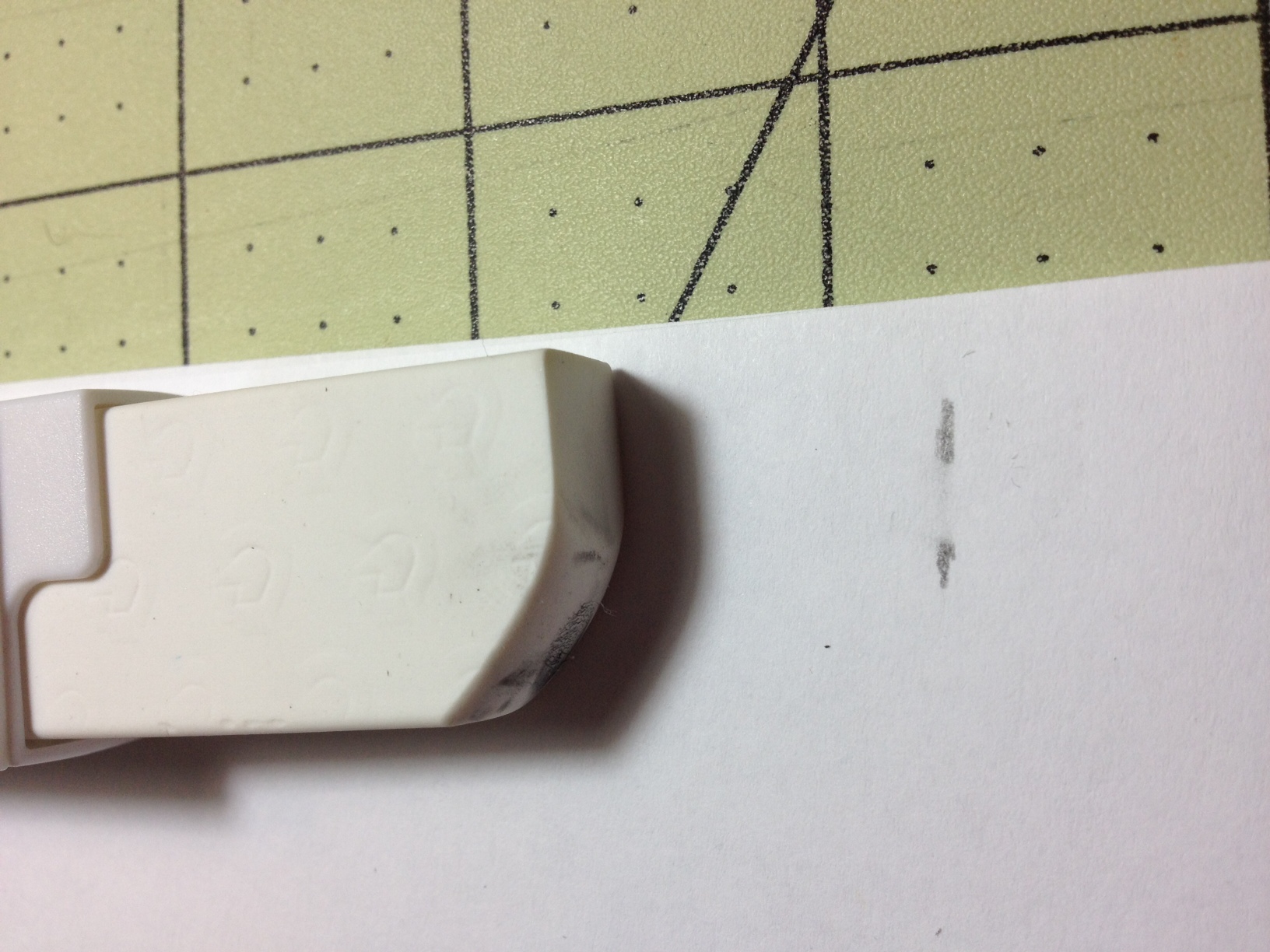
Interesting tidbit with this review; I was ordering a replacement for this product (because spoiler: I liked it) and I ended up with something that I wasn’t expecting. While my original Mars Plastic eraser came in a humble card sleeve (as most still do) my new ones came in a fancy plastic swivel case. So this review will really be two parts. One for the eraser itself, and another for the upgraded container they can come in.

photo-168

The eraser is a standard seeming white plastic/rubber rectangular prism that measures about 2½ x ¾ x ½ inches and is marked in a regular pattern subtly with the Staedtler logo on two sides; the four smaller sides are essentially flat. Since it is an eraser there isn’t much more to say about the looks, but how does it work? Well, I really like it. I go back and forth between hard and soft (kneaded rubber) erasers. I’ve currently moved back to the hard erasers because I can see when their ability to erase starts to be diminished more clearly (by being shorter rather than slightly darker). In my experience it has erased almost every pencil line I’ve asked it to, and it is better than the ones usually found at the store (save Magic Rub), but comparing higher end erasers is very difficult. They all do their jobs well and it’s mostly a matter of personal preference (and sometime pencil choice) as anything else, but that’s where a fancy plastic case might stand out and make a difference.

photo-169

The case is slightly larger in every dimension (duh) than the eraser. The top and bottom are made to resemble the traditional card-wrapped eraser, with a white bit extending from the blue eraser identification part. A larger Staedtler logo covers the pivot on one side in this white area. On this white end attached to the pivot on the inside is a cut-out box that is about an inch on one side and an inch and a quarter on the other. This box has eight small ridges on the inside to grip the eraser, and it pivots 180 degrees from having the eraser tucked inside the rest of the case to being fully exposed. It can go farther, but at risk of breaking the back of the case. This allows for easy dispensing of the eraser with one hand and provides a nice sturdy handle when erasing. It also protects the eraser from getting gunky or gunking up other things (the inside does get a bit dirty/gunky sometimes, though). I’m a fan of the case (but being nitpicky the two smallest ends are rounded off and the eraser will not want to stand up on them).

photo-170 photo-171

So in the end the Staedtler Mars Plastic is a good, but not exceptional, eraser. It’s not like it erases every pencil line in one stroke, or is virtually crumb-less, but it does get most pencil lines with relatively few crumbs. It works well, and I really like the case for the convenience and protection it provides. I’ve been using it (and flipping it open compulsively) for a bit and it doesn’t show any signs of breaking soon. Though it does make the eraser a considerable bit larger and limits use of about half of it. It’s a nice change of pace and experiment if one wants to spice up their eraser life.

Review – Faber-Castell Lux 034

Last week I talked about a Faber-Castell ballpoint pen that was made in Peru, the 033. And this week I will continue my talk of Peruvian pens with the Faber-Castell 034 in all of the standard colors: black, blue, and red. And these seem much more like a Faber-Castell version of the inexpensive Bics and Paper:Mates that are used all the time.

photo-159

The body is as simple as it can be. It’s a straight cylinder with a small bit of fluting on the end that allows to cap the grip when posted. There is also some fluting on the slight step-down that is the section, and it is surprisingly comfortable and grippy. From there, there is a fairly standard looking cone that leads to the metal tip. As far as I can tell this is not removable and thus the pen is not refillable. The cap is a single piece of plastic with the same fluting on the top, and it has a slight taper to catch the section. The clip is molded in and does work, but not very well since it doesn’t ever meet the cap or barrel.

photo-158

Writing is fairly smooth and nice. There is globbing and occasionally startup issues. Red seems to have more problems with the former while black the latter. All tips are on the fine side of medium, and aren’t shielded from air by the cap so they will have startup problems if left out for some time. The ink is water-resistant and office-friendly,with a grayish, warm black, a dark-ish blue, and a deeper red. They are pretty similar to a Bic Stic/Cristal and a Paper:Mate Write Bros. The main differences are a darker red color, and a smoother writing experience.

Overall, I’m happy with them, but I wouldn’t go out of my way to find them. The writing is as good or better than most of the pens of comparable price in the US, but the bodies are made of what feels like a much more brittle plastic and they are very light weight and get float-y when writing. They are a good, solid, cheap office pen.

Review – Faber-Castell 033 Ballpoint Pen

I recently received a box of things my brother got for me on his trip to Peru. Inside were several pens that seemed to be commonly available there. Indeed, they are more common there than in the US, because all of the information I could find on them was in Spanish, or Russian (Ukrainian? Cyrillic of some sort). And they do say “Product of Peru” in Spanish. So let’s get to it and look at the first type I received, the Faber-Castell 033 ballpoint in black.

photo-156

The pen has a very classic octagonal design, and it’s made with a plastic that feels much like the plastic that older pens and mechanical pencils were made out of, except it is much lighter and feels more brittle and thinner as a result. The faceted barrel is capped on the back by a step-down plug of a light grey color that allows the pen to be neatly posted, and the cap on the front is a very simple, if unsightly, ribbed design. The clip is molded in and works, but is quite filmsy, and I wouldn’t trust it. The cap does fit securely over the section, which is a simple taper in the barrel to a larger-than-normal metal cone, at the end of which is the ball. As far as I can tell, this tip is not removable, and thus the pen is not refillable. Stamped in gold on the side is just enough information to identify it, but not much more.

photo-157

Writing is surprisingly smooth for a ballpoint, but it does have occasional startup issues and more blobbing than I can get past. The ink is comparable to inexpensive Bic ink. It’s suitably dark and black, but it’s got a bit of a red sheen, and upon close inspection under a bright light it looks like a very dark purple. It’s still on the warmer side of things, though. It dries fast (except for the blobs), but with certain types of paper I wouldn’t try it left-handed. And its blobbing might cause it to smear for left-handers anyway. It is suitably waterproof like most ballpoint inks. I haven’t tested lightfastness, but in general even cheap black inks do well, but it isn’t archival quality.

Overall it’s a well-working, inexpensive pen. As far as super cheap pens go it isn’t the best, but it’s far from the worst. It writes well, but not perfectly. The body is simple with no frills and holds together despite being cheaply made. And there isn’t much more to it than that. I wouldn’t be going out to import them, but I would (and will) use them if I ended up with them (which I obviously did).

Review – Sharpie Industrial

Sharpie makes permanent markers, but permanent never really means permanent. Of course there are ways to remove traditional Sharpie ink, especially since it, like many modern inks, is alcohol based. So, in order to keep up with their permanent image Sharpie came up with its “Industrial” version. How permanent is it compared to the regular version? Let’s see.

photo-154

The body is virtually identical to that of a regular Sharpie, except for the information printed on it, which has been changed to reflect the more permanent nature and is in red. As far as writing on regular paper goes, it is a bit warmer than standard Sharpie ink, but not really any less or more black. The difference is barely noticeable. Also, like a regular Sharpie, it will not write on wet surfaces.

photo-155

But on to the permanence. I tested the ink on a piece of galvanized steel by making a small mark, letting it dry, and then applying pretty much anything I could think of that might clean it off. It held up remarkably well, but it was mostly resistant, and not fully “anything-proof”. By the end of my test the mark was quite faded but still readable, and it had withstood: water, fire, isopropyl alcohol, bleach, WD-40, ammonia, acetone, De-Solv-It (citrus based gunk remover), Lysol, Gojo hand cleaner (for grease and tar), dry cleaning fluid (because I couldn’t throw the kitchen sink at it), lighter fluid, paint thinner (mineral spirits), and gasoline. So I checked online and in several reviews people said that in laboratory settings the alcohol used would take the marker right off. So I went and attacked it with some denatured alcohol, and sure enough it broke it down to the most pale of lines possible, but it still wasn’t gone. So I tested on some other materials and another piece of galvanized steel. On plastic, the denatured alcohol removed it with very little problem. On aluminum it was also met with little resistance. On a tuna can (which could be either tin, steel, aluminum or a mixture) it was a little tougher but almost all of it was removed eventually. But, finally, on a galvanized trashcan the alcohol met its match, reducing it to a very faded line but it was still unable to remove it entirely. So there is likely some chemical that bonds directly to or gets through the galvanization on such materials.

Barely visible mark after denatured alcohol was applied

Barely visible mark after denatured alcohol was applied

All of this stands to reason. Modern inks are mostly made from an alcohol-based dye solution. This makes them dry faster and essentially water resistant, unlike their former water-based fountain pen ink relatives. But they still fall short of pigment-based inks on permanence, especially when it comes to alcohol, which in many cases will clean up both ballpoint ink and (permanent) marker ink by reactivating it for a short amount of time. Virtually any ink (but not all) will smear, bleed, or be removed when its base is reintroduced. But that’s why we have different bases in the first place.

In specific settings where large amounts of chemicals are continuously applied to surfaces, especially alcohol, these markers won’t work. But there are specialty markers made for work like that. As a general purpose marker that is meant to be used in tasks that are more demanding than standard household ones it works quite well. It does outperform the regular Sharpie and would work sufficiently well for many workplace or “industrial” tasks, but testing may be required before using it on the job.

Review – Sharpie Mean Streak White

I have a pretty liberal definition of what an art supply is. Not quite as liberal as those who say everything is an art supply because (almost) everything you do is art of some kind. But I do think more qualifies as art supplies than the average person does. For instance I would say that everything meant to make a mark is an art supply. And that assumption will be tested here where I take a look at the Sharpie Mean Streak “permanent marking stick”, and see if it has any real art applications.

photo-151

The body is quite large, being about half an inch in diameter. It’s got a good amount of information on the side, but it gets a bit cluttered-looking. The back is a twist knob, like a glue stick. The cap has a slight taper with several ridges for grip. Inside is a pointy cone that can shape or dent the “marking stick” if you put it in slightly wrong. Inside around the “marking stick” (grease, wax, or whatever it is) is a sizable ridge that is quite uncommon on writing implements. There is also no grip section area.

photo-152

There are two ways I can describe this, either as a permanent (wetter) crayon, or a more slick grease pencil. Neither of those descriptions really tell you exactly what these things are. The inside substance comes in a pointy cone that is pretty useless. It’s very putty- or grease-like and when used the point becomes very flat very fast. It writes similarly to a crayon, in that it isn’t easy to control or sharpen. When the tip is flattened beyond a certain point, the base can be twisted to extend the point, but it can’t be retracted, so remember to not twist it too far out (that shouldn’t be a problem unless you’re an impatient reviewer like I am). The feeling it has is very slippery, and quite a bit of material comes off for not a lot of writing, but there seems to be quite a bit of it in the barrel, so running out should not be a major problem.

Performance is a bit disappointing. The white color doesn’t cover very well at all, meaning use in art as either correction or even to mix with other colors is very limited or would require re-application. It can be used as a covering to make things “hazy” but the coating is quite unpredictable. It likes to clump up in certain areas and barely cover others at all, meaning detail work also shouldn’t be done with it. As far a permanence goes, it is, but not wholly. I did testing (not just normal use) on metal and paper. Both were reasonably water-proof, on metal flame did nothing to it and on paper it did resist the flame but once the paper burned it did too (not that anything else would have happened). Then on the metal piece it stood up to WD-40, which has a knack for removing regular Sharpie, but was easily wiped away by isopropyl alcohol. I also suspect it could fairly easily be scraped off or crack easily on pliable surfaces. It does go on whether the surface is wet or dry as advertised and does dry in a fairly short amount of time for how tacky it is to begin with.

I would still consider this an art supply, and it can work well in mixed media, but really it is much more at home in the garage or the toolbox. The tip and lack of sharpening or controlling method means it works quite a bit better when marking large surfaces. It is “permanent” in that it’s hard to purposefully get off, but it doesn’t penetrate and won’t wear terribly well. It’s an interesting item, but certainly not a general use-one.