Review – Faber-Castell Lux 034

Last week I talked about a Faber-Castell ballpoint pen that was made in Peru, the 033. And this week I will continue my talk of Peruvian pens with the Faber-Castell 034 in all of the standard colors: black, blue, and red. And these seem much more like a Faber-Castell version of the inexpensive Bics and Paper:Mates that are used all the time.

photo-159

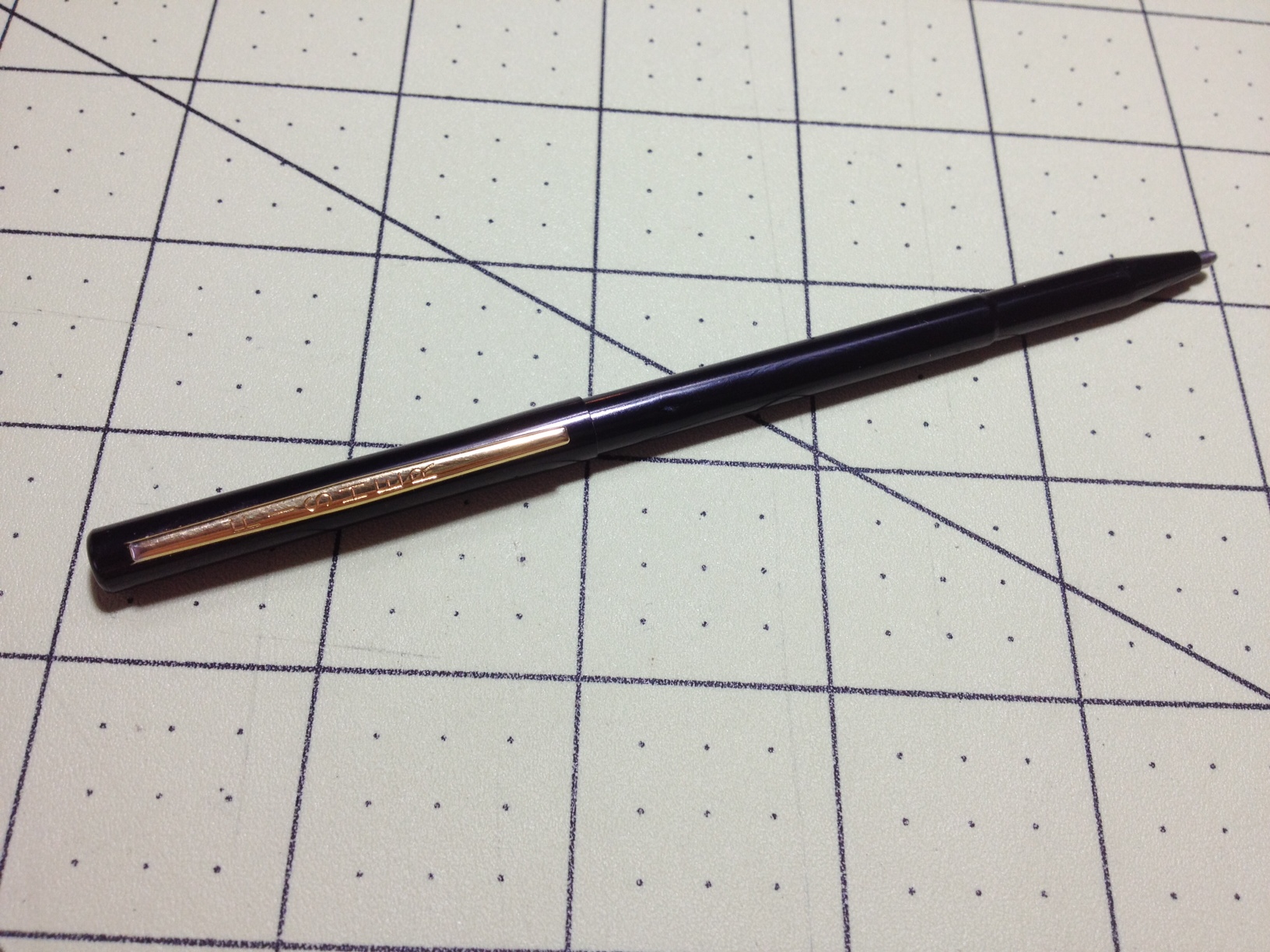
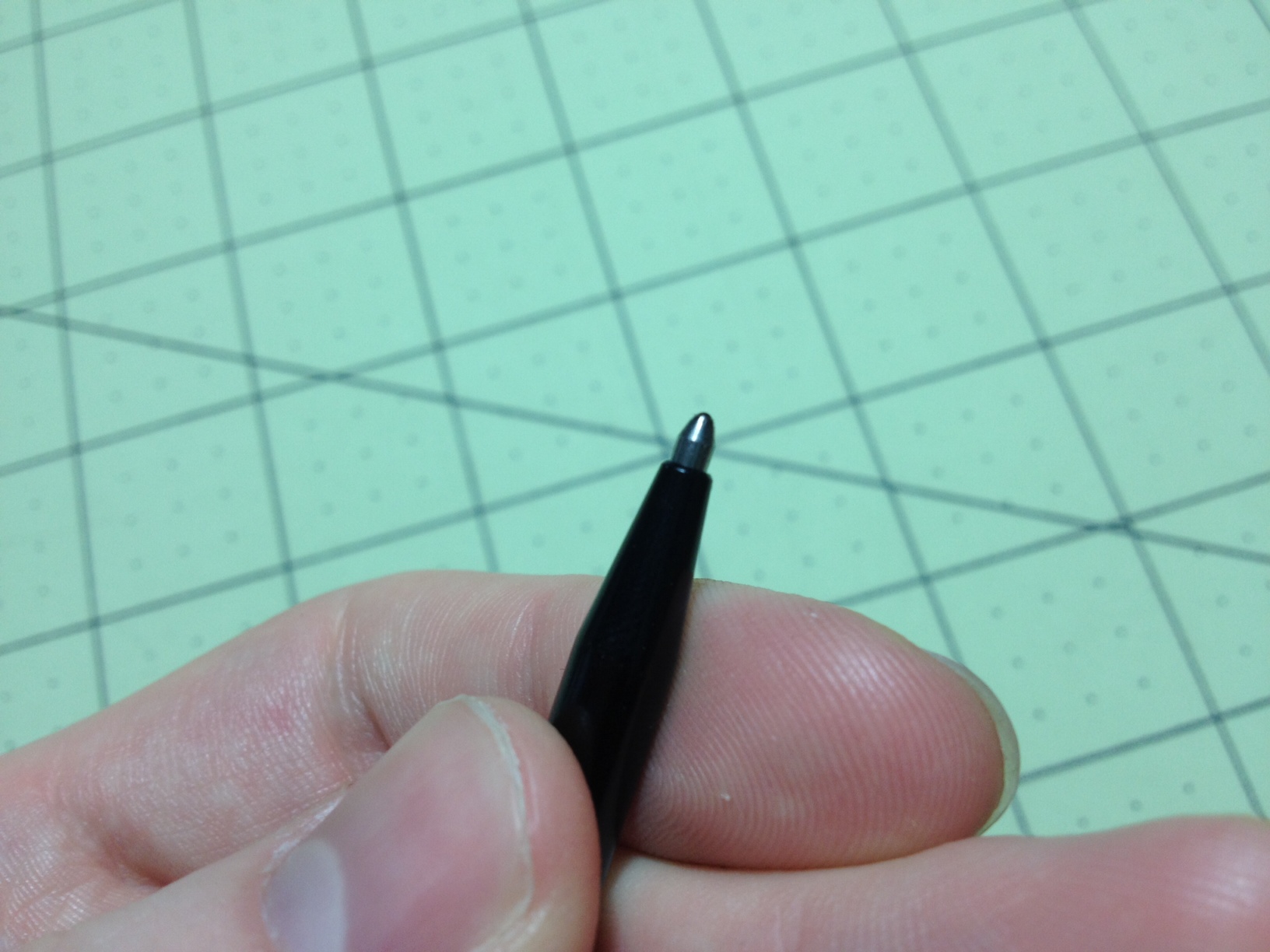
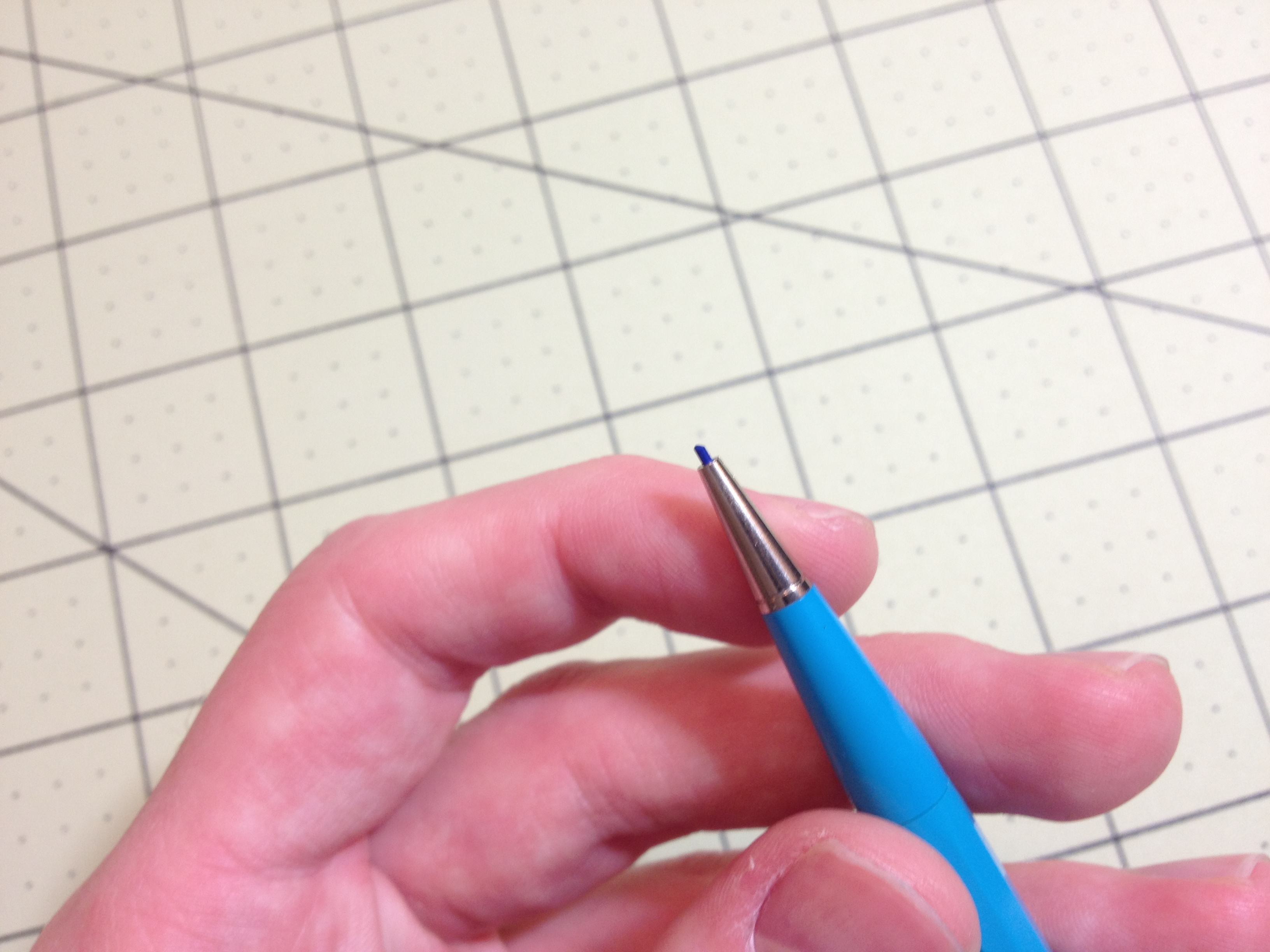
The body is as simple as it can be. It’s a straight cylinder with a small bit of fluting on the end that allows to cap the grip when posted. There is also some fluting on the slight step-down that is the section, and it is surprisingly comfortable and grippy. From there, there is a fairly standard looking cone that leads to the metal tip. As far as I can tell this is not removable and thus the pen is not refillable. The cap is a single piece of plastic with the same fluting on the top, and it has a slight taper to catch the section. The clip is molded in and does work, but not very well since it doesn’t ever meet the cap or barrel.

photo-158

Writing is fairly smooth and nice. There is globbing and occasionally startup issues. Red seems to have more problems with the former while black the latter. All tips are on the fine side of medium, and aren’t shielded from air by the cap so they will have startup problems if left out for some time. The ink is water-resistant and office-friendly,with a grayish, warm black, a dark-ish blue, and a deeper red. They are pretty similar to a Bic Stic/Cristal and a Paper:Mate Write Bros. The main differences are a darker red color, and a smoother writing experience.

Overall, I’m happy with them, but I wouldn’t go out of my way to find them. The writing is as good or better than most of the pens of comparable price in the US, but the bodies are made of what feels like a much more brittle plastic and they are very light weight and get float-y when writing. They are a good, solid, cheap office pen.

Review – Faber-Castell 033 Ballpoint Pen

I recently received a box of things my brother got for me on his trip to Peru. Inside were several pens that seemed to be commonly available there. Indeed, they are more common there than in the US, because all of the information I could find on them was in Spanish, or Russian (Ukrainian? Cyrillic of some sort). And they do say “Product of Peru” in Spanish. So let’s get to it and look at the first type I received, the Faber-Castell 033 ballpoint in black.

photo-156

The pen has a very classic octagonal design, and it’s made with a plastic that feels much like the plastic that older pens and mechanical pencils were made out of, except it is much lighter and feels more brittle and thinner as a result. The faceted barrel is capped on the back by a step-down plug of a light grey color that allows the pen to be neatly posted, and the cap on the front is a very simple, if unsightly, ribbed design. The clip is molded in and works, but is quite filmsy, and I wouldn’t trust it. The cap does fit securely over the section, which is a simple taper in the barrel to a larger-than-normal metal cone, at the end of which is the ball. As far as I can tell, this tip is not removable, and thus the pen is not refillable. Stamped in gold on the side is just enough information to identify it, but not much more.

photo-157

Writing is surprisingly smooth for a ballpoint, but it does have occasional startup issues and more blobbing than I can get past. The ink is comparable to inexpensive Bic ink. It’s suitably dark and black, but it’s got a bit of a red sheen, and upon close inspection under a bright light it looks like a very dark purple. It’s still on the warmer side of things, though. It dries fast (except for the blobs), but with certain types of paper I wouldn’t try it left-handed. And its blobbing might cause it to smear for left-handers anyway. It is suitably waterproof like most ballpoint inks. I haven’t tested lightfastness, but in general even cheap black inks do well, but it isn’t archival quality.

Overall it’s a well-working, inexpensive pen. As far as super cheap pens go it isn’t the best, but it’s far from the worst. It writes well, but not perfectly. The body is simple with no frills and holds together despite being cheaply made. And there isn’t much more to it than that. I wouldn’t be going out to import them, but I would (and will) use them if I ended up with them (which I obviously did).

Review – Sharpie Mean Streak White

I have a pretty liberal definition of what an art supply is. Not quite as liberal as those who say everything is an art supply because (almost) everything you do is art of some kind. But I do think more qualifies as art supplies than the average person does. For instance I would say that everything meant to make a mark is an art supply. And that assumption will be tested here where I take a look at the Sharpie Mean Streak “permanent marking stick”, and see if it has any real art applications.

photo-151

The body is quite large, being about half an inch in diameter. It’s got a good amount of information on the side, but it gets a bit cluttered-looking. The back is a twist knob, like a glue stick. The cap has a slight taper with several ridges for grip. Inside is a pointy cone that can shape or dent the “marking stick” if you put it in slightly wrong. Inside around the “marking stick” (grease, wax, or whatever it is) is a sizable ridge that is quite uncommon on writing implements. There is also no grip section area.

photo-152

There are two ways I can describe this, either as a permanent (wetter) crayon, or a more slick grease pencil. Neither of those descriptions really tell you exactly what these things are. The inside substance comes in a pointy cone that is pretty useless. It’s very putty- or grease-like and when used the point becomes very flat very fast. It writes similarly to a crayon, in that it isn’t easy to control or sharpen. When the tip is flattened beyond a certain point, the base can be twisted to extend the point, but it can’t be retracted, so remember to not twist it too far out (that shouldn’t be a problem unless you’re an impatient reviewer like I am). The feeling it has is very slippery, and quite a bit of material comes off for not a lot of writing, but there seems to be quite a bit of it in the barrel, so running out should not be a major problem.

Performance is a bit disappointing. The white color doesn’t cover very well at all, meaning use in art as either correction or even to mix with other colors is very limited or would require re-application. It can be used as a covering to make things “hazy” but the coating is quite unpredictable. It likes to clump up in certain areas and barely cover others at all, meaning detail work also shouldn’t be done with it. As far a permanence goes, it is, but not wholly. I did testing (not just normal use) on metal and paper. Both were reasonably water-proof, on metal flame did nothing to it and on paper it did resist the flame but once the paper burned it did too (not that anything else would have happened). Then on the metal piece it stood up to WD-40, which has a knack for removing regular Sharpie, but was easily wiped away by isopropyl alcohol. I also suspect it could fairly easily be scraped off or crack easily on pliable surfaces. It does go on whether the surface is wet or dry as advertised and does dry in a fairly short amount of time for how tacky it is to begin with.

I would still consider this an art supply, and it can work well in mixed media, but really it is much more at home in the garage or the toolbox. The tip and lack of sharpening or controlling method means it works quite a bit better when marking large surfaces. It is “permanent” in that it’s hard to purposefully get off, but it doesn’t penetrate and won’t wear terribly well. It’s an interesting item, but certainly not a general use-one.

Review – Fisher Space Pen Stowaway

The Fisher Space Pen has a reputation for being a very good pen, with many models being used by many people for many different things. But I feel that some models of space pen get more attention than others. And for some reason, the stowaway isn’t one of them, but it might be my favorite and I think it’s deserving of a look today.

photo-140 photo-141

The body is very simple. It’s a black metal cylinder with a plastic end cap and another slightly larger black cylinder fitting over it. Fitted to this top tube is a clip, which is longer than most pen clips I’ve seen and has “Fisher” stamped into it (not much else to say, it works as a clip should). On the section there is a slight but smooth step down, and then a taper to the point.

photo-144

Writing is fairly smooth, though it does require a bit more pressure than some of the more modern pens (but less pressure than the cheap ones). The pen itself is very thin in diameter, meaning one’s hand will begin to cramp if writing more than a few notes. The body is also very short, and generally requires the cap to be posted (placed on the back of the pen) in order to lie in the webbing of one’s hand and be comfortable. This small-ness is very useful when traveling, as this pen can fit just about anywhere (but not an Altoids tin or some similar sized case, which might be why “preppers” don’t use them very often). And even though it’s metal it weighs next to nothing. In most cases it will “stowaway” very easily.

photo-142 photo-143

I really like this pen. It goes with me almost everywhere (and I found an almost identically-sized pencil I will be talking about soon). Its slim body and black color make it very low profile and professional, while its all-metal construction and space pen (underwater, upside down, in space etc.) writing ability make it a very rugged writer. I did dent and scratch mine within a day of owning it, but I haven’t put anything on it since (and besides, that just adds character). The cartridges are even replaceable so you don’t have to throw out the pen each time as with many pens of this size. So, if you’re looking for an on-the-go sketching/writing/note taking pen that could also fit in with any of your other stuff at a moment’s notice, I’d say check this guy out.

Review – Paper:Mate Mates Mechanical Pencil

The Paper:Mate Mates is obviously designed to be child’s pencil, considering that they unusually come in various colors or with various princesses or comic book characters. But the reason I have one is because it was given to me. I’m a thin lead kinda guy (0.5 most of the time) and the Mates only come in one size: 1.3mm. So they’re a cheap way to get the feel of a larger lead for those of us not used to it. But how does the rest of it work?

photo-135

The most interesting thing about this pencil is the body, which is a rounded-off triangular shape. It seems built up from a more standard size. Most ballpoint pens or (non-mechanical) pencils could fit inside of the Mates with no problem. It’s also longer than most other pens and pencils I have lying around. The overall design is very simple; it’s made to resemble a regular pencil. There is a triangular eraser on the back that is plugged into the back of the lead tube. It then expands to fit with the edge of the plastic it is held in by and creates a more “seamless” look. This bit is also the click-advance mechanism. Following that, there is some styling in the plastic that is meant to resemble the metal bit holding the eraser in on wood pencils. And beyond that is a smooth triangular barrel (with enough information printed on it) followed by a taper that is a little roughed up and meant to look like a sharpened wood pencil. There is no pipe to hold the lead here; it simply comes out of the end.

photo-136

Writing is simple, and what one would expect from a #2 pencil: smooth and somewhat dark. Due to the size of the lead, though, a lot more expression can be obtained from this pencil, as the lead can be flattened on one side and then flipped to allow for swapping between a very thin and very broad line. The triangular shape both helps and hinders this, making it easier to precisely rotate the pencil, but hard to exactly flip it over. The shape and the length, though, help the pencil ergonomically quite a bit, making the user in general much less prone to hand fatigue and cramping when using it for long periods of time. The fact that it is quite light for its size also helps with this, but contributes to a float-y feeling that I’m not much a fan of.

This pencil was made for kids as a school pencil. The ergonomics, large lead size, and HB (#2) lead grade all stem from filling in large amounts of scantron bubbles. But it does have other, more artistic (or even some office) uses. The lead is replaceable so it can be swapped for one more suitable for you, but a better eraser is needed. It isn’t the sturdiest pencil in the world, but there isn’t much that could go wrong with it and it should hold up in most use cases. So if you want to try out larger lead sizes pretty inexpensively, or are looking for a more ergonomic pencil experience, here would be a place to start.

Review – Master Mechanic Carton Cutter

With so many options, one carton cutter review just wasn’t enough, and I am now back to review one that has a higher price. But does that make it better quality?

photo-127

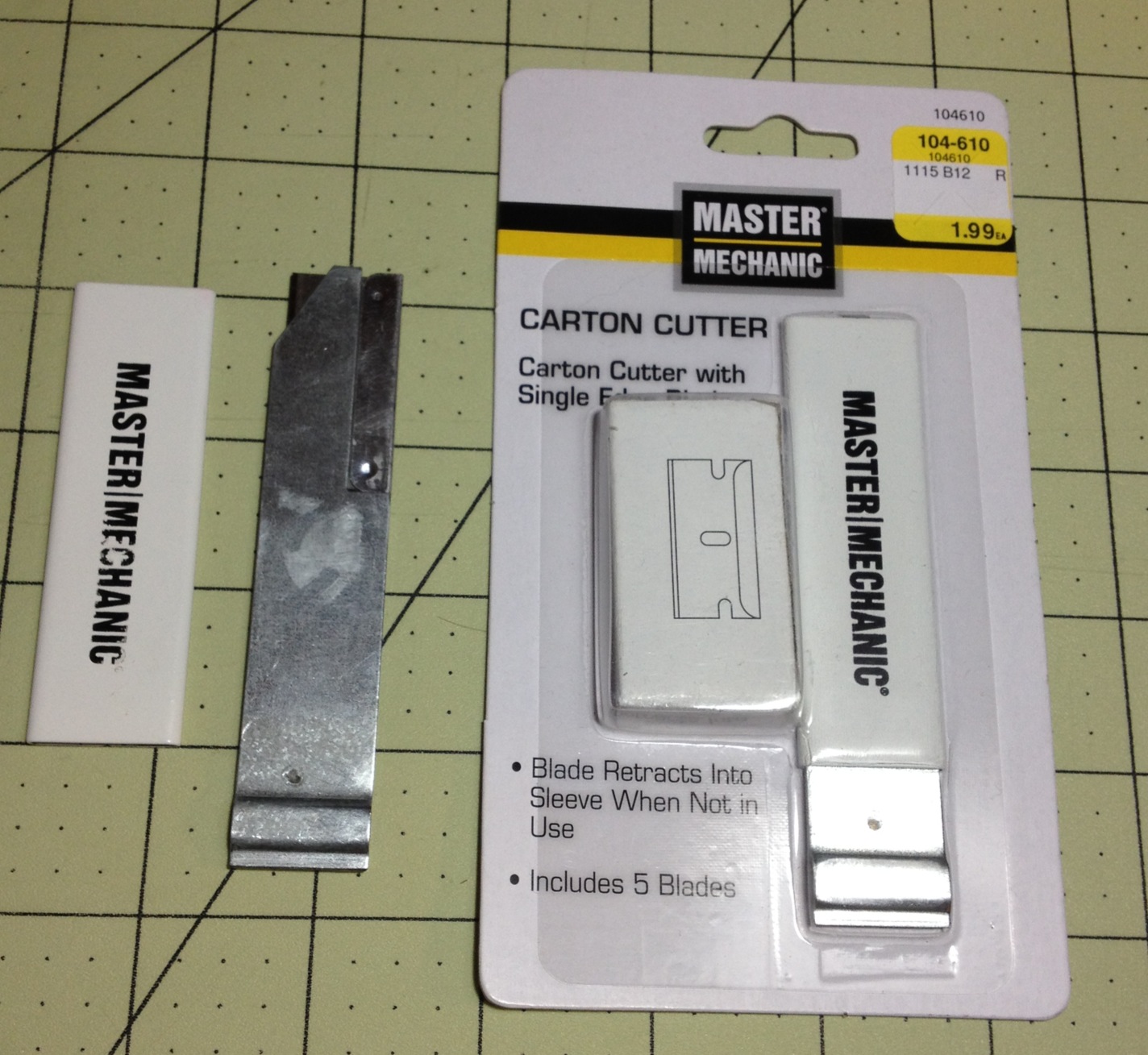
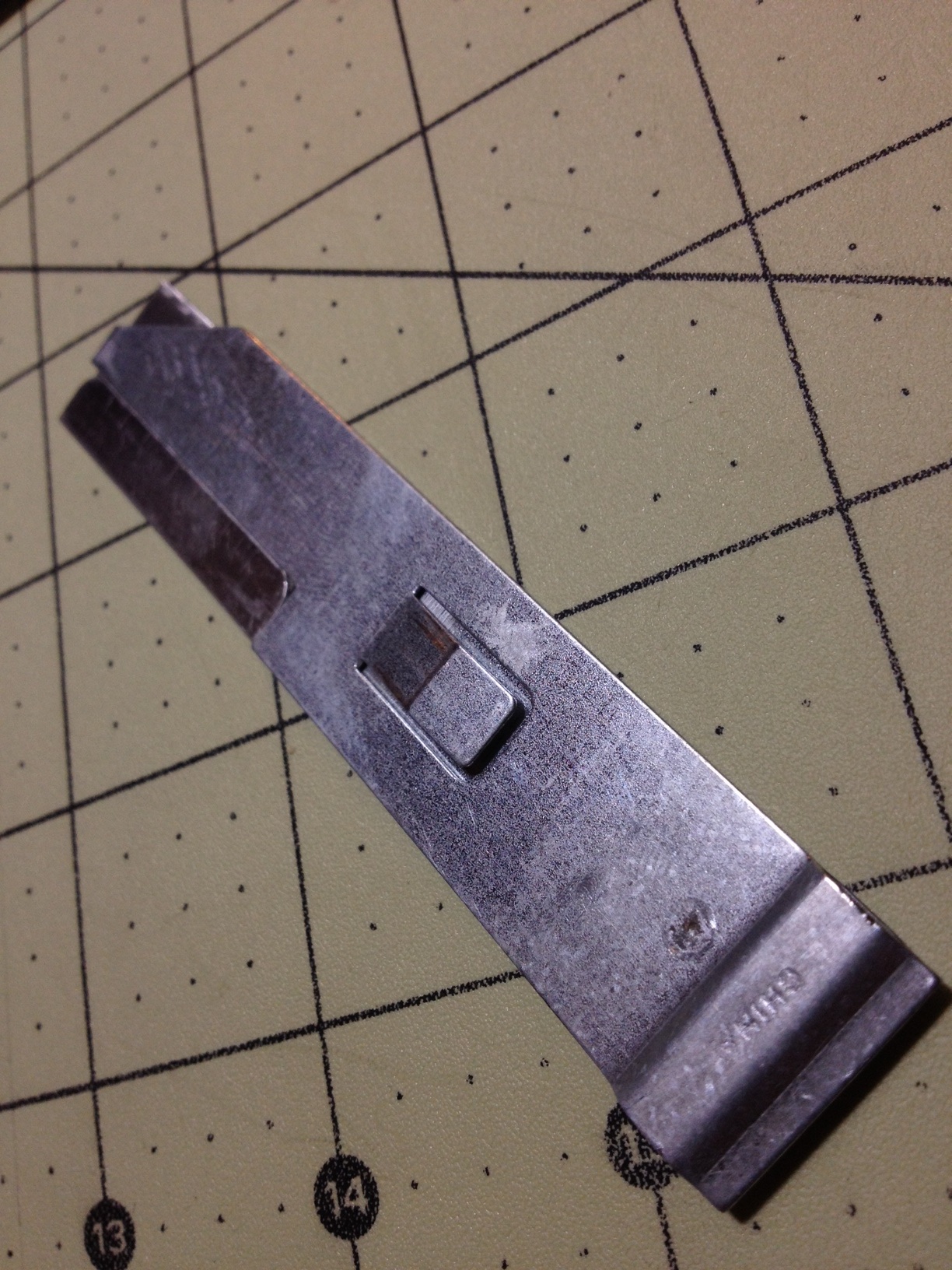
The short answer is yes: it is better quality, but I’ll just go over a few things. The cutter has a bent and nicely shaped/joined sleeve made out of an unknown metal (probably steel), with an insert that is a folded piece of metal that will hold a razor blade. It also has a cutout “spring” that creates the tension instead of the body doing that, making it more pleasant to use. The sleeve also has a nice, easy-to-hold white paint applied, which makes it easier to see. The Master Mechanic logo that is printed on top of this looks nice but wears off easily and looks unsightly when it does.

photo-128

Use is easy and smooth, tapping (a hard surface) both to deploy and retract the blade-holding mechanism (placing the back on a hard surface and pushing firmly will deploy the blade, and doing the reverse with the blunt part of the front will retract it), but it does have a way it “likes” to go in and works better that way. The razor blades that are included are also slightly better than the cheaper knife, but in general one won’t get much use out of single-edge razor blades, which are sharp but cheap and prone to snapping or deforming.

photo-129

Is it worth it to buy a better version of such simple product? Probably not for most people. While this is a better carton cutter than cheaper ones, it isn’t really less dangerous or easier to use per-se. The fit and finish are as good as one could reasonably expect on a product this cheap; the amount of friction on deployment is constant; and the device will likely last for a long time. Still, a carton cutter isn’t a tool most people will be worrying about, and the less expensive ones would be easier to replace if they were misplaced or damaged.

Review – Huion 17.7” Light Pad (L4S)

There have been some huge leaps in lightbox technology in recent years. I’ve owned 3 lightboxes in my time, one being a repurposed dental x-ray box, the second being a traditional style box and the third being this which I bought as a possibly temporary replacement for my more traditional-style box. But I might not be swapping back so soon.

Their photos look a lot better than mine

Their photos look a lot better than mine

The Light Pad itself is a rectangular prism that measures 17 7/8” diagonal and 14 1/8” x 10 5/8” x 3/16”, meaning it covers quite a large area, but is very slim. The workable white/translucent area has markings on the side indicated in centimeters 12 ¼” (31cm) x 8 ¼” (21cm) with a ½cm margin. The non-workable black margin is about ¾“ all the way around the pad and it’s only features are the power button and a logo. On the side of the device next to the power button is a micro USB port that is only used for power (this version has no internal batteries), and a red LED will come on when the device is correctly connected. On the back of the device there is some modest information and nicely padded feet that prevent the pad from sliding around when being used.

photo-123

Using the Light Pad is a breeze. Simply touching the power “button” lights up the entire workable area to the highest brightness setting (which isn’t very bright, and being shone through a white plastic makes it much less glaring on the eyes). Touching and holding the button will start the pad lighting up, and releasing the button during this will keep the pad at the current brightness setting. This setting is remembered and the next time one starts the device it will light up at the chosen setting unless you hold the button down again. The working area accommodates A4 and Letter sizes well, and the light on the brightest setting easily works with 2 sheets of 110lb cardstock. The plastic the surface is made from is very smooth, but resists sliding and scratches. The feet are also very nice and the device is stiff enough that it doesn’t bend around them under normal use (I still wouldn’t go stacking things on it).

photo-122

I don’t think I’m going to be going back to the more traditional lightboxes anytime soon. In my opinion the only advantage they offer is an angled working surface, which is a feature I never really used. The Huion Light Pad is a great lightbox; it’s sufficiently lighted and durable enough to be easy to work with, thin enough that is stores easily, and draws very little power. Its overall workspace footprint is very small, and its job is done almost flawlessly. I do find the red LED indicator light to be annoying but I can’t think of a better way to do things and it is much less troublesome than other indicator lights I’ve had to deal with. I also have no use for the multiple brightness settings but I suppose it’s better to have it than not. Still, the device has become a permanent feature of my workplace and I would recommend anyone looking for a lightbox to look at these cheaper and thinner LED alternatives to the traditional boxes.

photo-134

Review – Sharpie Colors Part 6 – Orange, Peach, And Yellow

And now, it is time for the final (for now) part of my look into the various colors of Sharpie markers (that I own). This section isn’t quite a “nice” as the others as I didn’t have another place to put the yellow that seemed appropriate, and there aren’t many oranges. Nevertheless, let’s take a look.

photo-96

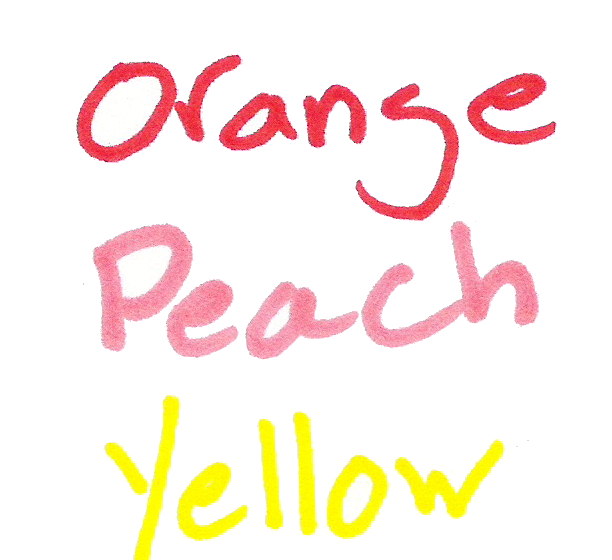
Orange – The standard orange is, like all standard Sharpie colors, quite dark. It doesn’t quite resemble the fruit enough for most renderings but is close enough. It’s not too bad on bleed-through, feathering, or shading. It’s well behaved, just not that useful.

sharpie colors oranges-yellows

Peach – Peach doesn’t quite look like a peach either. It’s more of a weird skin tone. But it is perhaps a bit more natural looking than the orange. It’s pretty bad on bleeding and feathering, with shading being noticeable. But it is pretty so if you like the look you might be able to find a use for it.

Yellow – And finally yellow. It isn’t something really spectacular. It is indeed stereotypically yellow, without much of a natural bent. It is hard to read in the dark and bordering on eye hurting in the light. It bleeds through, but feathering and shading are minimal. I would struggle to find a place for it due to its unnatural hard-to-read-ness but if yellow is your thing, it certainly gets it done.

And that’s the last set of the Sharpie colors that I have. It’s probably the most lackluster set (figuratively. Literally would be the neutrals). I would struggle to find a place either in art or at the office for them, but they do help round out any personal collections and would make eye-catching signs I guess.

Most of the Sharpie colors are more useful, though. The set I have would work both in the artistic and office realm. And it offers a large enough selection of colors to keep most people happy.

Review – Autopoint All American

There are tons of pencils out there, but sometimes the old designs just call to me. And they still work very well. It’s hard to beat some of the most simple writing utensils in many cases. The Autopoint All American is not the simplest of pencils, but it is quite a classic and simple design that works very well.

photo-78

The top of the pencil is a hard, but functional, eraser held in by a metal sheath; removing this allows for access to the lead storage area. There is a metal collar that holds the clip just down from that, followed by the faceted barrel with 10 sides. This continues until the break for the twist mechanism, at which point the tip tapers down to the point of the lead. The only information is the lead size and brand on the clip, which is quite hard to read, and leaves me wishing the model name was somewhere.

photo-77

The mechanism is a simple wire-twist one that is a bit stiff to use. Once lead is inserted, one can twist to the right to advance the lead, or twist to the left and push on a hard surface to retract it. While stiff, the mechanism is quite solid, and the lead is held firmly in place. I have a .9 lead size version (in blue) and the lead is large enough that breaking isn’t very common anyway, and I haven’t found it to be a problem. The lead included is fairly standard in and of itself.

photo-76

It’s a good pencil with a classic design. The mechanism isn’t the easiest to use but it’s robust and sturdy. The pencil itself has a very utilitarian look and feel that I quite like. It feels like many of the classic pencils I have. So for those looking for a classic, rugged pencil design, this is one to look out for.

Review – Bic Velocity Mechanical Pencil

Bic makes a lot of writing products, and sometimes it’s hard for me to keep them straight. I’ve never really been sure what one is supposed to do over the other. Nevertheless, the Bic Velocity is a solid mechanical pencil and I’ll be looking at it today.

20150510-220506.jpg

The back of the pencil is unremarkable; a clear plastic cap covers a small, white, barely functional eraser (it works about as well as most mechanical pencil erasers). This assembly can be pushed down to activate the lead advance mechanism. Just down from this is a plastic clip, functionally all right, with the pencil’s information written on it. Down from there, the body is clear and straight until it get to the rubberized grip section where it bulges then hourglasses, creating a nice place to rest your fingers. The little cap cone after this is clear, and has the metal tip floating inside so that is retracts when the lead is retracted, preventing the tip from getting caught on anything.

20150510-220540.jpg

Writing is fine. The lead is standard. It doesn’t break much, goes on smoothly enough and dark enough for school or office work. There is no advanced shock absorber or lead turning to prevent any damage, though, but at the price, that’s teetering on the edge of reason. The grip is comfortable enough to get one through writing or drawing without too much trouble. It doesn’t slip and isn’t too narrow. The overall construction is solid, and it feels like it won’t break in your hand.

Overall, the Velocity is fine. It isn’t the best mechanical pencil ever, and it has no real features, but it’s solidly and relatively comfortably built. It is fairly inexpensive and comes with enough refills of erasers and lead to last the user for some time. As far as inexpensive options go for mechanical pencils, it’s a good one, but there’s nothing special about it.