Review – Simple Pencil Extender

Pencil extenders are something I haven’t looked into very much. I am able to “comfortably” use a pencil well into a stub, and would just as soon have that stub as a backup and get a new pencil when it gets smaller (and now I’ve mostly swapped to mechanical pencils). But that does mean I have quite a few stubs lying around, and maybe with some inexpensive “Chinese” (don’t know for sure, but it seems likely) pencil extenders I can breathe new life into them.

photo 2-11

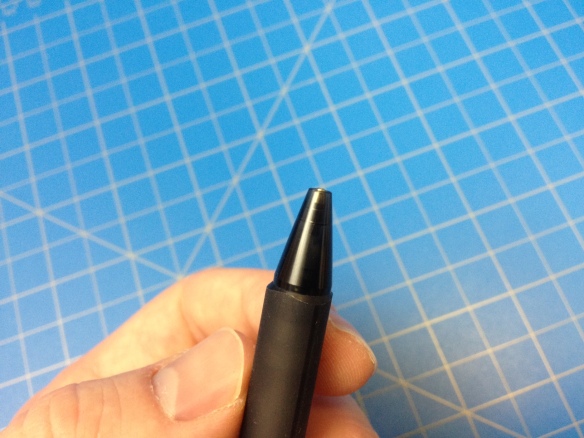
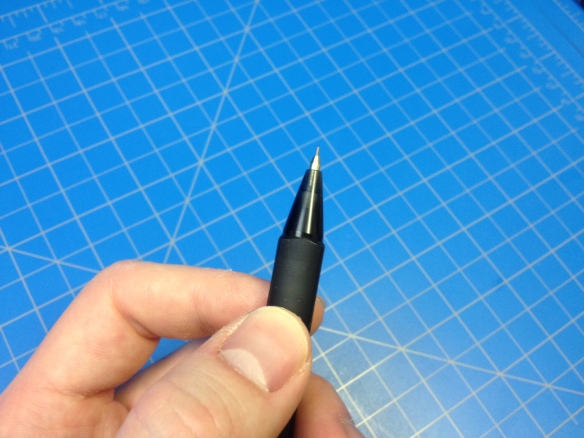
This one is a bit of an anomaly to me as I didn’t get it myself (it was a gift), it has no identifying markings, and I can’t seem to find it specifically online anywhere. I have found an eBay listing that highly resembles it, but I don’t quite know about it. Still, it is strikingly close to other, more hexagonally shaped versions that can be found all over the place and likely use the same collet.
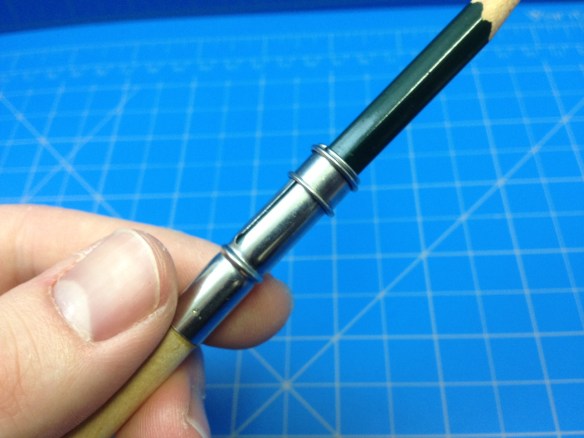
photo 3-10

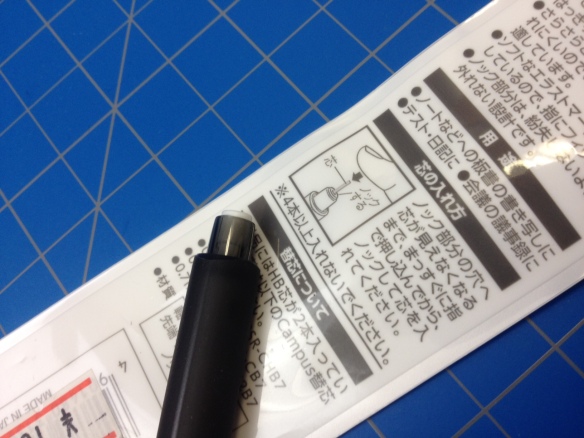
The device is immensely simple: a rounded wooden dowel is crimped to a tube of metal with a slit near one end and a separate metal band wrapped around it. When a pencil is inserted into the metal tube the band can be slid down to tighten and secure the pencil stub in place. It’s basically a collet that slides instead of screws, and while it works there are some problems. For example, the pencil stubs that can be used must be of a very specific size. Standard hexagonal pencils fit (think Paper:Mate Americans) but the larger art pencils and every round pencil I’ve found (including all colored pencils) have been too big. In general it seems a coat of paint is all the difference it takes between fitting and not.
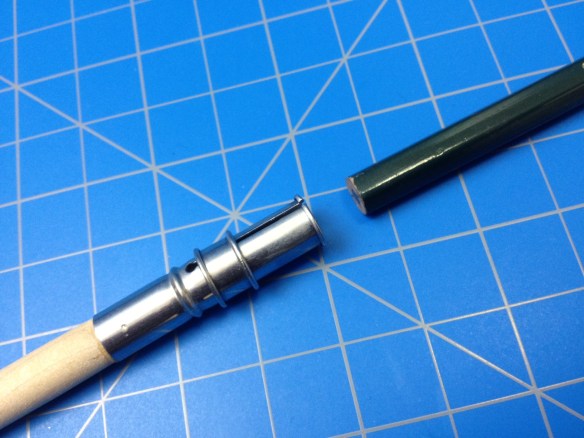
photo 4-10

And even when a pencil does fit it isn’t held very securely. Sliding the metal collar does clamp the collet tube down a bit but a good tug and the pencil comes free, though it is held in well enough that typical shakes don’t knock it loose. And the metal tube itself isn’t very well fitted to the wooden body and the two can easily be persuaded to part ways.
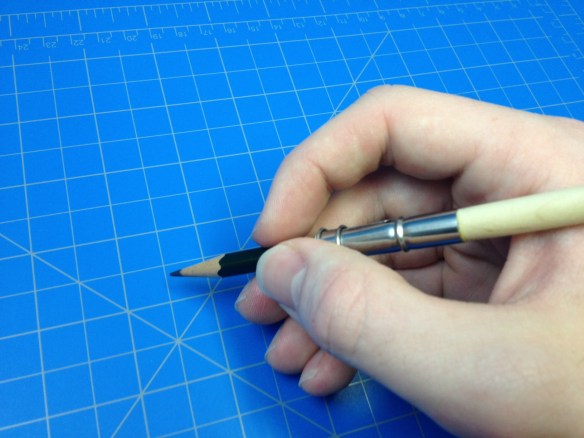
photo 5-3

Still, with the cost seemingly being almost nothing, it does a tolerable job. The pencil is held securely enough to write with, and can be used comfortably as long as there is still pencil to grip (the collet is not a nice bit to hold on to). It is fairly lightweight, which is good for portability but bad if you really want your pencil to feel the same as it did when it was longer. And even though the construction is shoddy they cost about as little as a pencil or two so if they help you finish a couple they’ll’ve been worth it.

Review – Stabilo No. 288 Exam Grade Pencils

Every time my brother goes on an international adventure, I get to reap the rewards by looking at writing utensils from another country without the hassle of actually having to visit that country. Now, Stabilo is a company with many products available in the US or easily shipped there, and the subject of this review, the Exam Grade No. 288 2B pencil, can be found and purchased here, but when you compare prices and availability it’s obvious it’s really meant for foreign markets (mine cost 36 {probably less} Thai Baht {or a dollar and 3 cents} for three pencils when compared to $3-7 on eBay or Amazon plus shipping). Is there a reason to chase them across the world or are they just Paper:Mate equivalents?

photo 2-13

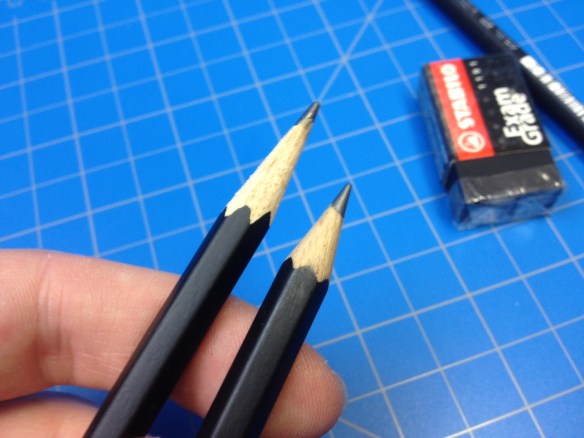
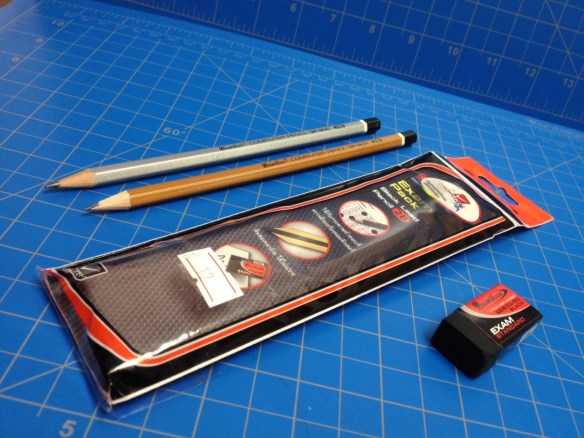
Most of the information on the package is in Thai, a language that I unfortunately don’t speak or read but have enough objects displaying it around my house that I can instantly recognize it. The pencils themselves are all in English, though, so for someone like me identification and re-ordering would be an easy thing to do. They’re a standard wooden hexagonal design with a black matte finish until the final ¾”, where there’s a glossy white band followed by a glossy red “cap” of paint. No eraser is affixed; instead, a separate eraser is included in the package. On two opposing facets of the body all of the necessary information is printed (poorly) in a silver ink and ever-so-slightly stamped (there’s also a barcode in white).

photo 3-12

Performance is pretty par. Supposedly, these are pencils meant to take school tests with, and I would say they do a good job of that. The wood isn’t great quality, but it’s light and sharpens easily. The graphite is on the darker side being a 2B (an unusual but not unheard-of hardness for US school pencils). It looseits point quickly but makes a darker mark, something I’m not a fan of, but is good for filling in bubbles on a scantron (or something similar). The black eraser comes in a card sleeve where all of the information is also in English. Supposedly it’s “specifically designed to erase scan sheets cleanly with minimal eraser mess” (and a bit of paraphrasing). And it’s not bad. Light marks are erased easily and darker marks passably, and the eraser shavings do clump up to create less mess. It also doesn’t seem to disappear right before your eyes as you use it. It’s far from a perfect eraser, but it (the 1191) is at least comparable to the standard pink erases that are so easily found.
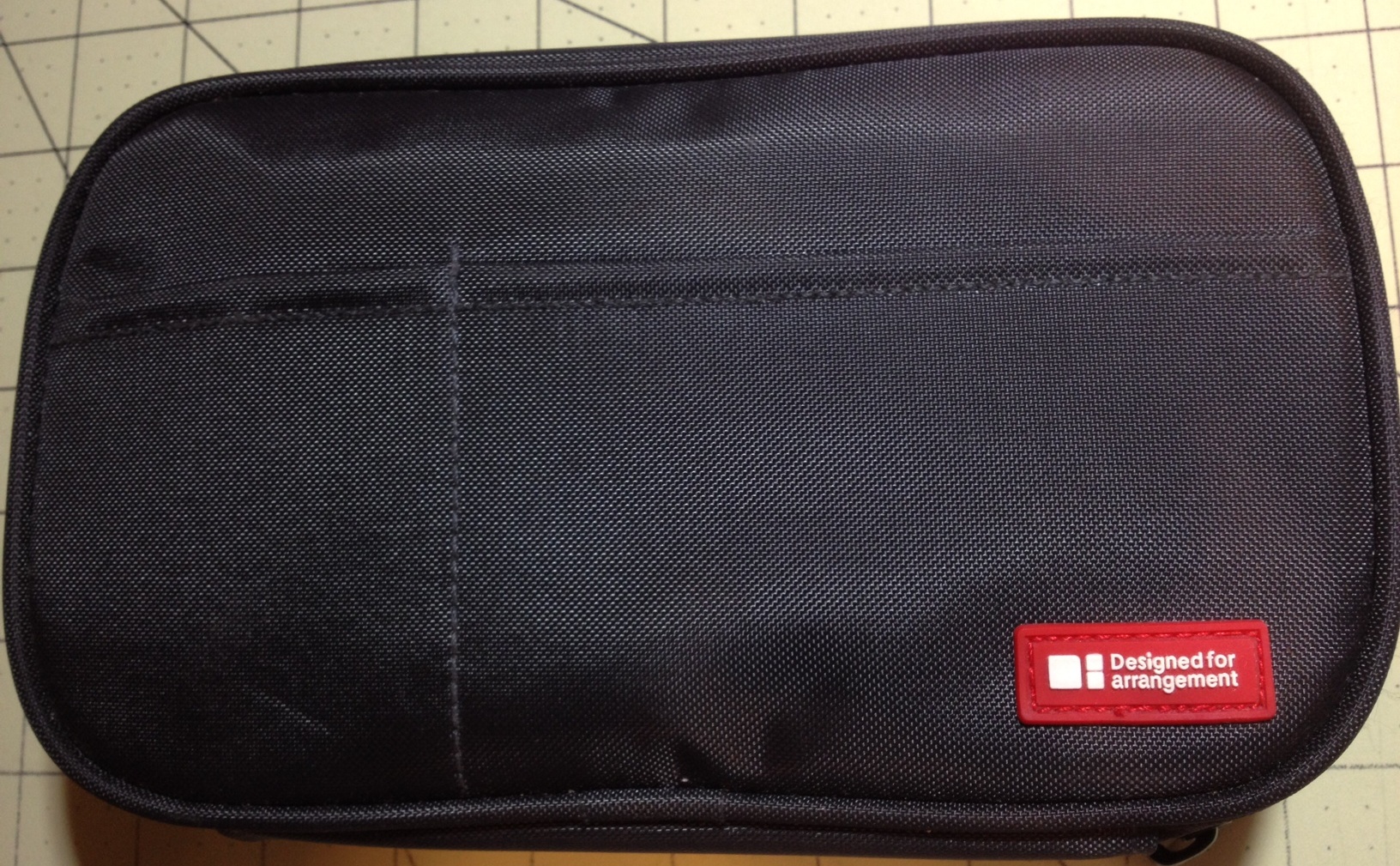
photo 4-12photo 5-5

As far as quality is concerned I’m not going to be running off to Thailand anytime soon to track down a lifetime supply. They’re competent but not excellent everyday/school pencils that are inexpensive and usable with a few subtle changes when compared to their counterparts in the west. If you should ever find yourself in Thailand or any area that sells them (perhaps you live there) they can easily be used for most daily tasks, but they’re nothing to write home about.
Review – Vinifan Bicolor Colored Pencils (Triangular)

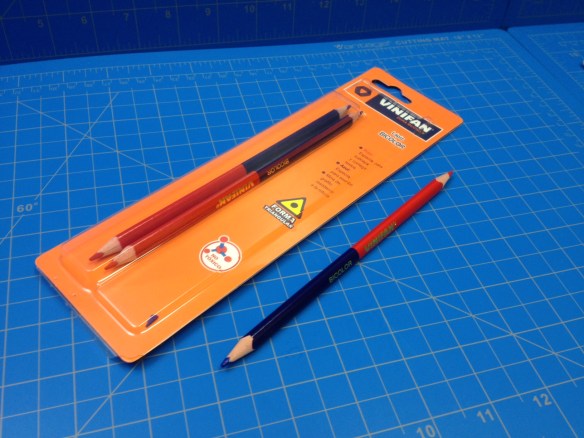
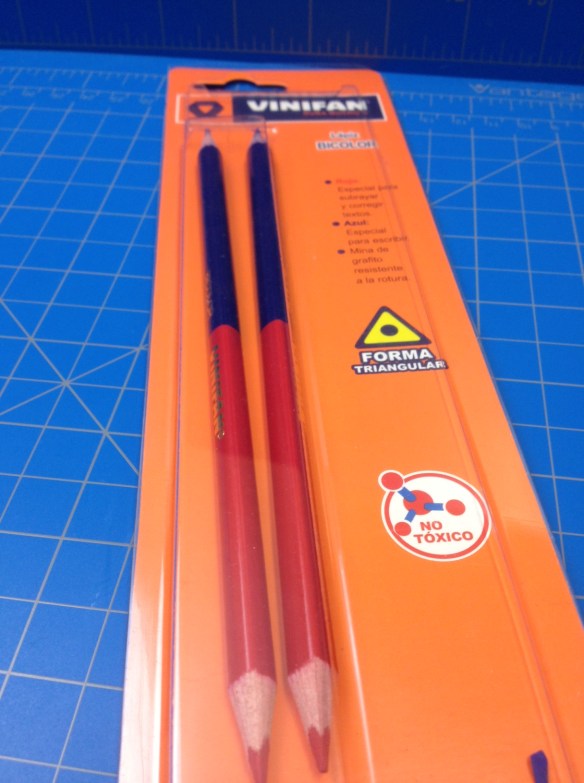
I don’t know about anyone else, but I certainly have memories of being fascinated by double-ended colored pencils. I actually might still have my first one around somewhere because, even though I ended up with a couple different ones in my pencil pile™, there just wasn’t much use I could find specifically for a double-ended colored pencil. But the box for the one I’m looking at today, the Vivifan Bicolor, has (as best I can make out since I don’t read Spanish fluently) listed uses for each side of the blue and red pencil. The blue side is for “writing” and the red side is for “correcting” (escribir y corregir respectivamente), but is that really a good use scenario?

photo 1-18photo 2-15

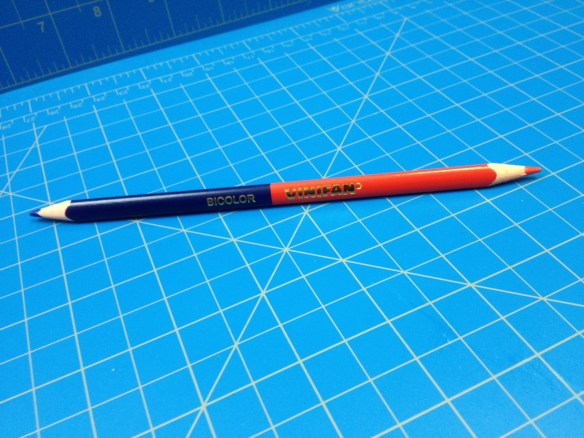
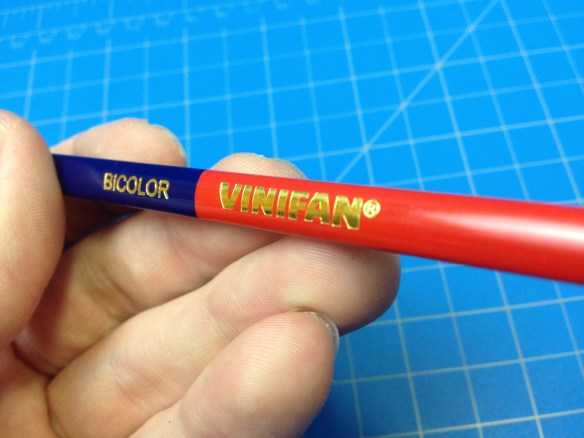
Like a few other Peruvian writing implements I’ve reviewed recently, the Bicolor has a rounded, triangular body that helps with grip and prevents it from easily rolling off the table. It’s painted red and blue on the sides corresponding with the color of the lead, coming together in the middle at a surprisingly straight line (I don’t know if that line exactly corresponds to the leads, though). Near the center, stamped in gold letters, are “Vivifan” and “Bicolor” which is enough, but I would’ve liked some more information.

photo 3-14photo 1-14

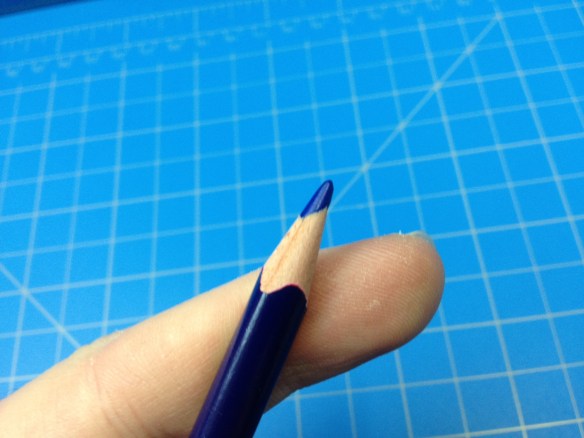
In the package, the points are very cheaply made with 3 flat cuts, but they are usable (though the points were broken or blunted on some of mine during the trip from Peru to the USA). The writing has a more-or-less standard, waxy colored pencil feeling. Coverage is pretty good when bearing down (the blue covers slightly less completely than the red), and at normal writing pressure they are darker than the average colored pencil. But, in my experience, they become unsightly and uncomfortable after only a few words. The fire-engine red and navy blue colors are unspectacular and almost non-differentiate-able from Crayola orange-red and blue pencils, but they get the job done. Both the waxy-ness and the not-good-for-art colors provided help lead to the very standard problem with inexpensive colored pencils of them not blending very well, but the packages says they’re for writing so that’s less of a concern.

photo 4-14photo 5-8

I’m still not really sure what I would use this for. The red side is good for marking corrections to be made, but the blue side is not good for writing. The color set is too limited for most artistic applications and the difficulty there is compounded by the inexpensive waxy-ness. Still, if you’re looking for a space-saving or easier-to-keep-track-of way to have both a blue and red colored pencil with you, this would be a perfectly adequate (and comfortably designed) way to do that.

Review – Pilot Opt (.5mm)

It’s always surprising how many innovations there can be for something as (seemingly) old, tried, and true as a mechanical pencil. The Pilot Opt is a fairy traditional and comfortably chunky mechanical pencil save for its unique advance mechanism. While a standard click-mechanism is available and quite usable (and necessary for retracting), there is also a sliding weight inside that allows the pencil to be shaken to advance the lead. But is this shake advance mechanism (that I don’t fully understand) a real improvement over the standard, or just a gimmick?

photo 1-17

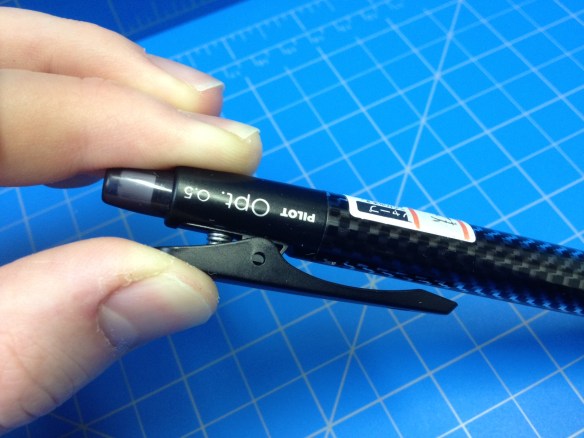
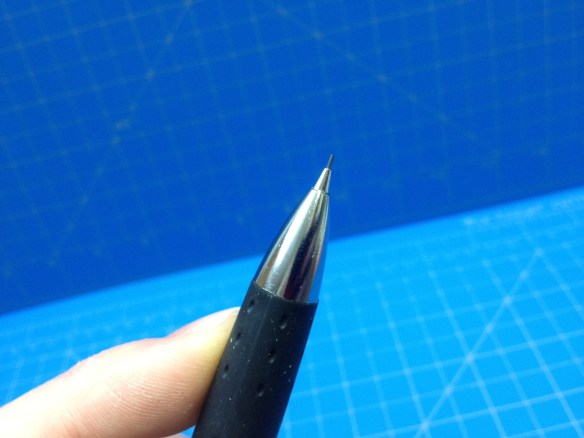
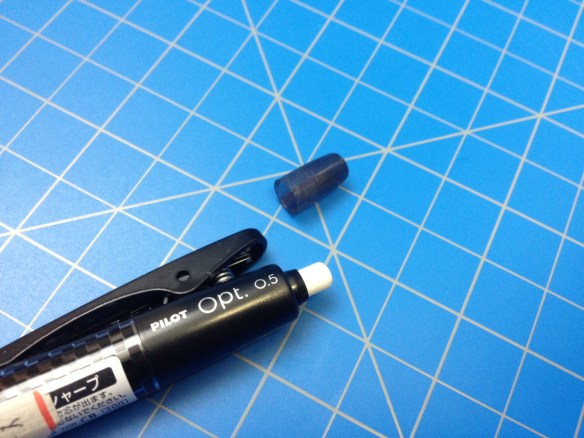
The body of the pencil is fatter than the average mechanical pencil and relatively torpedo-shaped, with the thickest part being around two-thirds of the way toward the front and tapering down from there. Forward of this hump there is a (removable) rubber grip section and a metal cone, attached to which is a smaller metal cone that serves as a lead pipe. As far as I can tell, the farthest this pencil can be taken down by the user is removing these two bits, which gets you nowhere. Behind the grip section is a clear piece of plastic with a colored checker pattern (which is black, trying to mimic a “carbon fiber” look. Other syles come in other colors) below this, you can see the black tube containing the advance mechanism. Behind that is a correspondingly colored opaque plastic bit that contains just enough printed information about the pen and holds the attached spring-clip on a pivot. At the very end of the pencil is a(nother) correspondingly colored translucent plastic eraser cover, under which is a small white eraser that can be removed to access the lead tube.

photo 4-13photo 3-13

The lead and eraser are what you would expect from Pilot: that is, quite serviceable. The lead is a fine .5 and the one included feels like an HB. It’s a medium hardness and quite smooth, nothing to write home about but nothing wrong. The eraser gets the job done but like many mechanical pencil erasers is entirely too small (in my opinion). This is offset slightly by it not being they type that disappears easily. The push click mechanism is usable and gets thing done, but is a little underwhelming. And the clip is great, being smooth enough to not damage items but strong enough to hold on firmly, while the spring mechanism makes it easier to use and harder to break. But obviously the main attraction is the shake advance mechanism, which works as advertised. A good shake will advance enough lead for one to be able to write, though it might take two to get to a length most people are comfortable with. The advance per “shake” is comparable to the advance per “click” with minor length differences depending on some ethereal power (likely gravity and the external forces you apply). And the weight inside needs to reach both extremes in a short period of time with some force in order to advance the lead, this means that accidental advancement is a rare occurrence, but when intentionally done can be a surprisingly subtle gesture (though it’s still violent enough that people might give you strange looks). I haven’t had it advance in my bag, yet it’s always done so easily when I was using it.

photo 2-14

Without its gimmick this is still a solid pencil, though one could argue that its ¥200 (≈$1.75) price tag isn’t worth it without the shake advance (the same for its increased US price of $3.00-3.50) but even then it’s right on the line for the quality (though I wouldn’t get it without the mechanism because of its thickness). But with the mechanism it becomes a fascinating and usable utensil. The grip is comfortable, if wide, the lead and eraser are of quality, the clip is a step up, and the mechanisms work wonderfully. If you’ve been looking for a more convenient advance mechanism and other options like side advance aren’t doing it for you this is certainly something to look at. And while I probably wouldn’t have bought one for myself (it was a gift from my brother when he went to Japan), and indeed I won’t be keeping it in my daily use pencil bag, I had a fun time with it all throughout my testing.

Review – Kokuyo PS-FP102 Mechanical Pencil (.7mm) (DM)

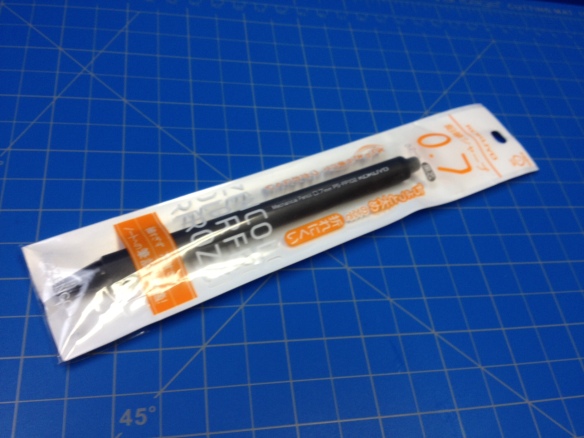
In a time where a lot of companies are trying to re-invent the wheel with their pencils, Kokuyo from Japan has made a relatively inexpensive, minimalistic, and comfortable mechanical pencil. The PS-FP102 (Pencil Sharp {my guess from the website}) omits several things that could be thought of as standard, and uses that effort on a sturdy and comfortable design (that is, from what I understand, ostensibly for children in school). Is the trade-off worth it?

photo 5-7

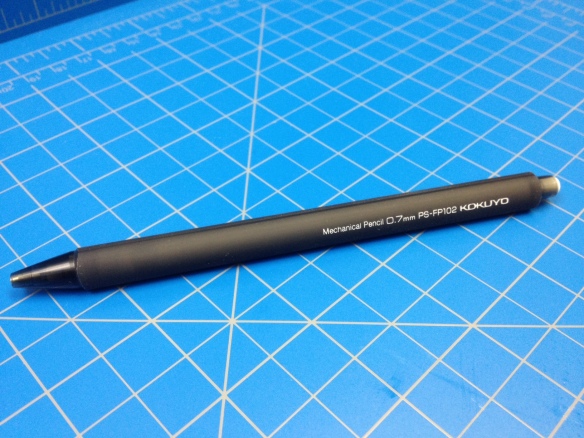
The body is one of the simplest to be found on a mechanical pencil, being mainly a vaguely triangular-ized (at least the “frosted” versions are triangular) cylinder with a rubbery coating for the 4 ½” body. Sticking out a quarter of an inch on the back is the click-advance button, and five eighths on the front is a plastic cone, from which a smaller metal “lead-pipe” can emerge bringing the total length of the cone to three quarter inches. Printed (maybe stamped or adhered) on one of the facets is all of the information about the pencil (which seems like it will rub off in the future but has withstood use so far).

photo 2-12

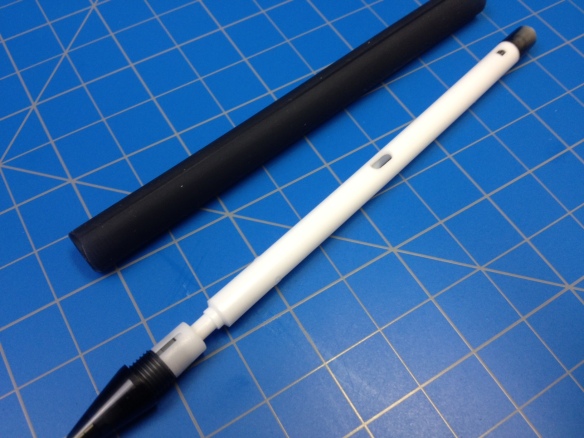
The body can be unscrewed at the cone, revealing that the rubberized triangular barrel is just a sheath, and the cone mechanism can be pulled from the front. As far as I can tell no further takedown can be done and neither of these operation provide any real benefit that I can see beyond checking how much lead is in the pencil (through a convenient window {the view on my frosted black version from the outside is blocked}) and perhaps clearing out the front mechanism.

photo 5-4

Writing performance is good; the lead is a .7mm and presumably HB (there are also .9 and 1.2mm versions). It’s a bit too thick for what I usually like to write with (.5mm) but it is fairly break-resistant and smooth, which would be good qualities for a school pencil, and from what I understand that is what it was originally designed for. There is no eraser or clip (though there is a version of the pencil that comes with a stand-alone eraser and friction-fit clip) and instead of having to remove a back piece to insert lead there is simply a hole just big enough to fit the lead through that lead can be fed into. Once it has been pushed all the way in, it enters into a larger reservoir and will not likely find the correct angle with sufficient force to come back out of the hole. It’s honestly a pretty elegant lead-feeding system if one doesn’t care about having an eraser.

photo 3-11photo 4-11

The click-advance mechanism is very smooth and workable, but unsatisfying. The metal “nib”/lead-pipe at the front does retract and advance with the lead, neatly preventing any damage that it would cause but being a bit fiddly (it’s easily possible to retract the lead and not the metal piece, which is a bit of a strange situation). And the rubberized, triangularized grip is very easy to hold, not slippery at all, and quite comfortable (though not my preference), especially for hands just learning to write (it keeps fingers in the proper orientation). I must say, though, that it only barely resists rolling off the table more than its round counterparts.

photo 1-15

So instead of an eraser or clip, this pencil provides an elegant lead-feeding system, comfortable and chucky triangular grip, and a stow-away point. All of which make it a good fiddly-bit-free pencil for students, and with a slide-over clip and external eraser (the integrated ones are never enough) it might also be a preferable one for artists or in the office. For the mostly reasonable price of ¥180 (≈$1.55) it’s a solidly designed, well built little pencil that seems like it would last under a bit of stress and is certainly worth checking out if you want a triangular grip or to forgo the standard integrated eraser for greater lead convenience.

Review – QuanTum Computer Pencils

Recently, I’ve gotten my hands on a few inexpensive pencils from Thailand. And at 12 Bhat (34 cents) for 2 pencils and an eraser, the QuanTum Computer Pencils are fairly cheap and meant mainly for school work. But would they hold up?

photo 1-8

Most of the information printed on the package is in Thai, so the most I can get out of it is that it’s a pencil, but the information printed on the body itself is in English, which is nice for people like me. The bodies are a simple, wooden hexagonal design with one rounded end. The two in my package have silver and gold painted bodies up until the last ½”, where there is a slim band of white paint followed by black for the end. Printed (notably not stamped) on of the facets is enough of the pencil’s information to get you by.

photo 2-6photo 3-6

Out of the package, the tips of these pencils were poorly enough cut that I needed to sharpen them before being able to use them (the lead is centered, just poorly cut). The graphite itself is softer than “standard”, being a 2B, but it’s on the harder side of 2B. The very (tip) point wears off quickly but it takes some time to wear it down after that. Writing or drawing is fairly smooth and getting dark patches for test answers would be/is easy (I don’t have a scantron laying around to try it on, but it gets pretty dark). There is also a black “perfect for 2B” eraser included in a tiny card sleeve. This eraser is surprisingly good, especially with this pencil; it gets rid of almost any trace of writing besides the indent in the paper, and does so quite quickly. It is one of those that seems to evaporate when you use it, though, and there are quite a few “shavings” to sweep away (also the package says “dust free”, and I have no idea what that means).

photo 4-6

I’d call these certainly adequate for what they are trying to be: school test or general use pencils. They function perfectly well but have a few quality mishaps, and I personally am more of an HB to F kinda person for my art/writing. If you run across them they’ll likely get the job done, but there’s no real need to go out of your way (like to Thailand) to find them.

Review – Tombow Mono Zero Erasers

A few years ago I was aiding my brother in the search for a good separate eraser to go with lead holders (that often don’t have their own erasers), and that lead me to review the Sanford Peel-Off Magic Rub, which is essentially a Magic Rub eraser in the same body Sanford uses for their Peel-Off China Markers. And to me that was the answer. I knew there were mechanical erasers, but they were mostly cheap little things, or not available in the stores I frequented. It wasn’t until a few months ago that I found the potential simple, high-quality solution of the Tombow Mono Zero mechanical erasers and I got them as fast as I could. Are they up to the task?

photo-2photo-1-2

The body is super simple, being a cylinder about the size of a pencil and a little over 3½” long. It comes in 2 different colors: silver for the round eraser, and black for the rectangular one (it’s made of plastic either way). At the front there is a step-down to the “lead-pipe” of sorts. This “pipe” being cylindrical for the round and flattened for the rectangular is the only other main physical difference between the two. The (lead/eraser) pipe is a nice, stiff metal that cleanly guides the eraser as it extends. On the back, there is a non-removable, simple push-click mechanism with an integrated clip. The clip is good but not superb at clipping, while having the advantage of being very structurally sound (something most plastic integrated clips are not). On the top of this mechanism is a sticker with the eraser’s sizes: 2.3mm in diameter for the round “small” and 2.5mm x .5mm for the rectangular “slightly less small”.

photo-2-1photo-3-1

Performance is good; the click mechanism is sound and has a satisfying feel, retracting and reloading are simple and both done from the front end (reducing the number of failure points but also making disassembly functionally impossible). The erasers are of the white variety and erase very well. They aren’t the absolute best I’ve seen and they won’t get rid of every single mark, but they are both quite tiny and precise, making them very useful in those fine detail areas other eraser wouldn’t even be able to get to.

photo-4

They are very good erasers, but more as a set to complement others than on their own. For writing, pocket and backpack sketchbooks, or those who do a lot of detail work, they will be fantastic, especially if one gets both to use in different situations. But for general use, they obviously don’t have the huge, quick-erasing capabilities of a standard eraser, and I’d imagine that in most people’s use cases they’d augment and not replace one. Still, I am one of those people who like to write and do finer-detail drawings more often than other types and they have earned a place in my pencil bag that I don’t see them moving out of any time soon. So if you’re looking for a fine mechanical eraser to easily carry around, fit in with your pencils, or do detailed work, I’d say take a look at these.

Review – INC Soft Scripts Mechanical Pencils

Pencils for the office, school, or just someone who loses their pencils a lot can get pricey, fortunately there are a lot of inexpensive options out there. But are they even worth it to try? Sure, there are a lot of inexpensive pencils, but if they don’t “pencil” there is no reason to even consider them. INC Soft Scripts are one such pencil on the less expensive side of the aisle. How well do they work?

photo-252

The design here is pretty stereotypical, with the barrel being a thin, featureless tube of black plastic that tapers at one end to a plastic lead pipe. Near this end is a rubber grip in one of a few (5 in my case) colors that is narrower in the middle and has ridges toward the end, both ostensibly to help with grip, and they succeed in being barely noticeable. On the back end is a colored plastic push-advance mechanism (that matches the grip) with integrated pocket clip and eraser holder. This bit can be removed to expose the lead-holding tube that contains 2 extra leads (for a total of 3 per pencil). The clip is nothing spectacular, with most of the necessary information on it, and fairly brittle. But I feel the entire end piece would fling off before it broke.

photo-253

Performance is what one would expect. The HB lead is middle-of-the-road, leaning toward soft, but there’s nothing particularly off about it. I personally don’t use a .7mm size but it is a fairly standard size and makes breaking less of a problem. The eraser is one of the little white ones that will get the erasing done pretty well, but will seem to disappear almost immediately. The clip is serviceable but I wouldn’t recommend using it. And, finally, the mechanism is quite solid and workable; pushing lead out and holding it in place when commanded to do so.

photo-254

They’re easily usable, but far from spectacular, pencils, with their main benefits being the rubber grip (if you happen to like those) and the fact that they are the ones at the store (if indeed they are the ones at the store). There’s nothing really there to recommend them on, but no reason to tell you to stay away, either. They will perform fine for office, school, car, or other tasks where pencils should be inexpensive because of the frequency with which they are broken or lost. In comparison to others at a similar, price it would really come down to personal preference.

Review – Western Family Mechanical Pencils

If you are ever in dire need of a mechanical pencil, and somehow find yourself at a shop that doesn’t sell Paper:Mate Sharpwriters at the price of whatever change you have in your pocket, or even at all, the Western Family mechanical pencils may be a cheaper, and click-advanceable, alternative. But are they actually useable?

photo-234photo-236

The body of the pencils is very simple; a smooth cylinder for the barrel with a tapering and fluted (for grip) cone leading to a plastic nub (lead pipe) at the front (this part is free spinning but doesn’t appear to detach). At the back is a nothing-special click mechanism with an integrated plastic clip (that does indeed clip to things and hold it in place, but is pretty flimsy) and a small white eraser on the back. Removing the eraser (which actually fits down inside almost all of the click mechanism) reveals the inner lead-holding tube, which comes stocked with one extra lead per pencil. The entire click mechanism can also be removed for more direct access.

photo-235

The performance is nothing to write home about. The HB 7mm lead is, as one would expect, fairly soft but not too soft, and a bit wide for people like me (I prefer 5mm, but I can live with 7). The eraser does indeed erase: it gets rid of most regular graphite marks but can be used up very quickly. The barrel of the pencil feels sturdy, but the ends are flimsy and plastic-y with tolerances that aren’t very tight.

photo-237

Overall the package is fairly bare-bones, but functional. I wouldn’t use them as my main pencils, but they’d work in a pinch. For only a few dollars you get 10 pencils (in 5 terribly boring colors) with 2 leads each and a body and eraser that will hold up probably no longer than it takes to use those 2 leads (the clip being the weakest link there). There is nothing particularly appealing aesthetically about them and no information (like lead size) other than “Western Family” printed on them. They’ll work for scattering about for use if you can’t find your normal pencil or for loaning to people who don’t care about the pencil (like at the office, or playing D&D) but I can’t recommend them for any other reason.

Review – Lihit Lab Pen(cil) Case

I might be a little bit late for the back-to-school season, but I do have a pencil case I wanted to talk about. Most pencil cases tend to be of the “dump everything in and fish it out” variety, even if the only hold a few pencils. The rarer breed is the organizational pencil case (that isn’t attached to some other “organizer”). One of the simplest, least expensive, and easiest to get a hold of versions of this is the Lihit Lab Pen Case (I can’t find a certain model name {maybe Teffa?} or number that seems to fit {maybe A7551-24?}). Is it worth it?

photo-201photo-205

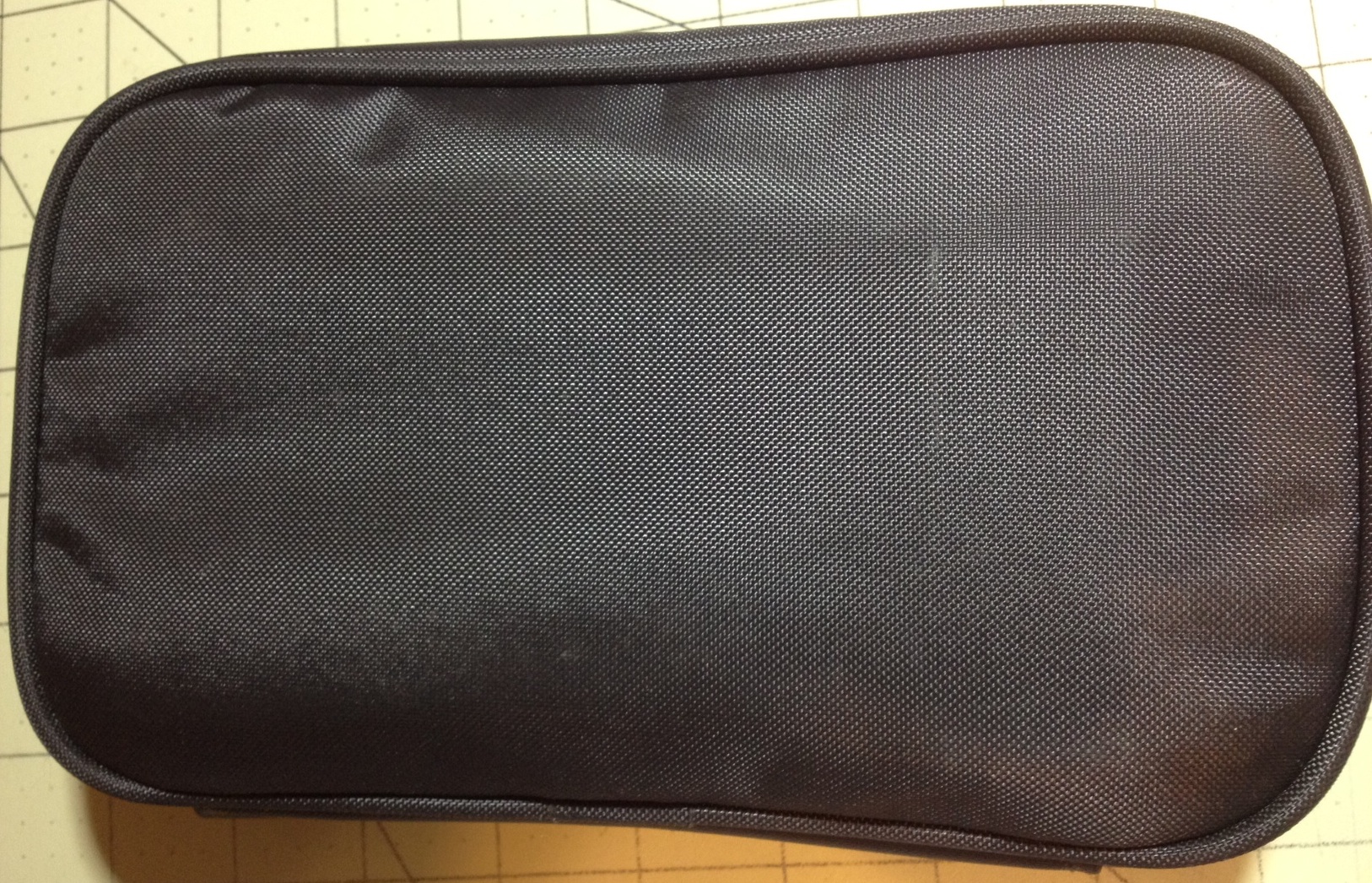
The outside of the case looks pretty standard (mine’s black, but there are lots of available colors), the back is blank and the front has two almost-useless pockets with a small rubber “designed for arrangement” badge. The (double) zipper is roughly in the center of the bag (and it even has the same logo as the front badge on it) and it feels very sturdy and secure, though it has no “brand-name” on it. The hinge is made of a double layer of the same fabric as the rest of the case and shows no sign of wear from several months of use. The whole package comes in at about 8”x4½”.

photo-204photo-198

The inside is a brown version of the same color polyester fabric (regardless of outside color). On the inside of the front there are two roughly inch-wide bands to hold in pens, and on the back inside there is a simple mesh covering about half the area (to hold other items). There is also a center divider/organizational area that is strangely attached to the inside of the back half and not in the middle. I suppose that would have interfered with the hinge, but its placement near the back (really it just favoring one side) can be a problem at times. The front of this divider has another inch-wide band (higher up this time) and a thin pocket (not mesh) at the bottom, and the back has three mesh pockets, the top two being slightly larger than the bottom one.

photo-202

So the configuration of the whole case is to hold pens in the front and other art/office supply things in the back. This works pretty well, especially since the back can hold either. I have 24 pens or pen-like things in mine* and 10 (or so, paper clips are counted as one thing) other things including an eraser, Swiss Army Knife, stapler, pencil sharpener, notepad etc. It fits everything nicely and is very flexible with its organization. I was surprised with what I could fit in it (almost everything I wanted), and I’ve been carrying it around wherever I need pen(cil)s for months now and it shows no sign of stressing the material or really any wear whatsoever.

photo-199

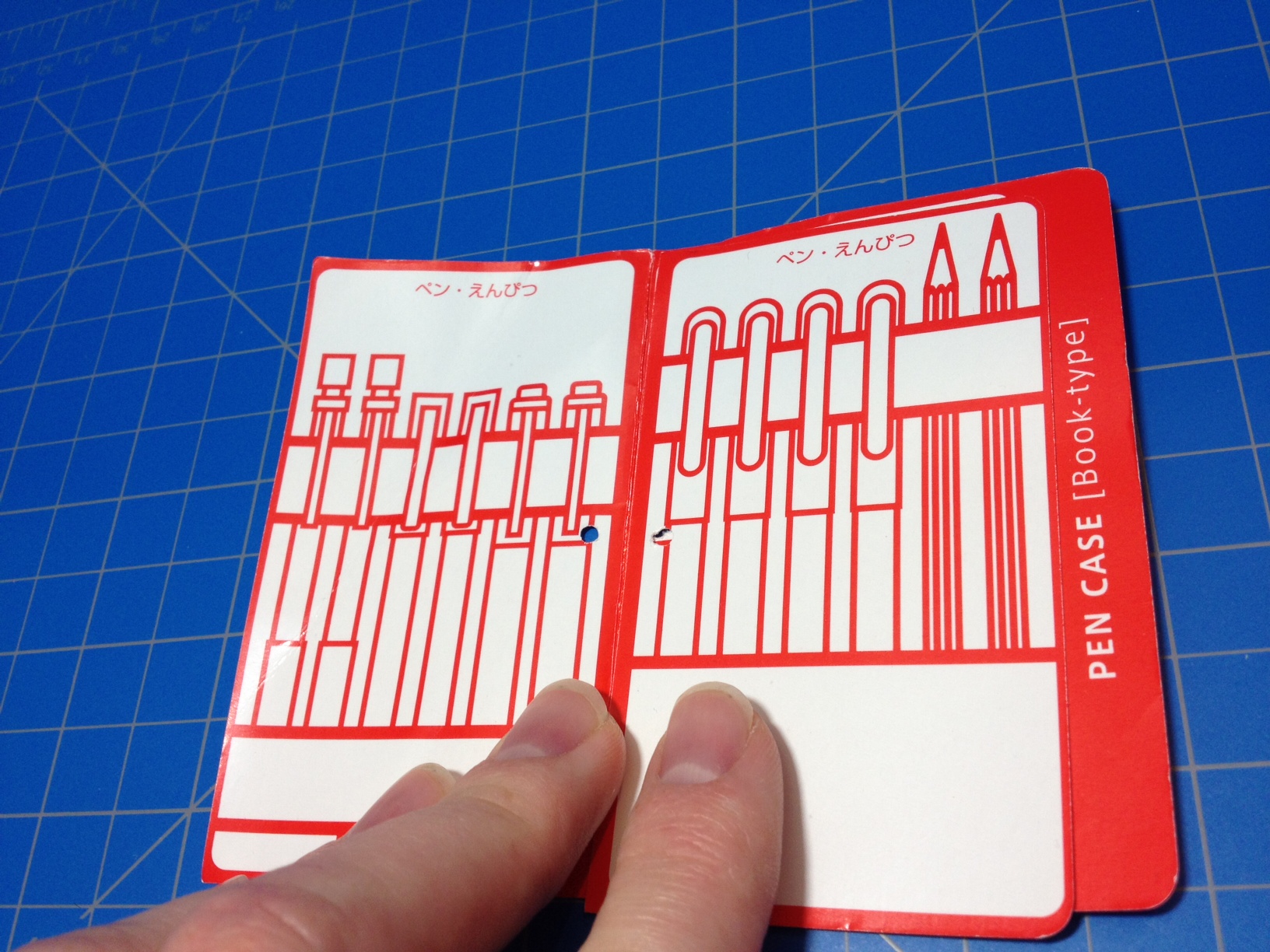
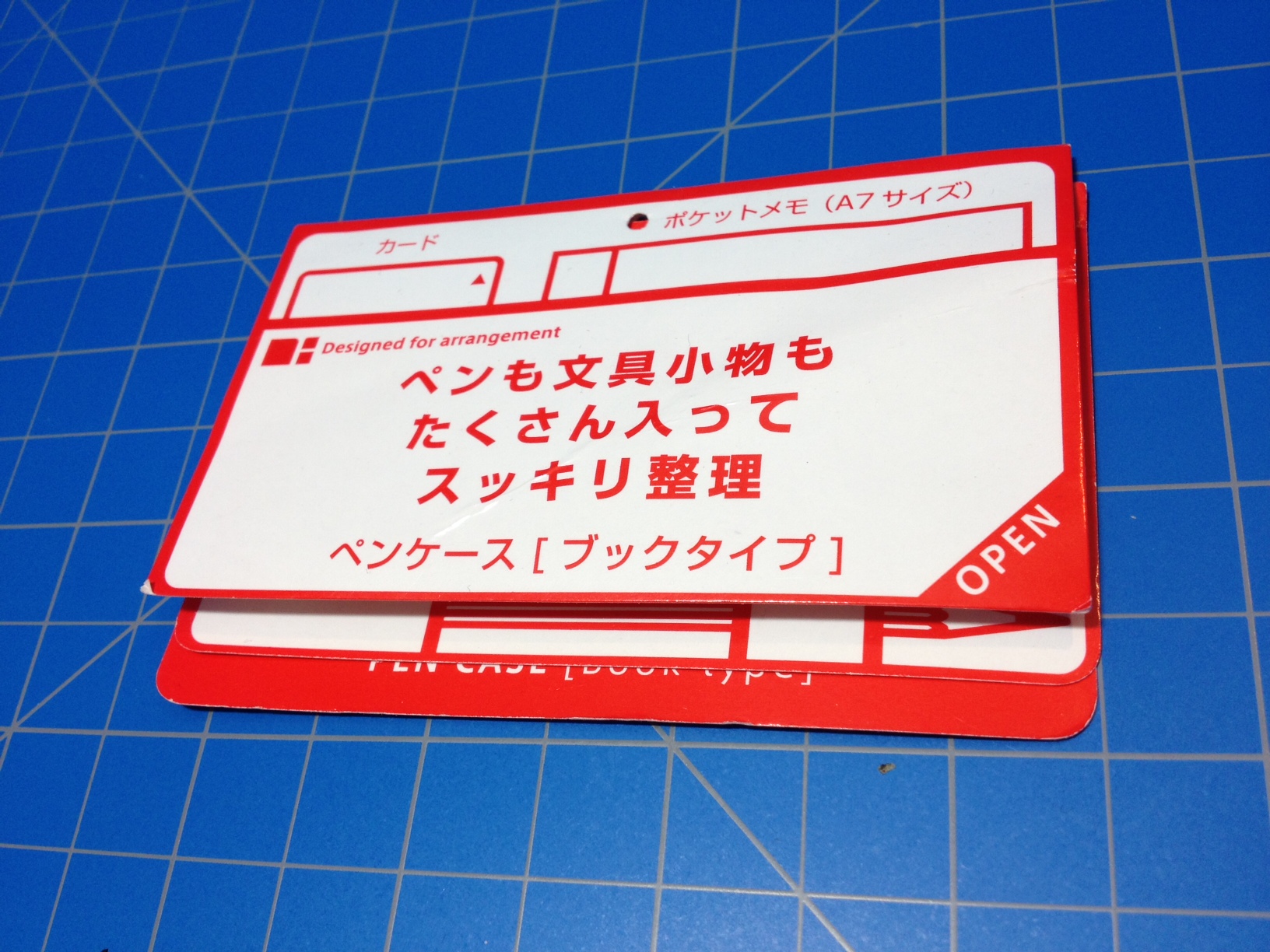
My concluding thoughts could just be “it is the pencil case I use, and I don’t see that changing soon”. And that would be true, I really like this case, it is perfect for my exact usage scenario, but due to its popularity and the number of photos of it I see online, it looks like it could fit quite a few usage cases. It’s inexpensive relative to other cases its size (it probably helps that there is no packaging needed, but it does come with a cute little card that folds out as a representation of how to use the case), it’s durable, flexible (both in the physical and organizational sense), and it’s attractive. I’d definitely recommend it as an upgrade to the regular zipper bag most people use.

photo-233 photo-232 photo-231 photo-230


* Pencil Case Full Contents List

    • 2 Pentel Pocket Brushes
    • Pigma Brush
    • 2 Tombow Duos (N95, N60)
    • Liquid Accent Highlighter
    • Sharpie Twin Tip
    • Autopoint All American in Blue (Caran d’Ache Sketcher Non-Photo Blue Pencil)
    • Pigma Graphic 1
    • Pigma Micron Technical Pens (005, 01, 02, 03, 05, 08)
    • Le Pen 0.03 (003) Technical Pen
    • Tombow Mono Zero Eraser (Round 2.3, Rectangular 2.5×5)
    • Scotch Tape Roll
    • Pad of Generic Sticky Notes (3”x2”)
    • Twist Ties x2
    • Paper Clips x5 (Insulated)
    • 4 inch Ruler
    • Pentel .5 HB lead
    • Pentel Graphgear 500 .5
    • Swingline Tot 50 Mini Stapler
    • Staedtler Mars Plastic Eraser (With Plastic Case)
    • Victorinox Super Tinker**
    • Zebra F-301 (Black, Blue, Green, Red)
    • Paper:Mate Liquid Paper Correction Pen (Signo Angelic White Gel Pen)
    • Kum Pencil Sharpener

28785

Last two photos from Jetpens.com (http://www.jetpens.com/Lihit-Lab-Teffa-Pen-Case-Book-Style-Black/pd/7665) I just had to include a photo of the "booklet" and originally couldn't find mine.

Last two photos from Jetpens.com (http://www.jetpens.com/Lihit-Lab-Teffa-Pen-Case-Book-Style-Black/pd/7665) I just had to include a photo of the “booklet” and originally couldn’t find mine.